Which Apartment Compost Bins Actually Stay Odorless?
The Myth of the Stinky Kitchen Bin
Most men avoid composting because they fear their studio apartment will end up smelling like a damp landfill. It is a valid concern. In a confined space, a single tray of rotting broccoli can overwhelm the living area in hours. However, the technology behind indoor waste management has evolved. Modern systems focus on anaerobic fermentation or rapid dehydration to neutralize smells before they even start.
If he chooses the right equipment, he can manage his food waste without ever catching a whiff of decay. The secret lies in how the bin handles moisture and airflow. When he learns how to reuse kitchen scraps for apartment plants, he transforms what was once trash into a valuable resource for his indoor greenery.
Bokashi Bins: The Fermentation Powerhouse
Bokashi is often the top choice for renters because it is specifically designed to be airtight. Unlike traditional composting which requires oxygen, Bokashi uses an anaerobic process. He simply drops his scraps into the bin, adds a layer of specialized bran (inoculated with beneficial microbes), and presses it down to remove air pockets.
- Odor Control: The airtight seal ensures no smells escape into the kitchen.
- Speed: It breaks down food much faster than a standard pile.
- Versatility: He can even throw in meat and dairy, which are usually off-limits for other indoor bins.
The only byproduct is a “tea” that he must drain every few days. This liquid is highly concentrated; when diluted, it becomes one of the best organic fertilizers for indoor apartment plants, providing a massive nutrient boost to his fiddle leaf fig or snake plant.
Electric Composters: High-Tech Dehydration
For the man who wants a “set it and forget it” solution, electric composters are the gold standard. These devices sit on the countertop and use heat and grinding blades to turn food scraps into dry, odorless mulch in under eight hours. Since the machine dehydrates the waste, there is no moisture left to create the foul odors associated with rot.
These units typically feature dual carbon filters that scrub the air as the machine runs. While they require an initial investment and a small amount of electricity, the convenience of having zero wet waste in the kitchen is a significant trade-off for many urban dwellers.
Worm Bins: The Silent Roommates
Vermicomposting might sound messy, but a well-maintained worm bin is surprisingly odorless. He can keep a compact, tiered worm farm tucked under his kitchen sink or in a hallway closet. Red wiggler worms consume the food scraps and bedding, leaving behind nutrient-rich castings.
To keep this system from smelling, he must maintain the carbon-to-nitrogen ratio. This means adding shredded paper or cardboard (browns) every time he adds food scraps (greens). If he keeps the bin moist but not soaking wet, the worms will work through the waste before it has a chance to sour. It is a living ecosystem that fits perfectly into a minimalist lifestyle.
Essential Features for Odor Prevention
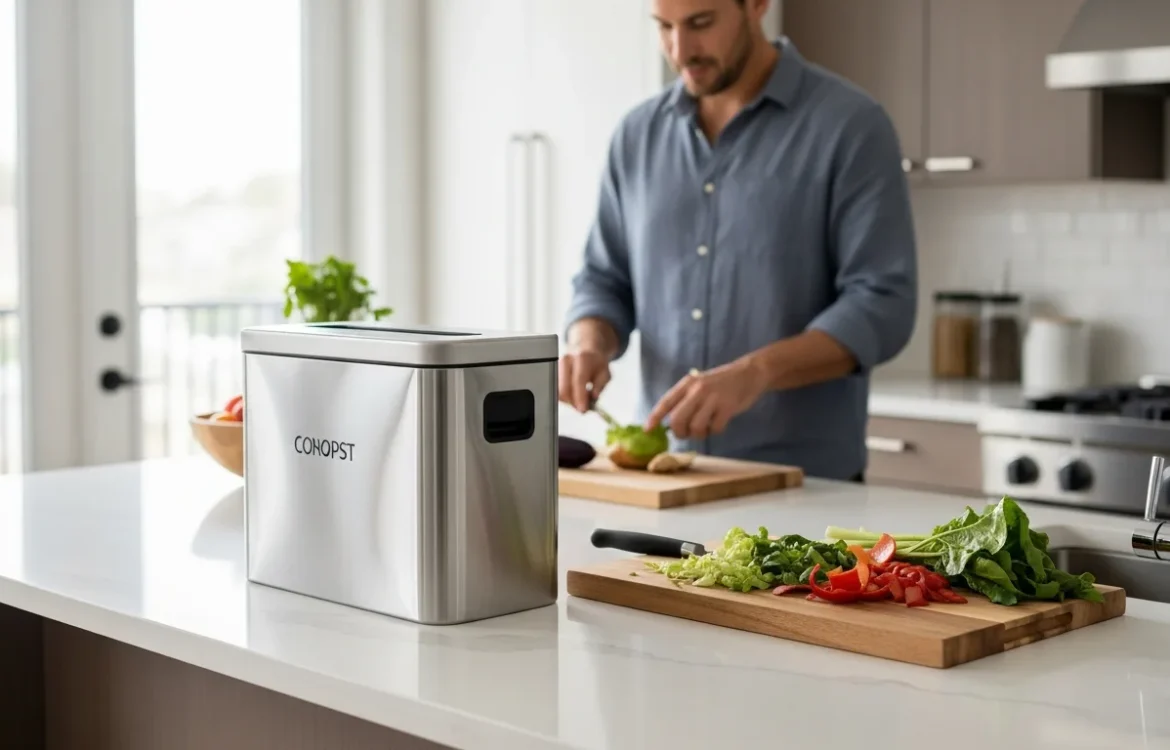
If he prefers a simple countertop collector before taking waste to a community bin, he should look for specific design elements. A basic plastic bucket will not suffice. He needs a bin with a charcoal filter integrated into the lid. These filters trap gas molecules, allowing the bin to breathe without releasing scents.
Stainless steel or ceramic bodies are also superior to plastic. Plastic is porous and can absorb odors over time, making it difficult to clean. A high-quality steel bin can be tossed in the dishwasher, ensuring that no lingering bacteria cause a stench between emptyings.
Maintenance Habits That Save the Air
Even the best bin will fail if he doesn’t follow a few basic rules. He should aim to empty his countertop bin every two to three days, regardless of how full it is. Rinsing the bin with a mixture of vinegar and water after each use kills odor-causing bacteria naturally.
He should also avoid adding too much high-moisture fruit at once. If he notices the bin getting soggy, adding a few handfuls of dry eggshells or torn-up egg cartons can balance the humidity. By staying proactive, he ensures his apartment remains a fresh, welcoming space.
Frequently Asked Questions
Do I really need a carbon filter for an apartment bin?
Yes. Unless he is using an airtight Bokashi system or an electric composter, a carbon filter is the only thing standing between his kitchen and the smell of decomposing onions. These filters should be replaced every 3 to 6 months to remain effective.
Can I keep my compost bin in the freezer?
This is a popular hack for men with very little space. By keeping a sealed bag or bin in the freezer, he stops the decomposition process entirely. There is zero smell because the scraps are frozen solid until he takes them to a drop-off point.
What is the easiest odorless bin for a beginner?
A stainless steel countertop bin with a double-filter lid is the easiest starting point. It requires no special knowledge or electricity. He just needs to be diligent about emptying it regularly at a local compost collection site.