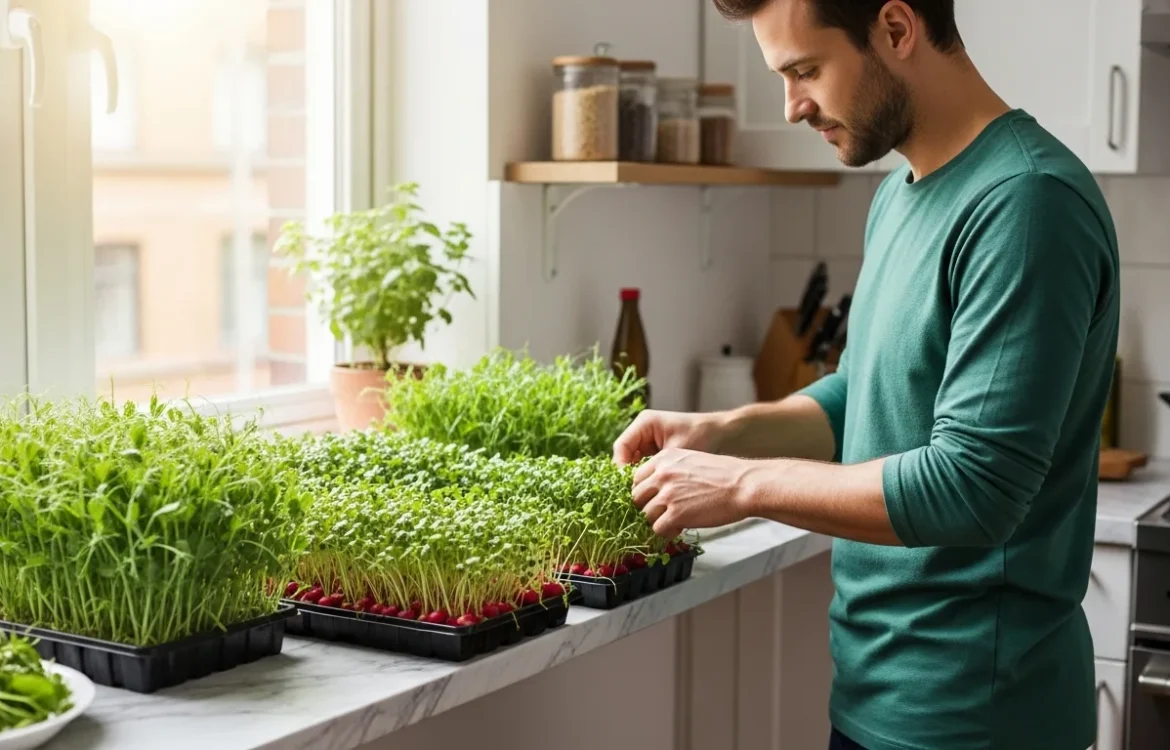
Can You Grow Microgreens in a Tiny Apartment Kitchen?
The Efficiency of Microgreens for Urban Renters
Space is the ultimate luxury in a city apartment, but a lack of square footage shouldn’t stop a man from producing his own food. Microgreens are the perfect solution for the urban dweller. These young seedlings are harvested just as their first true leaves appear, usually within 7 to 14 days. Because they are harvested so early, they don’t require deep soil or massive pots. A single windowsill or a small corner of a kitchen counter is all he needs to start a high-yield indoor farm.
Beyond the space-saving benefits, microgreens are nutritional powerhouses. Research suggests they contain up to 40 times more nutrients than their mature counterparts. For a man looking to optimize his diet without spending a fortune at high-end grocery stores, growing these at home is a logical move. He can control the quality of the soil, the water, and the seeds, ensuring a chemical-free harvest every time.
Essential Gear for a Minimalist Kitchen Setup
He doesn’t need a greenhouse to get results. A successful microgreen setup in a small kitchen relies on a few specific items that can be tucked away when not in use. Shallow growing trays are the foundation. Since microgreens have shallow root systems, a tray only two inches deep is sufficient. Many men prefer using 10×10 trays because they fit easily on standard kitchen shelving.
- Growing Medium: While potting soil works, coconut coir or hemp mats are cleaner options for a kitchen environment. They hold moisture well without the mess of traditional dirt.
- Seeds: Start with easy-to-grow varieties like radish, broccoli, or pea shoots. These germinate quickly and are less prone to issues.
- Mister Bottle: A fine mist is necessary to keep the seeds moist without washing them away or drowning the roots.
Mastering the Blackout and Growth Phases
The process begins with sowing seeds densely across the surface of the medium. After a light misting, the trays enter the blackout phase. This involves covering the tray with another tray or a heavy cloth to block out all light for 2 to 4 days. This technique forces the seedlings to stretch upward in search of light, resulting in longer stems that are easier to harvest.
Once the seedlings are about an inch tall, it is time to introduce light. If his kitchen doesn’t get much sun, he might need to supplement with artificial lighting to keep his greens from getting leggy and weak. LED grow lights are ideal here because they are energy-efficient and don’t produce excess heat that could dry out the delicate plants in a cramped kitchen space.
Optimizing Airflow and Preventing Mold
In the humid environment of a kitchen, mold is the primary enemy of microgreens. When plants are grown close together, air circulation becomes vital. He should avoid overwatering; the medium should be damp like a wrung-out sponge, not soaking wet. If the apartment feels stagnant, a small USB-powered fan can provide enough airflow to keep the crop healthy.
For those just starting out, following basic indoor apartment gardening strategies can help prevent common mistakes like over-seeding, which often leads to rot. He should also ensure his trays have drainage holes. If he is growing on a wooden countertop, using a secondary drip tray underneath is essential to prevent water damage to the rental property.
Harvesting and Storage Tips
Harvesting is the most rewarding part of the cycle. When the first set of leaves is fully developed, he can use a sharp pair of kitchen shears to snip the greens just above the soil line. It is best to harvest only what is needed for a single meal to ensure maximum freshness. If he harvests the entire tray at once, he should place the greens between dry paper towels in a sealed container and refrigerate them immediately. They will typically stay crisp for about five days.
Frequently Asked Questions
Do microgreens regrow after cutting?
Most microgreens do not regrow after the first harvest because the growing point is removed when they are snipped. Pea shoots are a rare exception and may provide a second, smaller harvest if cut high enough, but for most varieties, he will need to compost the roots and start a new batch.
How much light do microgreens actually need?
While they are more forgiving than mature plants, microgreens still require about 6 to 8 hours of bright light daily once they emerge from the blackout phase. A south-facing window is best, but inexpensive LED strips can easily fill the gap in darker apartments.
Is it cheaper to grow them than to buy them?
Absolutely. A small container of microgreens at a specialty market can cost five to eight dollars. By purchasing seeds in bulk and reusing trays, a man can produce the same amount for less than a dollar, making it a highly cost-effective hobby.