How Do You Keep an Indoor Apartment Herb Garden Alive and Thriving?
Master the Light Requirements
Light is the single most important factor for an indoor herb garden. Most culinary herbs, such as basil, rosemary, and thyme, are Mediterranean by nature and demand at least six to eight hours of direct sunlight daily. In a typical apartment, a south-facing window is the prime real estate for his plants. If he notices his herbs are becoming ‘leggy’—meaning they are growing tall and thin with sparse leaves—they are likely reaching for a light source they can’t find.
If his kitchen lacks a massive south-facing window, he shouldn’t give up. He can supplement the sun by setting up a dedicated lighting system to mimic the full-spectrum rays herbs crave. LED grow lights are energy-efficient and can be mounted directly under kitchen cabinets, keeping the workspace clear while providing the intensity needed for robust growth.
Watering Without Drowning the Roots
Overwatering is the fastest way to kill an indoor garden. Most beginners make the mistake of watering on a strict schedule rather than checking the soil. He should use the knuckle test: stick a finger an inch into the soil. If it feels dry, it is time to water. If it feels damp, he should wait another day or two. Herbs like lavender and rosemary prefer to dry out slightly between waterings, while mint and parsley enjoy more consistent moisture.
Proper drainage is non-negotiable. He must ensure every pot has drainage holes at the bottom. Without them, water pools at the base, leading to root rot—a silent killer that turns leaves yellow and mushy. Using a saucer underneath the pot will protect his countertops from water damage while allowing the plant to sit in a healthy environment.
Choosing the Right Soil and Fertilizer
He should never use standard garden soil from outside in an indoor pot. It is too heavy, lacks proper aeration, and often contains pests or pathogens. Instead, he needs a high-quality potting mix designed specifically for containers. These mixes usually contain peat moss, perlite, or vermiculite to ensure the roots can breathe and water can move freely.
Since the nutrients in a small pot are limited, he will need to fertilize. However, herbs are grown for their oils and flavor, not their size. Over-fertilizing can actually dilute the taste of the leaves. A liquid organic fertilizer applied at half-strength once a month during the growing season is usually sufficient. For those dealing with north-facing units or deep shadows, selecting species that tolerate less sun like mint or chives can prevent a lot of frustration and reduce the need for aggressive feeding.
Pruning for Maximum Yield
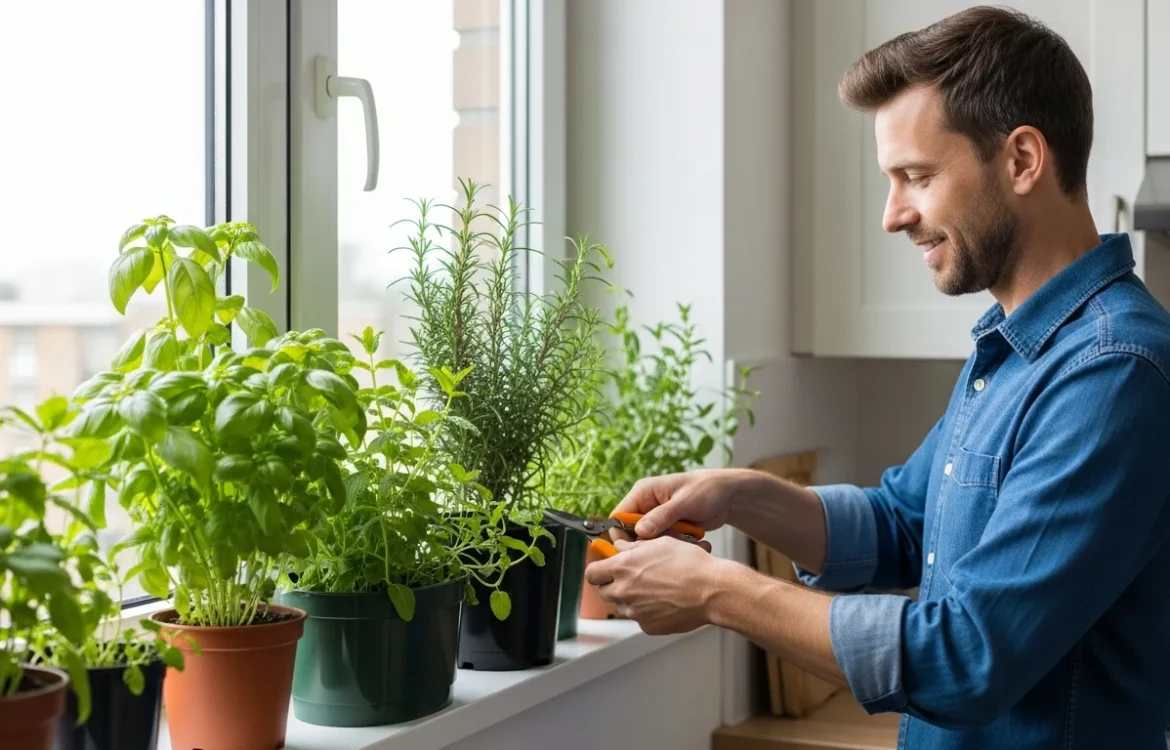
Many men are hesitant to cut their plants, fearing they will hurt them. In reality, regular harvesting is what keeps an herb garden productive. When he snips the top of a basil plant just above a leaf node, he signals the plant to grow two new stems from that point. This creates a bushier, more productive plant rather than a single tall stalk.
- Harvest from the top: Never strip all the large leaves from the bottom; these are the plant’s solar panels.
- Pinch off flowers: If an herb starts to flower (bolting), the flavor of the leaves often turns bitter. He should pinch these buds off immediately to keep the energy focused on leaf production.
- The 30% Rule: He should never harvest more than one-third of the plant at a single time to avoid shocking the system.
Managing Temperature and Airflow
Apartment environments can be tricky due to HVAC systems. Herbs generally thrive in temperatures between 65°F and 75°F, which aligns with most living spaces. However, he must be careful not to place his pots directly next to a radiator or an air conditioning vent. Extreme temperature fluctuations can cause leaves to drop or dry out rapidly.
Airflow is equally vital. Stagnant air in a cramped kitchen can lead to fungal issues like powdery mildew. He can improve conditions by spacing his pots a few inches apart or using a small desk fan to keep the air moving. This mimics the natural breeze of the outdoors and strengthens the stems of the plants as they grow.
Frequently Asked Questions
How do I know if my herbs need more light?
If the stems are stretching toward the window and the leaves are smaller than usual, the plant is struggling with low light. He may also notice the vibrant green color fading to a pale yellow.
Can I grow herbs in pots without holes?
It is highly discouraged. Without drainage, water collects at the bottom and suffocates the roots. If he has a decorative pot without holes, he should keep the herb in a plastic nursery liner with holes and place that inside the decorative container.
Why are my indoor herbs turning yellow?
Yellow leaves are usually a sign of overwatering or poor drainage. He should check the moisture level of the soil and ensure the pot isn’t sitting in a pool of water in the saucer.
Do indoor herbs need a lot of fertilizer?
No. Herbs are relatively low-maintenance. A light feeding once a month during spring and summer is plenty. Too much fertilizer can actually make the herbs taste less pungent.