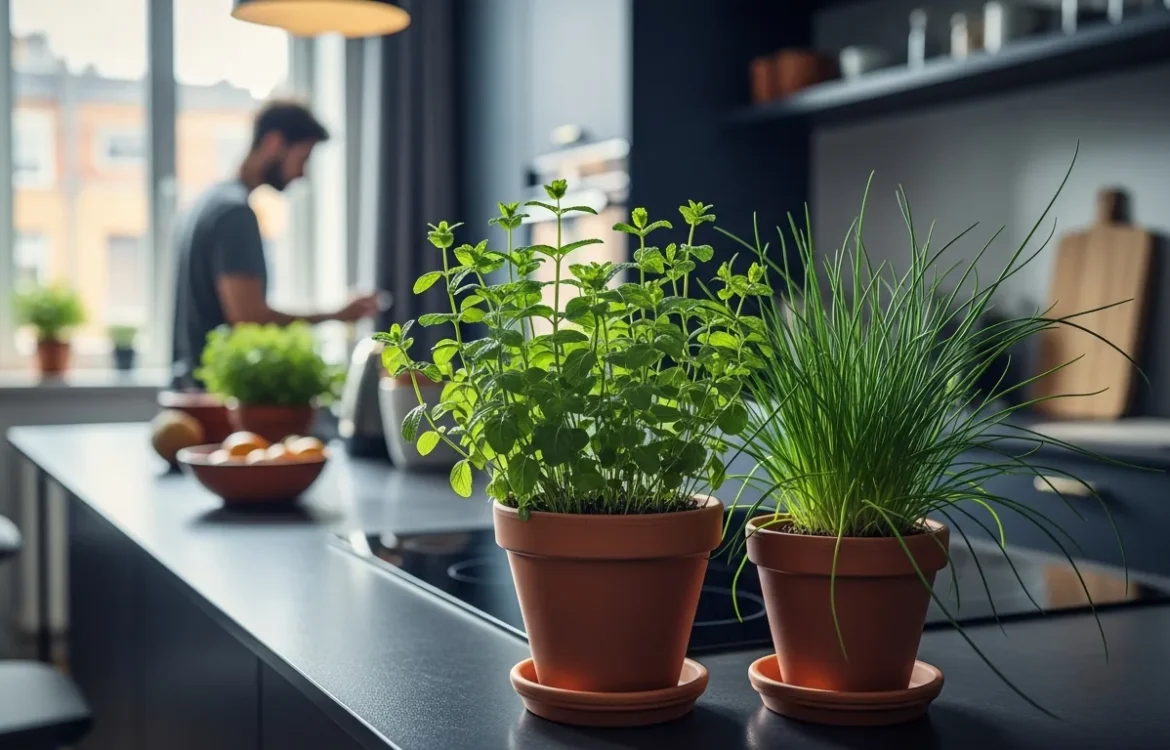
Which Herbs Actually Grow in Dark Apartment Kitchens?
The Myth of the Sun-Drenched Kitchen
Most guys assume that if his kitchen doesn’t have floor-to-ceiling windows facing south, he is destined to buy wilted plastic grocery store herbs for the rest of his life. He looks at his dim countertop and thinks nothing green could survive there. This is a mistake. While most Mediterranean herbs like rosemary and lavender crave intense heat and light, several hardy varieties thrive in the softer, indirect light found in typical urban apartments.
Success in a low-light kitchen isn’t about forcing a sun-loving plant to adapt; it’s about choosing species that naturally prefer the shade. When he selects the right plants, he can harvest fresh flavors for his steaks or cocktails without ever needing a backyard.
Top Low-Light Herbs for the Urban Cook
If his kitchen window faces a brick wall or an alley, these are the specific herbs he should prioritize. These plants are resilient and can handle the lower UV levels of a shaded apartment.
- Mint: This plant is practically a weed. It is notoriously difficult to kill and actually prefers a bit of shade to keep its leaves from scorching. Whether he wants peppermint for tea or spearmint for mojitos, mint will grow aggressively even in a dim corner.
- Parsley: Specifically the flat-leaf Italian variety. It is a biennial plant that handles indirect light exceptionally well. It grows slower in low light, but the flavor remains potent.
- Chives: These are the ultimate “set it and forget it” herb. Chives don’t need much to stay happy. As long as he keeps the soil moist, they will provide a steady supply of onion-flavored garnishes for his morning eggs.
- Lemon Balm: A member of the mint family, this herb is incredibly shade-tolerant. It smells fantastic and can be used in teas or as a citrusy addition to chicken dishes.
- Cilantro: Interestingly, cilantro often performs better in lower light because it is prone to “bolting” (going to seed) when it gets too hot and sunny. Keeping it in a cooler, shaded kitchen can actually extend its lifespan.
Mastering the Maintenance Routine
Growing herbs in a dark kitchen requires a different strategy than outdoor gardening. Because there is less sun to evaporate moisture, overwatering is the number one killer of indoor plants. He must ensure his pots have excellent drainage. If the roots sit in stagnant water, they will rot within a week.
When he learns how to care for indoor apartment herb garden setups, he realizes that consistency beats intensity. He should check the soil with his finger; if the top inch is dry, it’s time to water. He should also rotate his pots every few days. This prevents the plant from leaning too far toward the light source and becoming “leggy” or weak-stemmed.
Maximizing the Light You Do Have
Even “low light” herbs need some photons to photosynthesize. If his kitchen is truly cave-like, he can use a few tricks to amplify the available light. Painting the walls white or placing a mirror opposite the window can bounce light back onto his herb pots.
If natural light is non-existent, he doesn’t have to give up. Modern technology has made it easy to supplement. He can learn how to use grow lights for indoor apartment plants to provide the specific spectrum his herbs need. A small, sleek LED grow light can be tucked under a cabinet, providing 12 hours of “sunshine” without ruining the aesthetic of his kitchen.
Common Mistakes to Avoid
The biggest error a man makes is treating all herbs the same. He might try to grow Basil in the same dark corner as his Mint. Basil will fail; it is a sun-hog that will turn black and drop its leaves without at least six hours of direct light. He should stick to the leafy, green herbs and avoid the woody, shrub-like ones.
Another mistake is neglecting airflow. Apartment kitchens can become humid and stagnant, which invites mold. He should occasionally crack a window or run a small fan to keep the air moving around his plants. This strengthens the stems and prevents fungal issues that thrive in dark, damp environments.
Frequently Asked Questions
Can I grow rosemary in a low-light kitchen?
No. Rosemary is a Mediterranean shrub that requires intense, direct sunlight. In a low-light apartment, it will quickly become spindly, lose its needles, and eventually die.
How often should I fertilize indoor herbs?
Since herbs in low light grow slower, they need less food. He should use a liquid organic fertilizer at half-strength once a month during the spring and summer, and skip it entirely during the winter.
Do I need special soil for kitchen herbs?
He should use a high-quality indoor potting mix that contains perlite or vermiculite. This ensures the soil stays airy and doesn’t compact, which is vital for root health in low-light conditions.
What is the best pot for low-light herbs?
Terra cotta is excellent because it is porous and allows the soil to breathe. However, if he tends to forget to water, a glazed ceramic pot with a drainage hole will help retain moisture a bit longer.