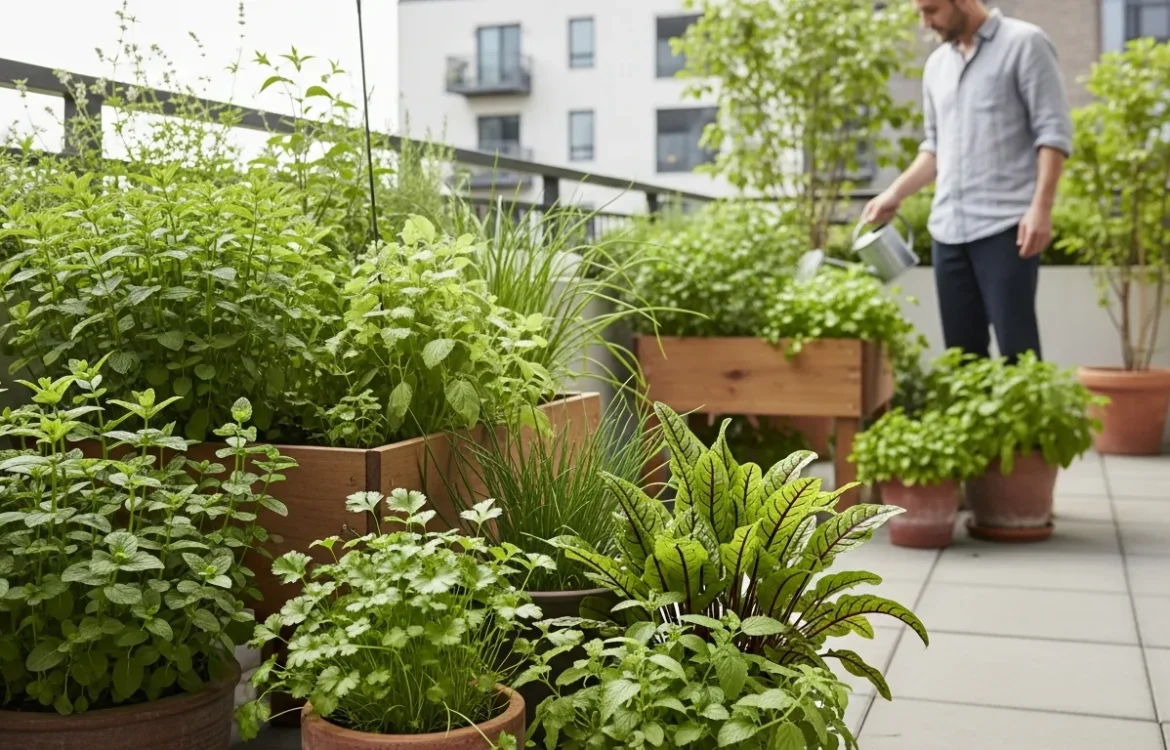
Which Herbs Actually Grow in the Shade? Best Varieties for Shady Apartment Patios
The Myth of the Sun-Drenched Herb Garden
Most beginners assume that if their balcony doesn’t face south, their dreams of fresh pesto and mojitos are dead. They see professional photos of sun-soaked Mediterranean gardens and assume their north-facing, shadowed patio is a wasteland. This is a mistake. While many woody herbs like rosemary and thyme demand intense heat, a surprising number of leafy greens thrive in the cooler, softer light of a shaded apartment patio.
When a man begins to start a patio garden at his apartment, he must first identify the type of shade he has. Dappled shade (sunlight filtering through trees or railings) and partial shade (2-4 hours of direct sun) are gold mines for specific herbs. Even in full shade—where there is no direct sun but plenty of ambient light—certain plants will still produce a respectable harvest.
Top Herbs That Thrive Without Direct Sunlight
If your patio is tucked away in the shadows, focus on these resilient varieties. They prioritize leaf production over flower and seed development, making them perfect for low-light environments.
- Mint: This is the undisputed king of shade. Mint is so aggressive that it actually prefers a break from the afternoon sun, which can scorch its leaves. Whether he chooses peppermint, spearmint, or chocolate mint, he should keep it in its own pot to prevent it from choking out other plants.
- Parsley: A biennial that handles cooler temperatures and lower light levels with ease. Flat-leaf Italian parsley tends to have a more robust flavor, while curly parsley offers a great aesthetic for small containers.
- Chives: These are incredibly hardy. Chives will grow almost anywhere and are one of the first herbs to pop up in the spring. They handle partial shade perfectly and provide a mild onion flavor for his cooking.
- Cilantro: This herb is notorious for “bolting” (going to seed) the moment it gets too hot. By growing cilantro in the shade of an apartment patio, he can actually extend its lifespan and harvest leaves for much longer than someone growing it in full sun.
- Lemon Balm: A member of the mint family, lemon balm is shade-tolerant and incredibly fragrant. It’s perfect for teas or adding a citrus note to summer dishes.
Mastering Shade Maintenance and Drainage
Growing in the shade requires a different tactical approach than traditional gardening. Understanding the nuances of apartment container gardening is essential because pots in the shade retain moisture much longer than those in the sun. Evaporation is slower, meaning the risk of root rot is significantly higher.
He should always use high-quality potting mix with added perlite to ensure maximum aeration. Before watering, he should stick his finger an inch into the soil; if it feels damp, he needs to wait. Overwatering is the number one killer of shade-grown herbs. Additionally, because these plants grow more slowly in low light, they require less fertilizer. A light application of organic liquid fertilizer once a month during the growing season is usually more than enough.
Maximizing Light on a Dark Balcony
Even if the sun never hits the floor of the patio, he can still optimize the available ambient light. Vertical gardening is a powerful tool here. By mounting planters higher up on the walls or railings, he might catch a few extra hours of light that don’t reach the ground level.
Using light-colored or reflective pots can also help bounce ambient light back onto the undersides of the leaves. White or metallic containers aren’t just a style choice; they are functional tools for the shade gardener. He should also regularly rotate his pots. Since the light source is often directional on a balcony, rotating the plant 90 degrees every week ensures that it grows evenly and doesn’t become “leggy” as it reaches toward the open sky.
Frequently Asked Questions
Can herbs grow in 100% shade?
No plant can grow in total darkness. However, many herbs can grow in “full shade,” which means they receive no direct sunlight but still get plenty of indirect, ambient light from the open sky or reflections off nearby buildings.
Why are my shade-grown herbs getting tall and skinny?
This is called etiolation. The plant is stretching to find more light. To fix this, he should move the plant to the highest possible point on his patio or prune the tops regularly to encourage bushier growth.
Do shade herbs taste different?
Sometimes. Herbs grown in full sun often have more concentrated essential oils, leading to a stronger flavor. However, shade-grown herbs like parsley and cilantro often have a more tender texture and a cleaner, less bitter taste because they aren’t stressed by heat.
How often should I water herbs in the shade?
Generally, much less often than sun-grown plants. He should check the soil every 2-3 days but only water when the top inch of soil is dry to the touch. Shady spots are prone to mold and fungus if kept too wet.