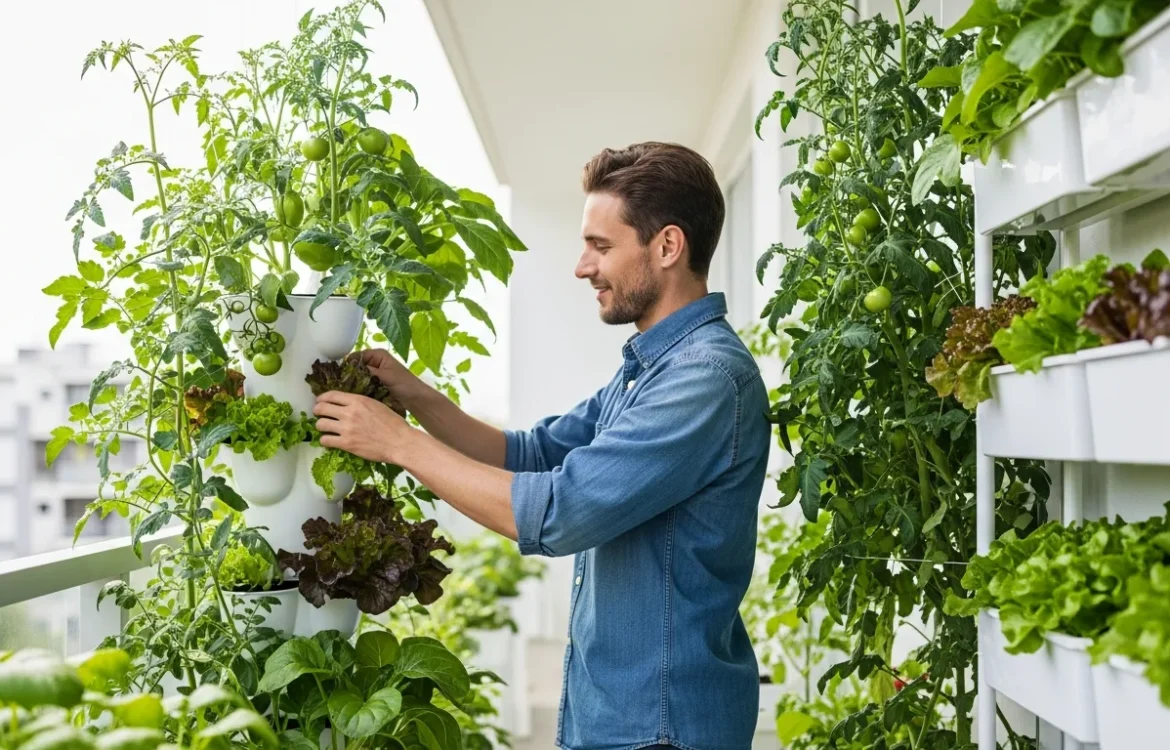
How Can You Grow a Productive Apartment Vegetable Garden?
Mastering Light and Exposure
A man cannot grow a successful apartment vegetable garden without first auditing his light. Most fruiting vegetables, like tomatoes and peppers, require at least six to eight hours of direct sunlight. If his windows face south, he has hit the jackpot. North-facing windows, however, rarely provide enough energy for anything beyond leafy greens or herbs.
He should track the sun’s movement across his space for a full day. If the shadows are long and the light is weak, he doesn’t have to give up. If his unit lacks natural sunlight, he can easily supplement with artificial sources by learning how to use grow lights effectively to mimic the solar spectrum. High-output LED panels are now affordable and run cool enough to sit just inches above his seedlings without scorching them.
Selecting the Right Containers
In a confined space, the container is the plant’s entire world. He must prioritize drainage above all else. A pot without holes is a death sentence for vegetable roots, leading to rot and fungal issues. When selecting pots, he should refer to a comprehensive apartment container gardening guide to ensure he picks the right size for root development.
- Fabric Pots: These allow for air-pruning, which prevents roots from circling and becoming root-bound.
- Self-Watering Planters: Ideal for the busy man who might forget a daily watering session during a heatwave.
- Terracotta: Great for plants that prefer drier soil, but they are heavy and can crack in freezing temperatures on a balcony.
Top Crops for Small-Space Success
He should focus on “cut-and-come-again” varieties to maximize his harvest. Instead of growing a single head of cabbage that takes months to mature, he can grow loose-leaf lettuce and harvest individual leaves for weeks. Cherry tomatoes are far more productive in small pots than large beefsteak varieties. They ripen faster and produce hundreds of fruits on a single vine.
Radishes are the sprinter of the vegetable world; he can go from seed to salad in as little as 25 days. For those with vertical space, pole beans or peas can be trained up a simple twine trellis, turning a bare wall into a living larder. He should look for “determinate” or “bush” varieties when buying seeds, as these are bred to stay compact.
Soil, Nutrition, and Maintenance
He must never use standard garden soil in his containers. It is too heavy, lacks aeration, and often carries pests or pathogens. Instead, he should invest in a high-quality potting mix containing peat moss or coconut coir, perlite, and vermiculite. This ensures his plants can breathe and retain moisture without becoming waterlogged.
Since nutrients leach out of containers every time he waters, he needs a consistent fertilization schedule. A liquid seaweed or fish emulsion fertilizer applied every two weeks provides the nitrogen, phosphorus, and potassium his vegetables crave. He should also keep a close eye on pest management. Aphids and fungus gnats can explode in population indoors, so he should keep a bottle of neem oil or insecticidal soap ready to handle outbreaks before they ruin his crop.
Frequently Asked Questions
Can I grow vegetables entirely indoors?
Yes. As long as he provides enough light through a bright window or LED grow lights, he can grow almost any small-scale vegetable entirely inside his living room or kitchen.
How often should I water my apartment garden?
Container plants dry out faster than those in the ground. He should stick his finger an inch into the soil; if it feels dry, it is time to water. In the height of summer, a balcony garden may need water every morning.
What is the easiest vegetable for a beginner to grow?
Leafy greens like spinach and kale are incredibly forgiving. They don’t require pollination to produce a harvest and can handle slightly lower light levels than fruiting plants.
Do I need to worry about weight on my balcony?
He should be mindful of the weight of large ceramic pots filled with wet soil. Using lightweight plastic or fabric pots and a soil-less potting mix helps keep the load manageable for most standard apartment balconies.