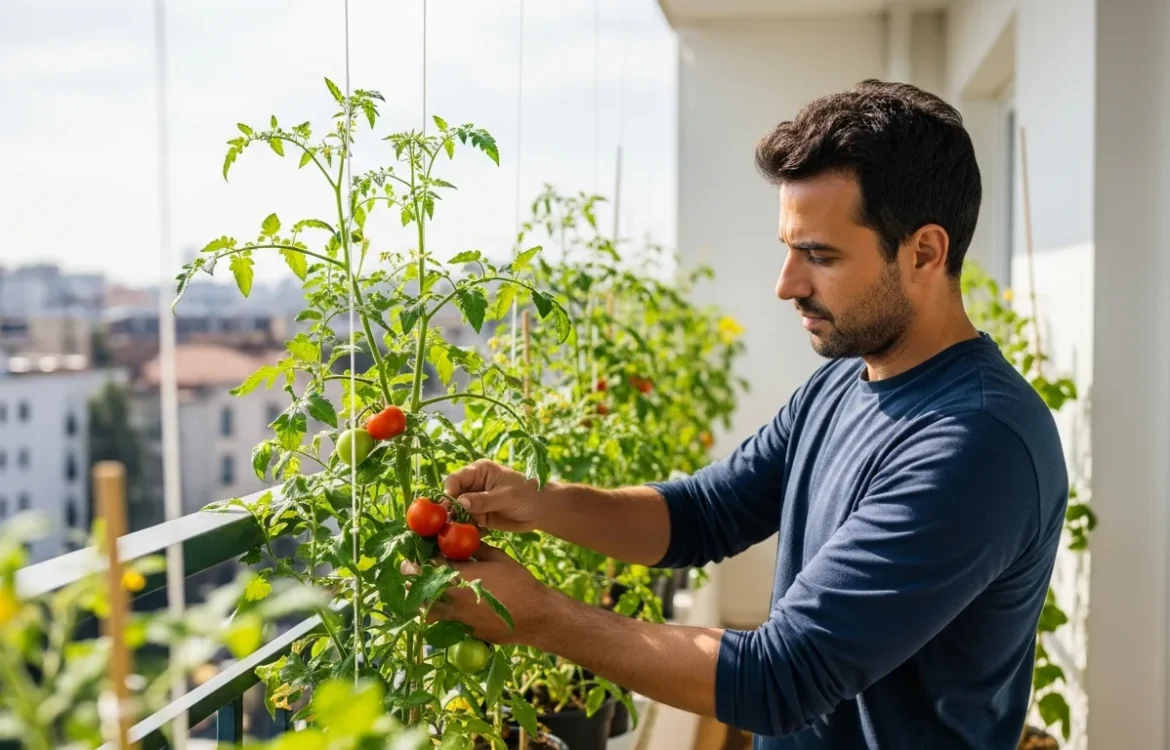
How Can You Successfully Grow Tomatoes on a Small Apartment Balcony?
Choosing the Right Tomato Variety for Small Spaces
The biggest mistake a beginner makes is grabbing any random seedling from the local nursery. On a balcony, space is a premium commodity. He needs to look specifically for determinate or “bush” varieties. These plants grow to a fixed height, usually around three to four feet, making them perfect for confined areas.
Varieties like Tiny Tim, Patio Princess, or Bush Early Girl are engineered for container life. Unlike indeterminate varieties that vine out indefinitely and require massive trellises, these compact plants focus their energy on producing fruit quickly. If he has a bit more vertical room, he might opt for a cherry tomato variety, which is generally hardier and more forgiving of the fluctuating conditions found on a high-rise balcony.
Selecting the Perfect Container and Soil
A tomato plant is only as healthy as its root system. For a standard bush tomato, a 5-gallon container is the gold standard. Anything smaller will lead to the soil drying out too fast, causing the plant to stress and drop its blossoms. He should ensure the pot has ample drainage holes at the bottom to prevent root rot.
When it comes to the medium, garden soil is a no-go. It is too heavy and may contain pathogens. Instead, he should use a high-quality potting mix enriched with perlite or vermiculite for aeration. Understanding the fundamentals of an apartment container gardening guide ensures he starts with the right foundation, providing the drainage and nutrient retention these heavy feeders require.
Maximizing Sunlight on a High-Rise Balcony
Tomatoes are sun-worshippers. To get those sugars developing in the fruit, the plant needs at least 6 to 8 hours of direct sunlight daily. He should observe his balcony throughout the day to identify the “hot spots” where the sun hits most intensely.
If the balcony is north-facing or heavily shaded by neighboring buildings, he might struggle with full-sized slicer tomatoes. In these cases, focusing on cherry tomatoes is a smarter play, as they can often produce a decent crop with slightly less intense light. He can also use reflective surfaces or white-painted pots to bounce a little extra light back onto the foliage.
Watering and Feeding for a Consistent Harvest
Consistency is the secret sauce of tomato gardening. If the soil fluctuates between bone-dry and soaking wet, the fruit will likely crack or develop blossom end rot. He should check the soil daily by sticking his finger an inch deep; if it feels dry, it is time to water.
Because nutrients leach out of containers quickly during watering, a regular feeding schedule is vital. He should use a balanced organic fertilizer every two weeks once the first flowers appear. Learning how often to water balcony container plants is a skill he will master over the first few weeks of the growing season as he learns how the wind and heat of his specific microclimate affect his pots.
Supporting and Pruning Your Plants
Even bush varieties benefit from a little support. A simple tomato cage or a sturdy bamboo stake keeps the fruit off the soil and improves airflow around the leaves, which is critical for preventing fungal diseases. He should tie the main stem loosely to the stake using soft twine or strips of old t-shirts to avoid cutting into the plant.
Pruning is less intensive for determinate varieties, but he should still remove any “suckers”—the small shoots growing in the crotch between the main stem and a branch—near the bottom of the plant. This keeps the base clear, allowing for better air circulation and making it harder for pests to climb up into the canopy.
Frequently Asked Questions
Can I grow tomatoes on a balcony that only gets morning sun?
It is possible, but the yield will be lower. He should stick to cherry tomato varieties like ‘Sun Gold,’ which are more vigorous and can produce fruit with about 5-6 hours of sun, though the tomatoes may take longer to ripen.
Why are the bottom of my tomatoes turning black?
This is likely blossom end rot, caused by a calcium deficiency often triggered by inconsistent watering. He needs to ensure the soil stays evenly moist so the plant can effectively transport calcium to the developing fruit.
Do I need to pollinate the flowers myself?
Tomatoes are self-pollinating, meaning each flower contains both male and female parts. On a balcony, the wind usually does the work. However, if his balcony is very sheltered, he can gently shake the plant or tap the flower clusters to help the pollen move.