Can You Wall Mount a TV in an Apartment Without Losing Your Security Deposit?
The Reality of Mounting a TV in a Rental
A massive TV stand is the ultimate space-killer in a cramped living room. For most guys, the goal is a clean, floating look that maximizes floor space and improves viewing angles. However, the fear of a landlord’s wrath often keeps that 65-inch screen sitting on a dusty IKEA cabinet. The good news is that wall mounting a TV in an apartment is entirely possible, provided he follows a few technical steps and understands the structural limits of his walls.
Before he even picks up a drill, he must check his lease agreement. Most modern leases allow for “normal wear and tear,” which often includes small nail holes, but large toggle bolt holes for a heavy TV mount might fall into a different category. If the lease is vague, a quick email to the property manager can save him hundreds of dollars in repair fees later.
Finding the Right Support
He cannot simply drive a screw into the drywall and hope for the best. A mid-sized TV can weigh anywhere from 30 to 70 pounds, and the leverage exerted by a mounting bracket will rip through standard plasterboard in seconds. He needs to locate the wooden studs behind the wall to ensure the mount is anchored to the building’s frame.
Most apartment buildings follow standard construction codes, but understanding the standard distance between vertical supports is vital for planning the layout. Typically, studs are spaced 16 inches apart. He should use a high-quality magnetic or electronic stud finder to mark the center of each stud. If he hits metal instead of wood, he is likely dealing with a commercial-grade steel stud building, which requires specialized toggle bolts rather than standard wood screws.
Renter-Friendly Mounting Alternatives
If he is strictly forbidden from drilling large holes, he isn’t out of luck. There are several “no-drill” or “low-impact” options available in 2026 that cater specifically to the rental market:
- No-Stud Mounts: These use a series of small, thin nails driven at an angle. They can support up to 100 pounds and leave holes no larger than a picture hook.
- Hybrid TV Stands: These look like a mount but are actually floor-based stands that tuck behind a media console. They provide the floating look without touching the wall at all.
- Tension Pole Mounts: These use floor-to-ceiling pressure to hold the TV in place, making them perfect for studio apartments with industrial finishes.
For those who prefer a traditional aesthetic, focusing on damage-free apartment wall upgrades can help balance the tech-heavy look of a mounted screen with softer decor elements that don’t require heavy hardware.
The Installation Process: A Step-by-Step Approach
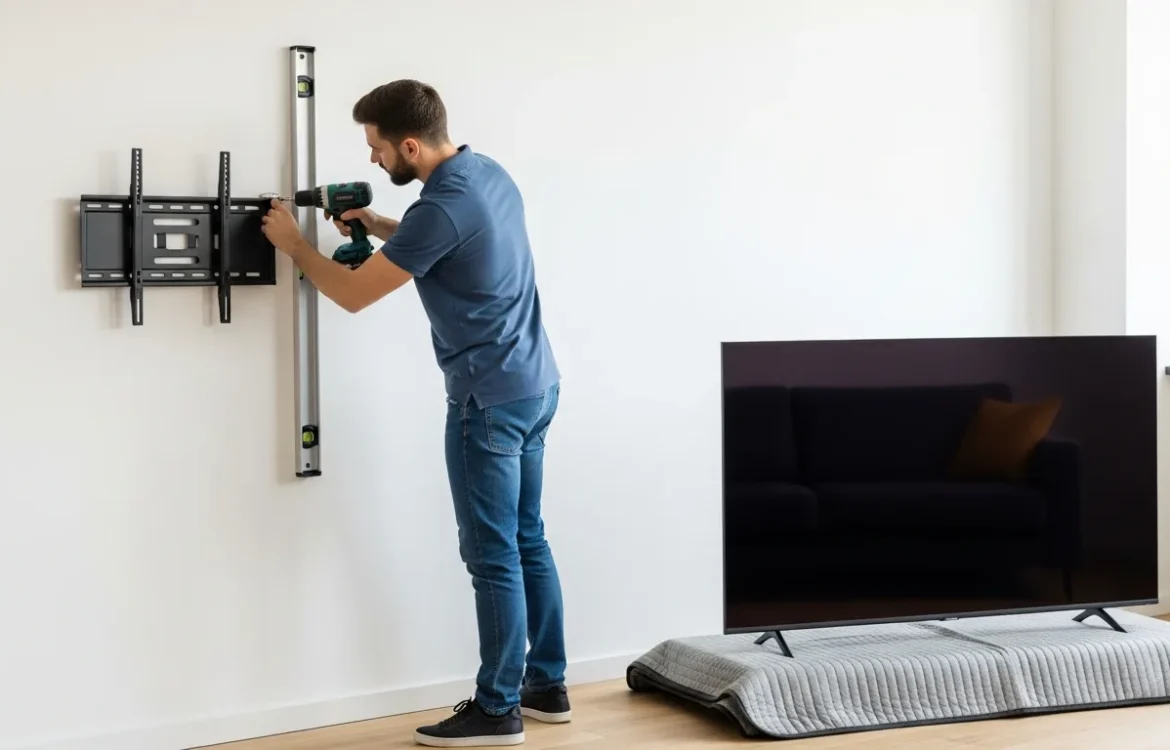
Once he has identified the studs and chosen his mount, he needs to gather his tools: a power drill, a level, a socket wrench, and a pencil. He should start by taping a piece of paper to the wall to catch the drywall dust as he drills.
Step 1: Mark the height. The center of the TV should ideally be at eye level when he is seated. Most men mount their TVs too high, leading to “r/TVTooHigh” ridicule and neck strain.
Step 2: Drill pilot holes. He should use a bit slightly smaller than the lag bolts to prevent the wood stud from splitting.
Step 3: Secure the bracket. He must ensure the bracket is perfectly level before tightening the bolts. A slight tilt will be glaringly obvious once the screen is attached.
Hiding the Cables Without Cutting the Wall
Landlords rarely allow tenants to run wires inside the walls. To keep the setup looking professional, he should use paintable cable raceways. These plastic channels adhere to the wall and hide the dangling HDMI and power cords. He can paint the raceway the exact color of the apartment wall to make it virtually invisible. This keeps the installation clean and ensures he won’t have to fish wires out of the insulation when he moves out.
How to Patch the Holes Like a Pro
When the lease ends, he needs to erase the evidence. Removing a TV mount usually leaves four to six significant holes. He should fill these with a high-quality spackling compound, using a putty knife to scrape it flush with the wall. Once dry, a light sanding with 220-grit sandpaper will make the surface smooth.
The final trick is the paint. He can take a small flake of the original paint (often found behind an outlet cover) to a local hardware store for a color match. By dabbing the paint on with a small sponge rather than a brush, he can mimic the wall’s texture, making the repair impossible to spot during the final walkthrough.
Frequently Asked Questions
Can I mount a TV on a brick wall in an apartment?
Yes, but he will need a masonry drill bit and lead anchors or Tapcon screws. He should check with management first, as brick repairs are much harder to hide than drywall patches.
Will mounting a TV void my security deposit?
Not necessarily. If he patches and paints the holes professionally before moving out, most landlords will never notice. However, leaving gaping holes will almost certainly result in a deduction.
What is the best mount for a small apartment?
A full-motion or articulating mount is usually best. It allows him to pull the TV out and angle it toward the kitchen or dining area, providing more flexibility in a limited space.