How Can You Improve Sound Insulation for Apartment Walls Effectively?
The Reality of Thin Apartment Walls
Living in a multi-unit building often means sharing more than just a zip code; it means sharing every sneeze, phone call, and late-night movie marathon with the guy next door. When a man moves into a new place, he expects a level of privacy that thin drywall simply cannot provide. Improving sound insulation for apartment walls isn’t just about peace and quiet—it is about reclaiming a personal sanctuary.
Most modern apartments are built for speed and cost-efficiency, not acoustic isolation. This results in hollow-sounding walls that act like drums, amplifying vibrations rather than dampening them. To fix this, he needs to understand that sound travels in two ways: through the air and through the structure itself. Addressing both is the only way to achieve true silence.
Strategic Furniture Placement as a Sound Barrier
Before spending a dime on specialized materials, a man should look at the layout of his room. Mass is the enemy of sound. By placing heavy, dense objects against the offending wall, he can significantly reduce the amount of vibration that passes through. A floor-to-ceiling bookshelf filled with thick hardcover books acts as a makeshift acoustic buffer.
- Heavy Wardrobes: Positioning a solid wood wardrobe against a shared wall adds a thick layer of density.
- Sectional Sofas: Pushing a plush, high-back sofa against the wall helps absorb mid-range frequencies.
- Area Rugs: While technically for the floor, thick rugs can be hung as tapestries to dampen echoes within the room.
Utilizing Professional Soundproofing Materials
If furniture isn’t enough, it is time to look at more technical solutions. Many men opt for Mass Loaded Vinyl (MLV), a dense, flexible material designed specifically to block sound transmission. It can be temporarily tacked to walls and covered with a decorative fabric or a thin layer of plywood. For those looking for a more comprehensive approach, understanding soundproofing apartment walls for renters involves using materials that provide high STC (Sound Transmission Class) ratings without permanent modifications.
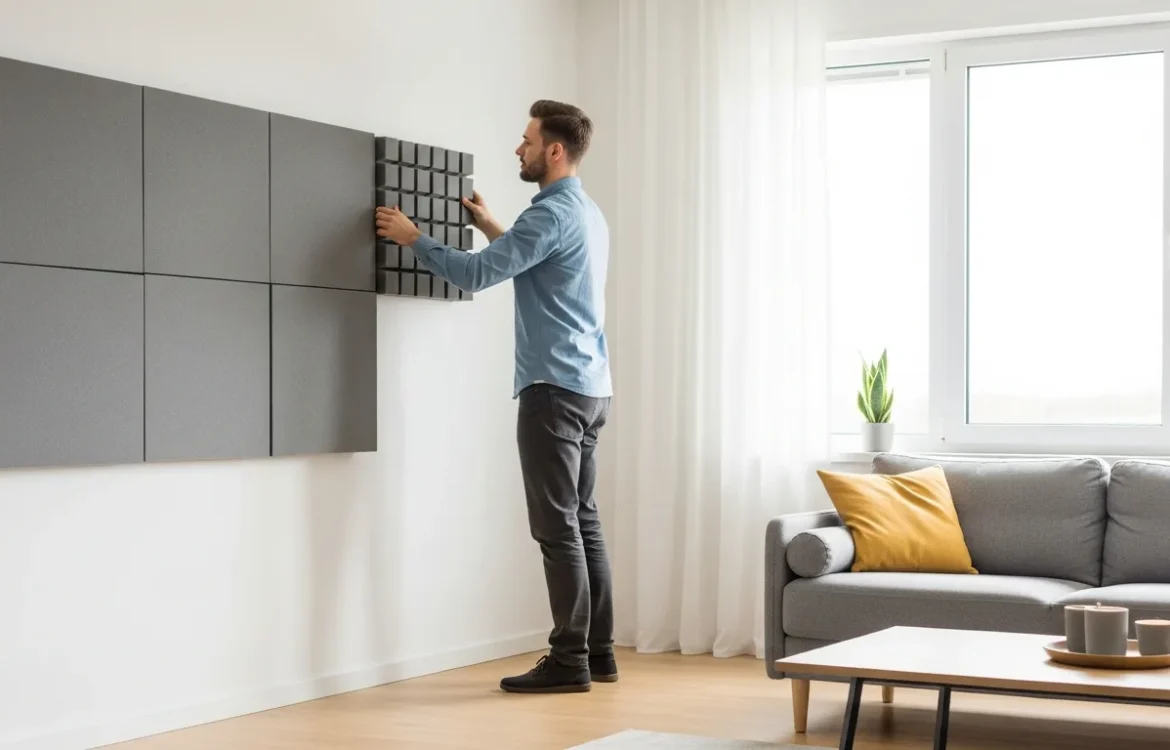
Acoustic foam panels are another popular choice, though they are often misunderstood. These panels are excellent for reducing echo and improving the sound quality inside the room, but they do very little to stop sound from coming through the wall. For actual insulation, he should prioritize high-density materials over porous foam.
Sealing the Hidden Gaps
Sound is like water; it will find the smallest crack and leak through it. Often, the culprit isn’t the wall itself but the gaps around it. Electrical outlets are notorious for this, as they are essentially holes cut directly into the wall. Using putty pads behind the outlet covers can seal these leaks effectively.
Baseboards and crown molding also frequently hide small air gaps. A man can use clear acoustic caulk to seal these seams. This specialized sealant remains flexible over time, meaning it won’t crack as the building shifts, maintaining a permanent airtight seal. Learning how to soundproof apartment walls properly requires this attention to detail, ensuring that no air—and therefore no sound—can bypass his hard work.
The Power of Sound-Dampening Curtains
Windows are often the weakest link in any room’s acoustic profile, but heavy-duty sound-dampening curtains can also be used directly on walls. These are not your standard drapes; they are lined with heavy materials like thermal polyester or even thin layers of metal film. By hanging these from a rod that spans the entire length of a shared wall, he creates a thick, soft barrier that catches sound waves before they hit the hard surface of the drywall.
Frequently Asked Questions
Can I soundproof my apartment without losing my security deposit?
Yes. Most effective methods, such as using MLV, acoustic blankets, or heavy furniture, are completely non-destructive. As long as he avoids permanent adhesives or major construction, his security deposit remains safe.
Do egg cartons actually work for sound insulation?
No. This is a common myth. Egg cartons are too thin to block sound and too poorly shaped to provide meaningful diffusion. They are a fire hazard and provide zero benefit for sound insulation.
What is the cheapest way to block noise from neighbors?
The most cost-effective method is rearranging heavy furniture against the shared wall and sealing gaps around doors and outlets with weatherstripping or acoustic caulk.
Does hanging blankets on the wall help?
Thick moving blankets or specialized acoustic blankets can help reduce echo and dampen some higher-frequency noises, but they will not block deep bass or loud conversations as effectively as dense materials like MLV.