
How to Clean Kitchen Cabinets: The Step-by-Step Guide for Every Finish
Kitchen cabinets take more daily wear than almost any other surface in your home. Every time you sear dinner, steam vegetables, or grab a mug with damp hands, tiny oil droplets and dust settle onto the doors. Over a few weeks, that film turns into a sticky layer—especially above the range and around handles.
You do not need harsh chemical degreasers to restore them. Strong solvents often strip paint, cloud polyurethane, or swell laminate seams—a costly mistake for renters protecting a security deposit. Whether you are doing a seasonal refresh or tackling buildup as part of a step-by-step kitchen cleaning routine, this guide explains how to clean kitchen cabinets safely for every finish.
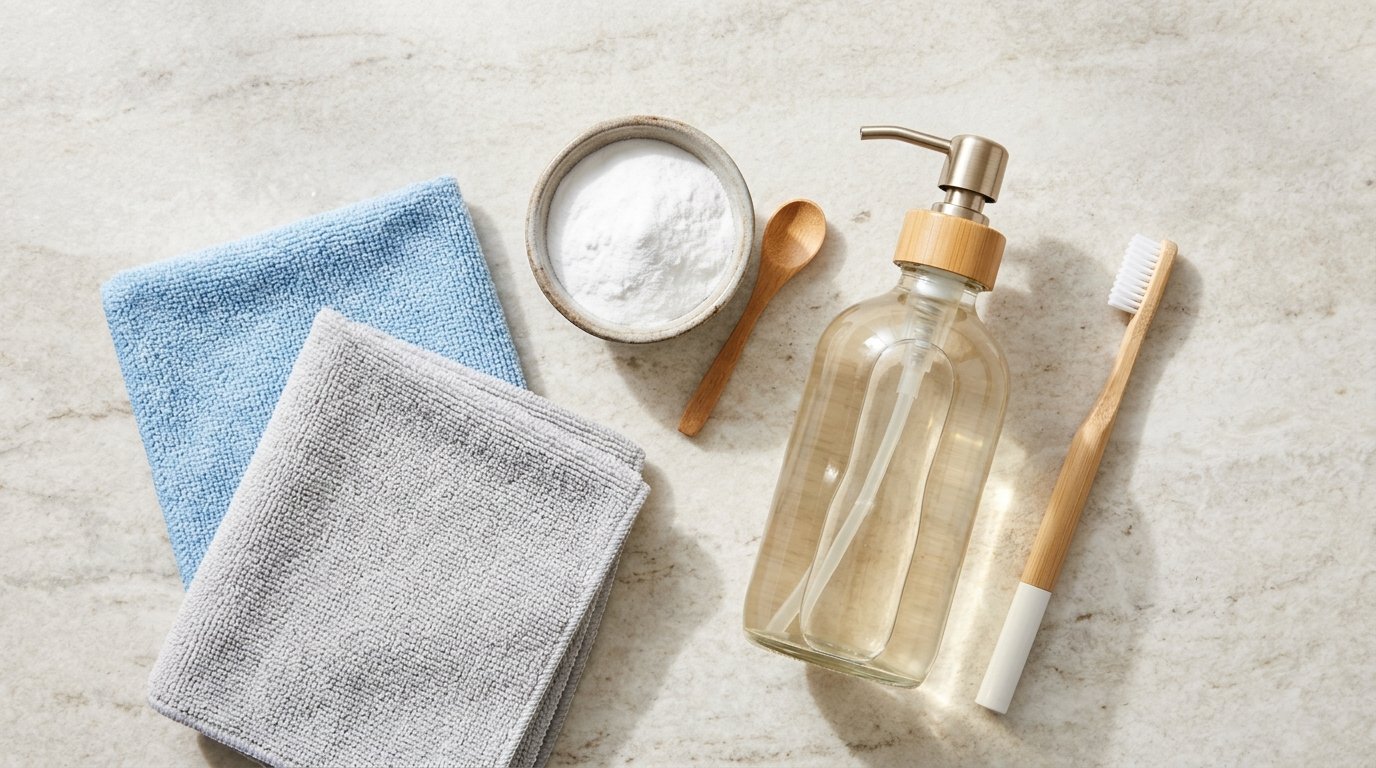
What You Need Before You Start
Most cabinet finishes respond best to gentle surfactants and minimal moisture. Gather these simple tools first:
Three soft microfiber cloths: One for washing, one for rinsing, and one dry towel for buffing.
Mild liquid dish soap: Cuts through cooking oil without stripping sealed wood or paint.
Warm water and a spray bottle: Warm water dissolves grease faster than cold water.
Baking soda: Forms a gentle, non-scratch paste for stubborn food splatters.
Soft-bristle toothbrush: Reaches molding, hinges, and tight corners around pulls.
White vinegar (optional): Safe diluted 1:1 with water on sealed laminate or glass, though best avoided on wood.
How to Clean Kitchen Cabinets Step by Step
Test any cleaning mixture on an inconspicuous spot—like the inside of a lower door—before wiping the visible fronts.
1. Empty and Dry-Dust First
For a deep clean inside and out, remove dishes, spices, and shelf liners. Wipe cabinet faces, tops, and shelves with a dry microfiber cloth or vacuum brush attachment first so loose dust does not turn into gray streaks when wet.
2. Mix a Mild Dish Soap Solution
Add a few drops of mild dish soap to warm water (about one tablespoon per quart).
Spray or dip your cloth—never spray cleaner directly onto the cabinet.
Excess liquid can pool in crevices and swell particleboard.
3. Wipe Top to Bottom in Small Sections
Wring your microfiber cloth until it feels damp, not dripping. Work from upper cabinets down to base cabinets so drips never land on clean doors. Wipe with the grain on wood, or use gentle circles on smooth laminate and painted doors.

Focus on edges around knobs and handles, where hand oils collect fastest, and use a soft toothbrush to lift grime from shaker recesses.
4. Soften Sticky Grease Without Scrubbing
For baked-on grease near the stove, press a warm, soapy cloth against the spot for 15 to 30 seconds to soften the oil, then wipe gently. For stubborn marks, dab on a thin paste of two parts baking soda and one part water, let it sit briefly, and wipe clean.
5. Rinse and Dry Immediately
Leftover soap attracts fresh dust and leaves a cloudy film. Wipe each section with a clean cloth dampened with plain warm water, then buff completely dry right away with a lint-free towel.
How to Clean Kitchen Cabinets by Material
Different surfaces tolerate moisture and acidity differently. Match your method to your kitchen’s finish below:
| Cabinet Material | Best Cleaner | Key Care Rule | Avoid |
|---|---|---|---|
| Sealed Wood (Oak, Maple) | Mild dish soap + warm water | Wipe with the grain and dry immediately | Soaking, ammonia, undiluted vinegar |
| Painted Wood / MDF | Mild dish soap + warm water; baking soda paste for spots | Use light pressure to preserve sheen | Magic Erasers, scouring pads, harsh degreasers |
| Laminate & Thermofoil | Dish soap or 1:1 diluted white vinegar | Keep moisture away from seams and edges | Excess water, abrasive powders, acetone |
| Metal & Hardware | Warm soapy water | Remove knobs to soak if needed; dry thoroughly | Bleach or acid on brass or bronze |
On natural grain surfaces such as white oak kitchen cabinets, keeping moisture minimal prevents the open grain from raising or darkening. Painted cabinets also share the same care rules as interior drywall—if you have read about cleaning apartment walls without ruining the paint, apply that same light touch here.
What Never to Use on Kitchen Cabinets
Abrasive sponges and steel wool: Leave micro-scratches that dull glossy finishes and strip paint.
Bleach and ammonia: Break down protective clear coats and discolor wood stains.
Silicone furniture polishes: Leave a waxy film that traps airborne grease and dust.
Damp dish towels over doors: Moisture trapped on top edges causes swelling and peeling.
A Simple Maintenance Schedule to Prevent Grease Buildup
Once your cabinets are clean, maintaining them takes minutes. Fit these habits into your home cleaning system:
Weekly (5 minutes): Wipe handles, pulls, and doors beside the stove with a dry or barely damp microfiber cloth.
Monthly: Spot-clean cooking splatters near the range hood and wipe inside the trash-can cabinet.
Every 3 to 6 months: Wash top to bottom with warm soapy water, buff dry, and line upper cabinet tops with parchment paper to catch dust and grease.
Renter tip: Run your range hood fan whenever frying or simmering. Capturing airborne oil early keeps rental cabinets move-in ready.
Frequently Asked Questions
Can I use vinegar to clean wood kitchen cabinets?
Undiluted vinegar is too acidic for most wood finishes and can dull polyurethane over time. Stick to mild dish soap and warm water for wood, and save 1:1 diluted vinegar sprays for sealed laminate or glass.
How do I remove sticky residue from cabinets above the stove?
Hold a warm, soapy microfiber cloth against the sticky spot for 20 to 30 seconds to soften the oil before wiping. For lingering spots, use a gentle baking soda and water paste, then rinse and dry immediately.
Are Magic Erasers safe for painted kitchen cabinets?
Use extreme caution. Melamine foam acts like fine sandpaper and can leave dull spots on satin paint or lift dark pigments. Mild dish soap and a microfiber cloth are safer first choices.