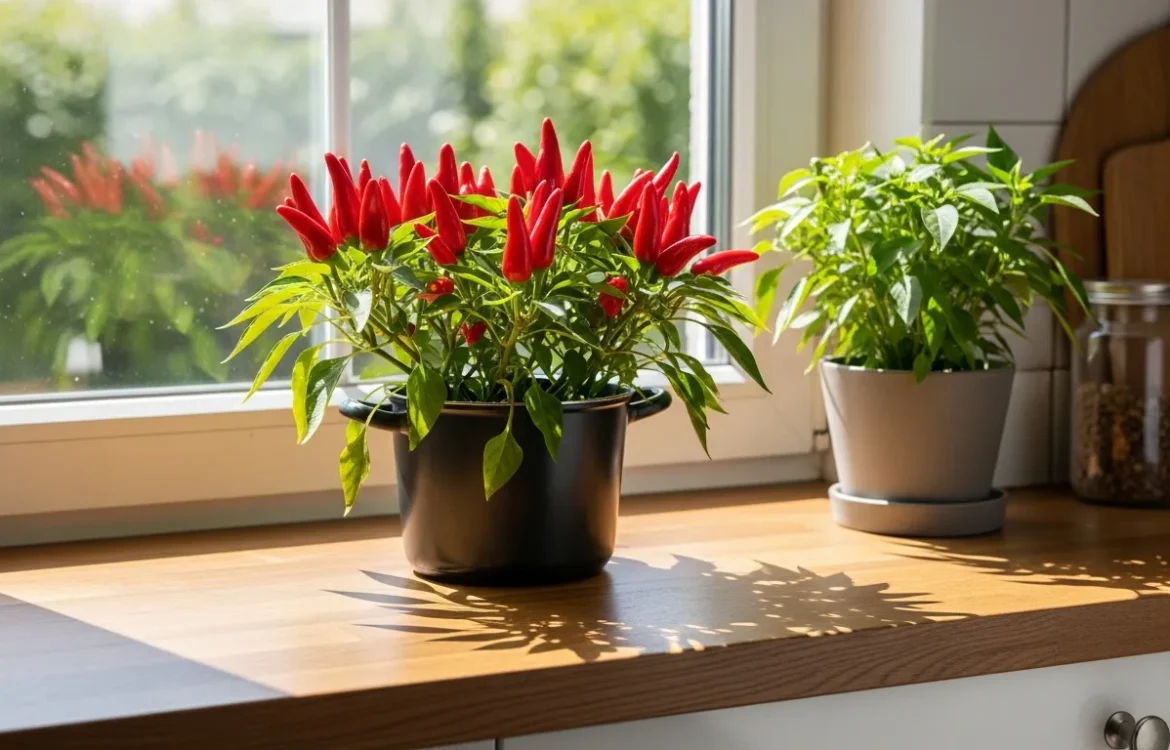
Can You Grow Spicy Chili Peppers on a Small Windowsill?
Choosing the Right Chili Varieties for Small Spaces
Not every chili plant is destined for a windowsill. A gardener must choose compact, determinate varieties that won’t overtake his entire kitchen. Large Bell peppers or tall Poblano plants often struggle in the confined space of a ledge. Instead, he should look for ornamental or dwarf varieties that pack a punch in both heat and aesthetics.
- Apache: A heavy-cropping dwarf chili that produces small, bright red fruits.
- Thai Dragon: Grows upright and stays relatively small, perfect for tight corners.
- Prairie Fire: Tiny but incredibly hot peppers that look like colorful Christmas lights.
- Basket of Fire: A trailing variety that works well if his windowsill has a bit of extra depth.
Light and Temperature: The Fuel for Heat
Chili peppers are sun-worshippers. To produce capsaicin—the compound that gives them heat—the plant needs at least six to eight hours of direct sunlight daily. A south-facing window is the gold standard for any indoor grower. If he notices his plant stretching or becoming “leggy,” it is a clear sign the pepper is searching for more light.
If his apartment doesn’t get enough natural sun, he can easily supplement the environment by learning how to use grow lights for indoor apartment plants to keep the heat levels high. Temperature is equally vital; peppers thrive when the air stays between 70°F and 85°F. He should avoid placing pots near drafty windows during winter, as a sudden chill can cause the plant to drop its flowers prematurely.
Potting, Soil, and Drainage Essentials
A common mistake is using a pot that is too large, which leads to waterlogged soil and root rot. A 6-inch to 8-inch pot is usually sufficient for most windowsill varieties. Ensure the container has ample drainage holes at the bottom. Chili peppers hate “wet feet,” so a well-draining potting mix is non-negotiable.
He should look for a mix containing perlite or vermiculite to improve aeration. To boost growth without expensive chemicals, a gardener can reuse kitchen scraps for apartment plants, providing organic nutrients directly to the soil. Crushed eggshells, for instance, can add much-needed calcium, preventing blossom end rot in his developing peppers.
The Secret to Indoor Pollination
In an outdoor garden, bees and wind handle the heavy lifting of pollination. Indoors, the gardener must take on this role himself. Without pollination, the flowers will simply wither and fall off without producing fruit.
The process is simple: once the flowers open, he should gently shake the plant or flick the stems to distribute the pollen. Alternatively, he can use a small paintbrush or a cotton swab to move pollen from one flower to another. Doing this every few days during the flowering stage ensures a high yield of peppers.
Watering and Feeding for Maximum Yield
Consistency is the hallmark of a successful windowsill harvest. He should wait until the top inch of soil feels dry before watering. Overwatering is the fastest way to kill a chili plant, while underwatering can stress the plant and make the peppers exceptionally (and sometimes unpleasantly) hot.
Once the plant begins to flower, he should switch to a fertilizer high in potassium and phosphorus. This encourages fruit production rather than just leafy green growth. A liquid seaweed extract or a dedicated tomato feed works wonders for indoor chilies, provided he follows the dosage instructions to avoid nutrient burn.
Troubleshooting Common Windowsill Issues
Even the most attentive grower will face challenges. Aphids are the most common indoor pest; these tiny green insects cluster under leaves and suck the sap. He can manage them by wiping the leaves with a damp cloth or using a mild insecticidal soap.
If the leaves turn yellow, it usually indicates a nitrogen deficiency or overwatering. By adjusting his feeding schedule and ensuring the pot isn’t sitting in a saucer of stagnant water, he can quickly bring the plant back to health. Growing chilies is a game of observation; the plant will always tell him what it needs if he pays close attention to the foliage and fruit development.
Frequently Asked Questions
How long does it take for windowsill chilies to ripen?
Depending on the variety, it typically takes 60 to 90 days from potting for the first peppers to reach maturity. He will see them change from green to their final color, such as red, orange, or purple.
Can I grow chili peppers indoors year-round?
Yes, as long as he provides enough light and maintains a warm temperature. In winter, a grow light is almost always necessary to compensate for shorter days.
Why are my chili pepper leaves curling?
Leaf curl is often caused by pests like aphids or mites, or by inconsistent watering. He should check the undersides of the leaves for insects and ensure the soil moisture remains steady.