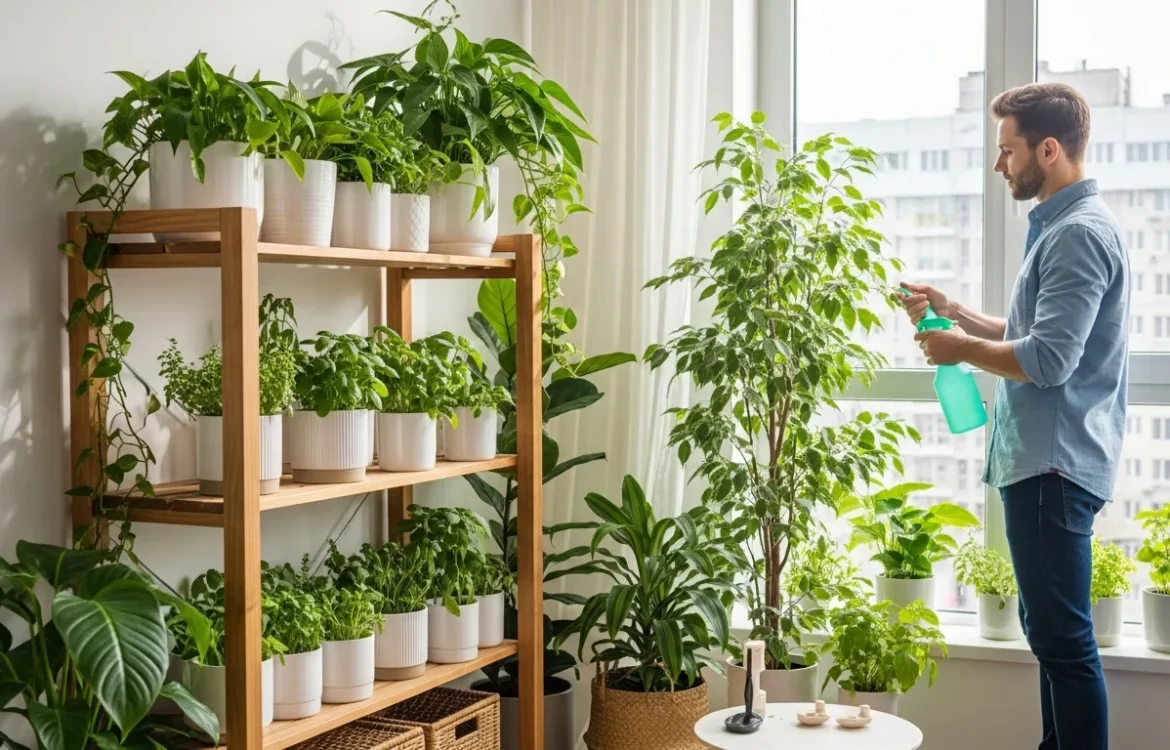
How Can You Start an Indoor Apartment Garden? 7 Practical Tips for Beginners
Assess Your Natural Light Before Buying
The biggest mistake a new gardener makes is choosing a plant based on looks rather than his apartment’s environment. Before he heads to the nursery, he must track the sun. He should spend a Saturday observing which windows get direct beams and for how long. South-facing windows typically offer the most intense light, while north-facing windows provide a soft, consistent glow that suits low-light species.
If he lives in a basement unit or a space shadowed by taller buildings, he isn’t out of luck. He can supplement with LED grow lights. These allow him to cultivate sun-hungry herbs even in the dimmest corners of his living room.
Choose Resilient Starter Plants
A beginner should build his confidence with “unkillable” plants before moving to finicky tropicals. Snake plants, ZZ plants, and Pothos are excellent choices because they tolerate neglect and varying light levels. He will find that these species are forgiving if he forgets to water them for a week.
For those interested in edible yields, starting with a small herb collection is the most rewarding path. Before he buys his first pot, he should consult a comprehensive apartment container gardening guide to understand the basics of vessel selection and how different materials like terra cotta or plastic affect moisture retention.
Invest in High-Quality Potting Mix
He must never use dirt from the outside ground. Outdoor soil is too dense, lacks proper drainage, and often contains pests or pathogens that will thrive in a warm apartment. Instead, he needs a sterile potting mix designed specifically for indoor use.
Using the right potting mix is non-negotiable because garden soil is too heavy and lacks the aeration needed for indoor pots. A good mix usually contains peat moss, perlite, or pine bark to ensure the roots can breathe and water can flow through freely.
Master the Art of Watering
Overwatering kills more apartment plants than underwatering ever will. A man should get into the habit of the “finger test.” He sticks his index finger two inches into the soil; if it feels damp, he waits. If it is bone dry, it is time to water.
- Drainage is key: He should ensure every pot has a hole at the bottom.
- Empty the saucer: After watering, he must discard any excess water sitting in the tray to prevent root rot.
- Consistency: He should try to water his plants at the same time of day, preferably in the morning.
Utilize Vertical Space and Shelving
When floor space is limited, he needs to look up. Wall-mounted planters, hanging baskets, and tiered shelving units allow him to grow a lush jungle without sacrificing his walking path. He can use Command hooks or tension rods to hang lightweight plants like Spider plants or String of Pearls, ensuring he doesn’t damage the walls and lose his security deposit.
He might also consider a dedicated plant stand near a window. This keeps his greenery organized and makes it easier for him to mist his plants or check for pests in one centralized location.
Manage Humidity and Airflow
Apartments, especially during the winter when the heater is running, can become incredibly dry. Most indoor plants are tropical and crave humidity. He can boost the moisture in the air by grouping his plants together, which creates a small microclimate, or by placing a tray of pebbles and water beneath the pots.
Airflow is equally important. Stagnant air can lead to mold or fungal issues. He should occasionally crack a window or run a small fan to keep the air moving around his foliage, ensuring his plants stay vibrant and healthy.
Monitor for Pests Regularly
Even in a high-rise, pests like fungus gnats or spider mites can find their way in. He should inspect the undersides of leaves once a week. If he spots tiny webs or moving dots, he must act quickly. A simple solution of neem oil or insecticidal soap usually does the trick. By catching the problem early, he prevents an infestation from spreading to his entire collection.
Frequently Asked Questions
What are the easiest vegetables for a beginner to grow indoors?
Herbs like basil, mint, and chives are the easiest. If he has a very sunny window, he can also try cherry tomatoes or small chili peppers in deep containers.
How do I know if my plant needs more light?
If he notices his plant is becoming “leggy” (stretching toward the window with large gaps between leaves) or if the leaves are losing their variegation, it is a clear sign the plant is starving for more sunlight.
Can I use tap water for all my indoor plants?
Most plants handle tap water fine, but some sensitive species like Calatheas may dislike the chlorine. He can let his tap water sit out overnight to allow the chemicals to dissipate before using it on his more delicate greenery.