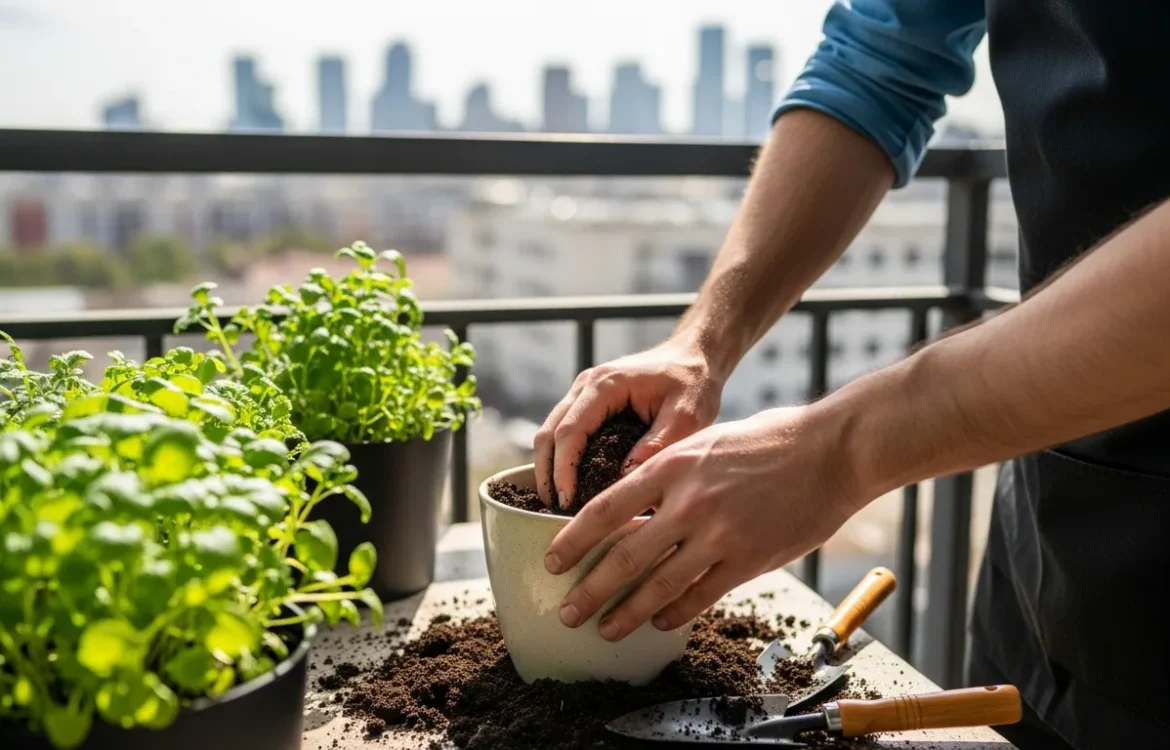
What Is the Best Potting Soil for Apartment Container Gardening?
Why Your Apartment Plants Need Potting Mix, Not Garden Soil
The biggest mistake a man can make when starting his indoor garden is grabbing a bag of cheap topsoil or digging up dirt from a nearby park. Real soil is heavy, compacts easily, and often contains dormant pest eggs or fungi that thrive in the stagnant air of a living room. In a container, that soil turns into a brick, suffocating roots and killing the plant within weeks.
For a successful setup, he needs a soilless potting mix. These mixes are specifically engineered to be lightweight, sterile, and porous. Because containers have limited volume, the medium must work twice as hard to provide oxygen and moisture. When a man starts his first balcony project, he should consult an apartment container gardening guide to understand the spatial constraints of his unit before hauling heavy bags up the stairs.
The Essential Ingredients of a Premium Potting Mix
High-quality potting soil isn’t just one material; it is a blend of components designed to balance water retention with drainage. Here is what he should look for on the label:
- Peat Moss or Coconut Coir: These provide the bulk of the mix. They hold onto water effectively while keeping the mix light.
- Perlite: Those small white rocks that look like Styrofoam. They are actually volcanic glass that creates air pockets, preventing the soil from becoming a soggy mess.
- Vermiculite: Similar to perlite but better at holding moisture. It is excellent for plants that prefer consistently damp (but not wet) conditions.
- Pine Bark: Often found in professional mixes, it adds structure and longevity to the medium.
A man who values his time will choose a mix that already contains a starter fertilizer. This provides his plants with a steady supply of nitrogen, phosphorus, and potassium for the first six weeks. To keep his greens vibrant without chemical smells, he might look into the best organic fertilizers for indoor apartment plants to supplement his potting mix once the initial nutrients are depleted.
Choosing Soil Based on Plant Type
Not all apartment plants have the same thirst. A cactus sitting on a sunny windowsill has vastly different needs than a fern in a dim corner. Matching the soil to the species is the hallmark of an expert gardener.
For Herbs and Vegetables: These are heavy feeders. He should look for a potting mix labeled “Organic Vegetable and Herb.” These usually contain compost or worm castings, providing the rich organic matter needed for edible crops like basil or cherry tomatoes.
For Succulents and Cacti: These plants hate “wet feet.” He needs a gritty, fast-draining mix. If the soil stays damp for more than a few days, the roots will rot. A mix with a high percentage of sand and perlite is mandatory here.
For Tropical Houseplants: Monsteras and Philodendrons prefer an “Aroid mix.” This is a chunky blend with plenty of orchid bark and perlite, mimicking the forest floor where these plants naturally grow.
Managing Weight and Drainage on a Balcony
Weight is a serious consideration for the apartment dweller. If he is gardening on a balcony, he must be mindful of the load-bearing capacity of the structure. Standard potting mixes are light when dry but can become incredibly heavy after a deep watering. Using fabric pots or lightweight resin containers paired with a peat-based mix helps keep the total weight manageable.
Drainage is equally vital for neighbor relations. He should ensure his pots have holes and use saucers to catch excess water. This prevents muddy runoff from dripping onto the balcony below, which is a quick way to get a notice from the property manager. If he finds his soil is drying out too fast in the summer heat, he can add a layer of mulch or moss on top to lock in moisture.
How to Refresh Old Potting Soil
He doesn’t necessarily need to buy new bags every single year. If the plants from the previous season were healthy and pest-free, he can rejuvenate the medium. He should dump the old soil into a large bin, break up any root clumps, and mix in about 25% fresh compost or a high-quality potting booster. This restores the structure and nutrient levels without the waste of throwing away perfectly good material. However, if he dealt with fungus gnats or root rot, it is better to start fresh to avoid infecting new plants.
Frequently Asked Questions
Can I use orchid bark for all my apartment plants?
No. While orchid bark is great for drainage, it doesn’t hold enough water for most vegetables or herbs. It should be used as an amendment rather than a standalone soil for most species.
Is organic potting soil better for indoor use?
Organic mixes are excellent because they use natural nutrient sources, but they can sometimes attract more fungus gnats than sterile synthetic mixes. He should weigh the benefits of organic growth against the potential for minor indoor pests.
How often should I replace the soil in my containers?
For most indoor plants, a full soil change every two years is ideal. This prevents the buildup of salts from tap water and ensures the soil hasn’t become too compacted to allow for proper aeration.