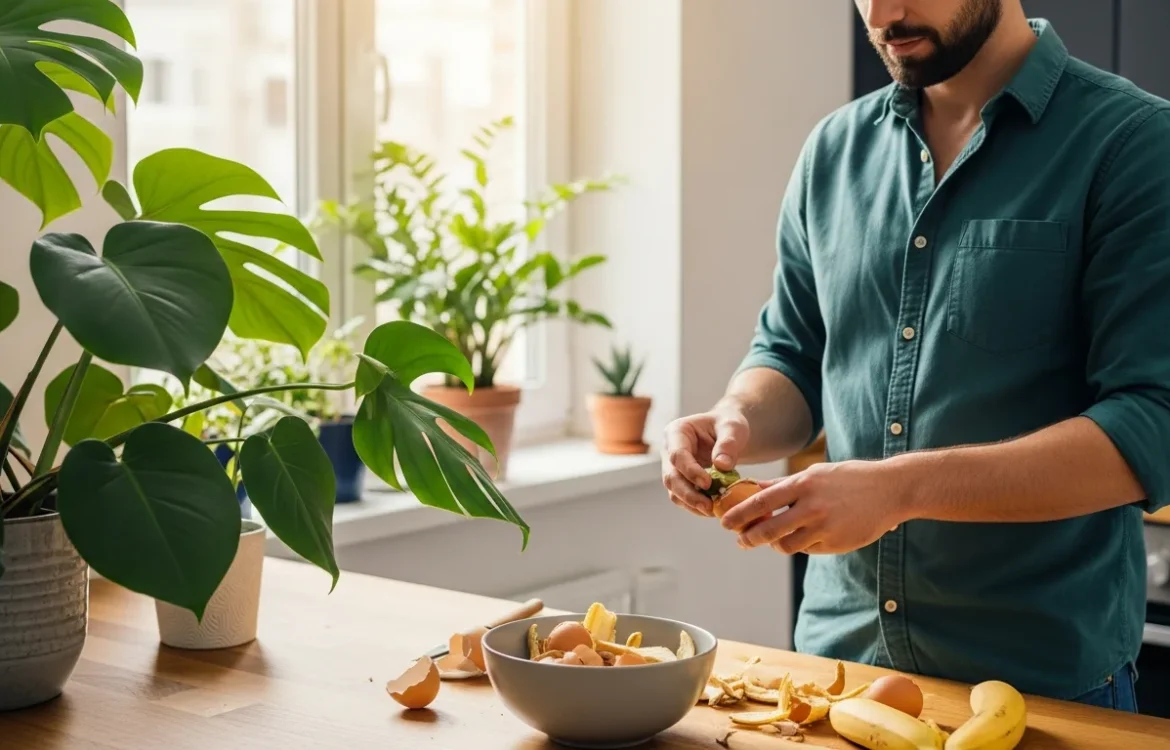
Can You Feed Your Apartment Plants with Kitchen Scraps?
Stop Throwing Away Your Plant’s Favorite Nutrients
Every time a man tosses a banana peel or a handful of coffee grounds into the trash, he is essentially throwing away high-quality fertilizer. In a small apartment, you don’t need a massive backyard compost bin to recycle nutrients. You can turn your daily kitchen waste into a potent growth booster for your indoor greenery with zero specialized equipment.
Reusing scraps is about working smarter, not harder. By understanding the chemistry of your waste, you can provide your plants with nitrogen, potassium, and calcium without spending a dime at the garden center. Here is how to do it effectively without making your living room smell like a landfill.
Banana Peel Tea for a Potassium Boost
Banana peels are packed with potassium, which is vital for root health and flowering. Instead of burying the whole peel in a pot—which can attract fruit flies—create a liquid extract. Simply drop a few peels into a jar of water and let them sit for 24 to 48 hours.
Once the water turns a light brown, he should remove the peels and use the liquid to water his plants. This “tea” delivers nutrients directly to the roots in a form that is easy for the plant to absorb. It is a much cleaner alternative to traditional composting for those living in tight quarters.
Eggshells: The Slow-Release Calcium Source
Calcium is the building block of plant cell walls. If a man notices his plants looking flimsy or dropping new leaves, they might be calcium deficient. Eggshells are the perfect solution. To use them, he must first rinse them thoroughly to remove any protein residue that could rot.
- Crush them fine: Use a mortar and pestle or a blender to turn the shells into a fine powder.
- Mix into the soil: Sprinkle the powder on the top layer of the soil and scratch it in.
- Boiling method: Boil 10-20 shells in a gallon of water, let it sit overnight, and use the strained water for a quick calcium hit.
While these DIY methods are excellent, sometimes a plant needs a more balanced nutritional profile. In those cases, supplementing with the best organic fertilizers for indoor apartment plants can fill the gaps that kitchen scraps might miss.
Coffee Grounds: Nitrogen with a Warning
Used coffee grounds are a famous source of nitrogen, but they must be used with caution in an apartment setting. Because they are highly organic, they can easily develop mold if they stay damp on top of the soil.
A man should never dump a thick layer of wet grounds directly onto his houseplants. Instead, he should dry the grounds completely on a baking sheet first. Once dry, he can lightly mix a tablespoon or two into the potting mix. This improves soil structure and provides a slow release of nitrogen that keeps foliage looking deep green and healthy.
Vegetable Boiling Water: The Hidden Goldmine
The next time he boils pasta, potatoes, or vegetables, he shouldn’t pour that water down the drain. As vegetables cook, they leak micronutrients into the water. Once the water has cooled completely to room temperature, it serves as a nutrient-rich tonic for his plants.
Note: Ensure the water is unsalted. Salt buildup in a small pot can quickly dehydrate and kill an indoor plant by drawing moisture out of the roots.
Preventing Pests and Odors in Small Spaces
The biggest fear for any apartment dweller using kitchen scraps is an infestation. Organic matter attracts insects, so knowing how to deal with gnats in apartment plants is essential if he plans to use DIY fertilizers.
To keep the environment clean, he should always prioritize liquid extracts (teas) or finely ground powders over whole food chunks. Burying scraps deep under the soil surface rather than leaving them on top also prevents odors and keeps pests from finding a breeding ground.
Frequently Asked Questions
Can I use raw meat scraps for my plants?
No. Never use meat, dairy, or oils. These will rot, create a terrible smell, and attract serious pests like cockroaches and rodents. Stick strictly to fruit, vegetable, and grain-based scraps.
How often should I use kitchen scrap tea?
Once every two to four weeks is usually sufficient. Over-fertilizing, even with natural scraps, can lead to nutrient burn or salt buildup in the soil.
Do I need to worry about the pH of my soil?
Coffee grounds are slightly acidic. If he has plants that prefer alkaline soil, he should use grounds sparingly. Most common houseplants, however, handle the slight acidity of coffee and banana tea very well.