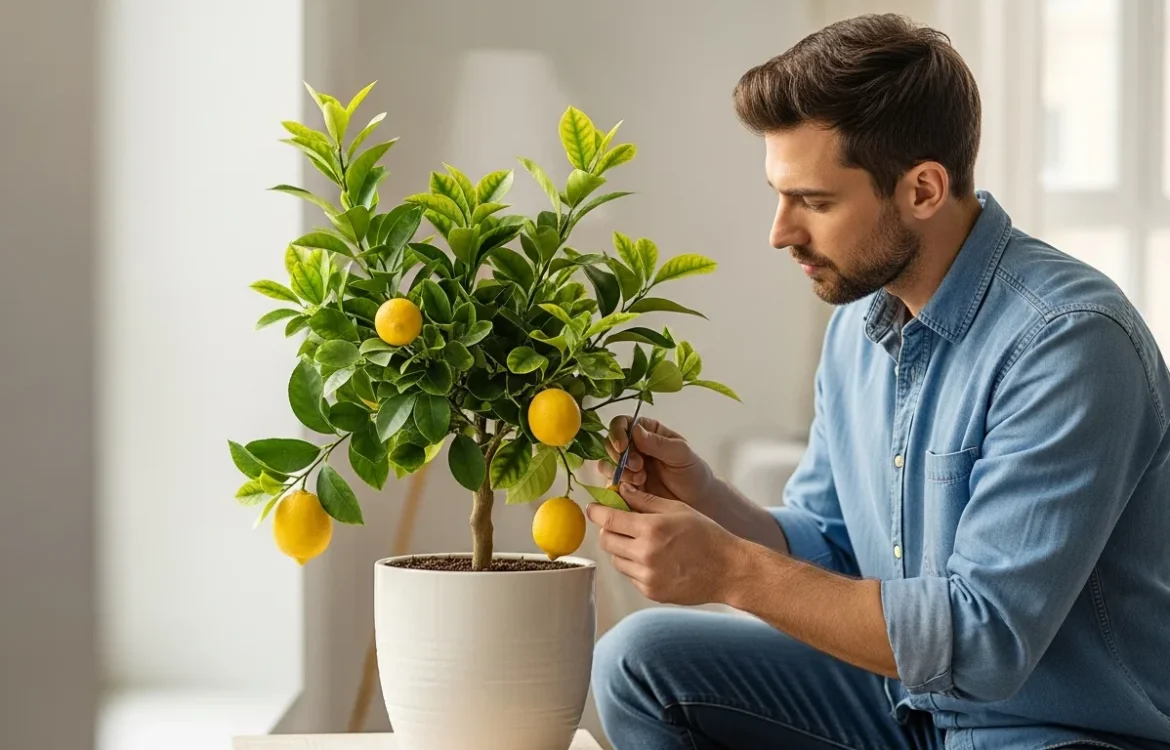
Can You Successfully Grow a Lemon Tree in a Small Apartment?
Choosing the Right Lemon Variety for Indoor Living
He cannot simply grab a seed from a grocery store lemon and expect a harvest in his living room. Most commercial lemons grow into massive trees that require outdoor conditions to thrive. For an apartment dweller, the Improved Meyer Lemon is the undisputed king. It is a hybrid between a lemon and a mandarin, making it naturally shrub-like and more resilient to indoor environments.
Other suitable options include the Ponderosa lemon, known for its oversized fruit, or the Variegated Pink Eureka. These varieties are among the best indoor trees for small apartments because they remain manageable in size while producing fragrant blossoms that double as a natural air freshener for his home.
Mastering the Light Requirements
Citrus trees are sun-worshippers. To produce fruit, a lemon tree needs at least 8 to 12 hours of direct sunlight daily. In an apartment setting, a south-facing window is his best bet. If he notices the leaves turning a dark, dull green or dropping off entirely, the tree is likely starving for light.
Natural light alone is often insufficient, especially during winter months or in north-facing units. If his space lacks the necessary exposure, he should learn how to use grow lights for indoor apartment plants to fill the gap. High-intensity LED grow lights positioned a few inches above the canopy can provide the full-spectrum rays the tree needs to photosynthesize and develop fruit sugars.
The Importance of Drainage and Soil Quality
Lemon trees hate “wet feet.” If the roots sit in stagnant water, they will rot within weeks. He must choose a pot with ample drainage holes at the bottom. A terracotta pot is often preferred over plastic because it allows the soil to breathe and helps moisture evaporate more evenly.
- Soil Mix: Use a well-draining cactus or citrus potting mix. Avoid heavy garden soils.
- Pot Size: Start with a pot slightly larger than the root ball. Moving a small tree into a massive pot can lead to overwatering issues.
- Elevation: He should place the pot on a tray filled with pebbles to catch excess water while keeping the base of the pot dry.
Watering and Humidity Management
A common mistake he might make is watering on a strict schedule. Instead, he should stick his finger two inches into the soil; if it feels dry, it is time to water. When he waters, he should do so thoroughly until water runs out of the drainage holes, then empty the saucer immediately.
Apartments are notoriously dry, especially when the heater is running. Lemon trees prefer 50% humidity or higher. He can boost the moisture levels around his tree by misting the leaves daily or using a dedicated humidifier. This prevents the leaf tips from browning and keeps the tree’s pores open for gas exchange.
Hand-Pollination: Playing the Role of the Bee
Since there are no bees inside an apartment to move pollen from flower to flower, he must take over this job. When the tree blooms, he will see small yellow centers inside the white petals. He can use a small paintbrush or a cotton swab to gently rub the pollen from one flower and transfer it to the sticky center of another.
This simple manual task ensures that the blossoms actually turn into fruit rather than just falling off the branch. He should perform this every few days while the tree is in full bloom to maximize his potential harvest.
Feeding and Pruning for Maximum Yield
Indoor citrus trees are heavy feeders. During the growing season (spring through fall), he should apply a high-nitrogen liquid fertilizer every three to four weeks. This provides the fuel needed for new leaf growth and fruit development. In the winter, he can scale back feeding as the tree’s metabolism slows down.
Pruning is also essential for maintaining a compact shape. He should trim back any “suckers”—shoots that grow from the base of the trunk—and thin out crowded branches to allow light to reach the center of the tree. This keeps the plant healthy and ensures he isn’t losing valuable floor space to a wild, unkempt tree.
Frequently Asked Questions
How long does it take for an indoor lemon tree to produce fruit?
If he buys a 2-3 year old nursery tree, he can expect fruit within the first year. If he starts from a cutting, it may take 2-3 years to reach maturity.
Why are my lemon tree leaves falling off?
Leaf drop is usually caused by a sudden change in temperature, a lack of light, or overwatering. He should check for drafts from air conditioners or heaters and ensure the soil isn’t waterlogged.
Can a lemon tree survive in a low-light apartment?
Not without help. While the tree might survive for a few months, it will not thrive or produce fruit without supplemental grow lights to mimic the intensity of the sun.
Do I need to repot my lemon tree every year?
No, lemon trees actually prefer being slightly root-bound. He should only repot every 2-3 years when he sees roots growing out of the drainage holes or if the tree becomes top-heavy.