
How to Get Rid of Fruit Flies in Your House or Apartment: Fast, Renter-Friendly Solutions
You bring home fresh bananas on Saturday, and by Tuesday afternoon, a persistent swarm of tiny insects is hovering over your kitchen counter. Fruit flies (Drosophila melanogaster) multiply rapidly—a single female can lay up to 500 eggs on ripening produce, turning a clean kitchen into a battleground in just days.
For apartment dwellers, fruit flies present unique challenges: shared plumbing, trash chutes, and lease limits on chemical sprays. Fortunately, eliminating them does not require harsh exterminators. By removing food sources, sanitizing sink drains, and setting high-yield DIY traps, you can eradicate fruit flies completely within 48 to 72 hours.
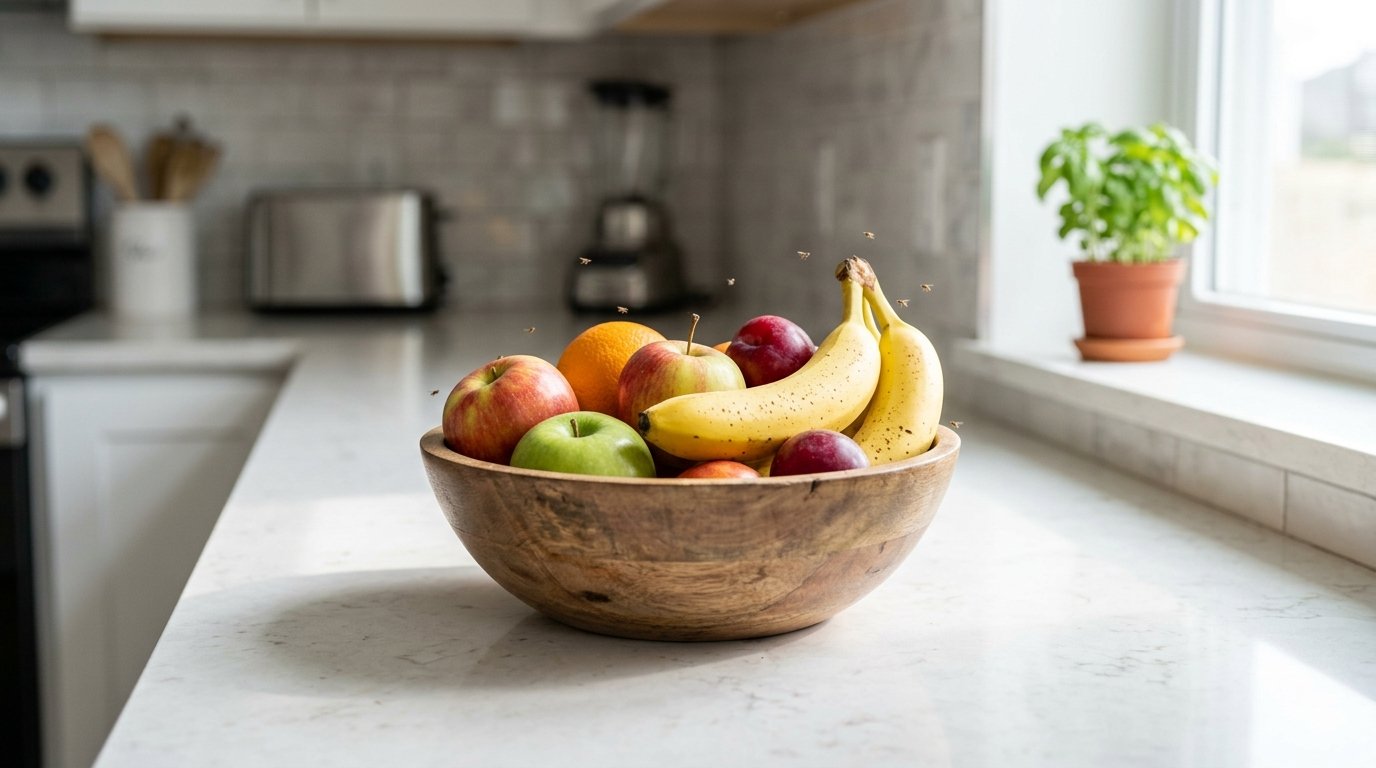
Where Do Fruit Flies Come From in the First Place?
Contrary to common myth, fruit flies do not materialize spontaneously from rotting food. In almost every household outbreak, they hitchhike into your home from the grocery store. Microscopic eggs are often already deposited beneath the skins of bananas, tomatoes, and stone fruits while sitting on supermarket shelves.
In a warm room, those eggs hatch into larvae within 24 to 30 hours, feed on yeast and sugars, and emerge as reproductive adults in barely a week. Beyond fresh fruit, adult flies gravitate toward damp organic environments:
- Unrinsed recyclables: Residual beer bottles, wine glasses, and soda cans.
- Sink drains and disposals: Organic biofilm adhering to disposal splash guards and P-traps.
- Damp kitchen items: Sour sponges, wet mop heads, and unwashed dish cloths.
- Pantry staples: Forgotten onions or soft potatoes stored in dark cabinets.
Fruit Flies vs. Drain Flies vs. Fungus Gnats: Quick ID Guide
Before mixing traps, confirm your pest. Sweet vinegar traps will not catch fungus gnats or drain flies. Here is how to identify them instantly:
| Pest | Appearance | Breeding Site | Targeted Solution |
|---|---|---|---|
| Fruit Fly | Tan/amber body, red or dark eyes, ~1/8 inch | Ripe produce, open trash, sour sponges | Apple cider vinegar dish soap traps; chill fruit |
| Drain Fly | Moth-like fuzzy wings, dark gray body, ~1/8 inch | Sludge inside plumbing pipes and disposals | Baking soda & vinegar scrub; boiling water flush |
| Fungus Gnat | Slender, mosquito-like body, long thin legs | Damp houseplant soil and decaying roots | Let soil dry out completely; yellow sticky traps |
The 2 Best DIY Fruit Fly Traps That Actually Work
Skip smelly commercial chemicals. These two homemade traps use common pantry staples and capture active adult flies within hours.
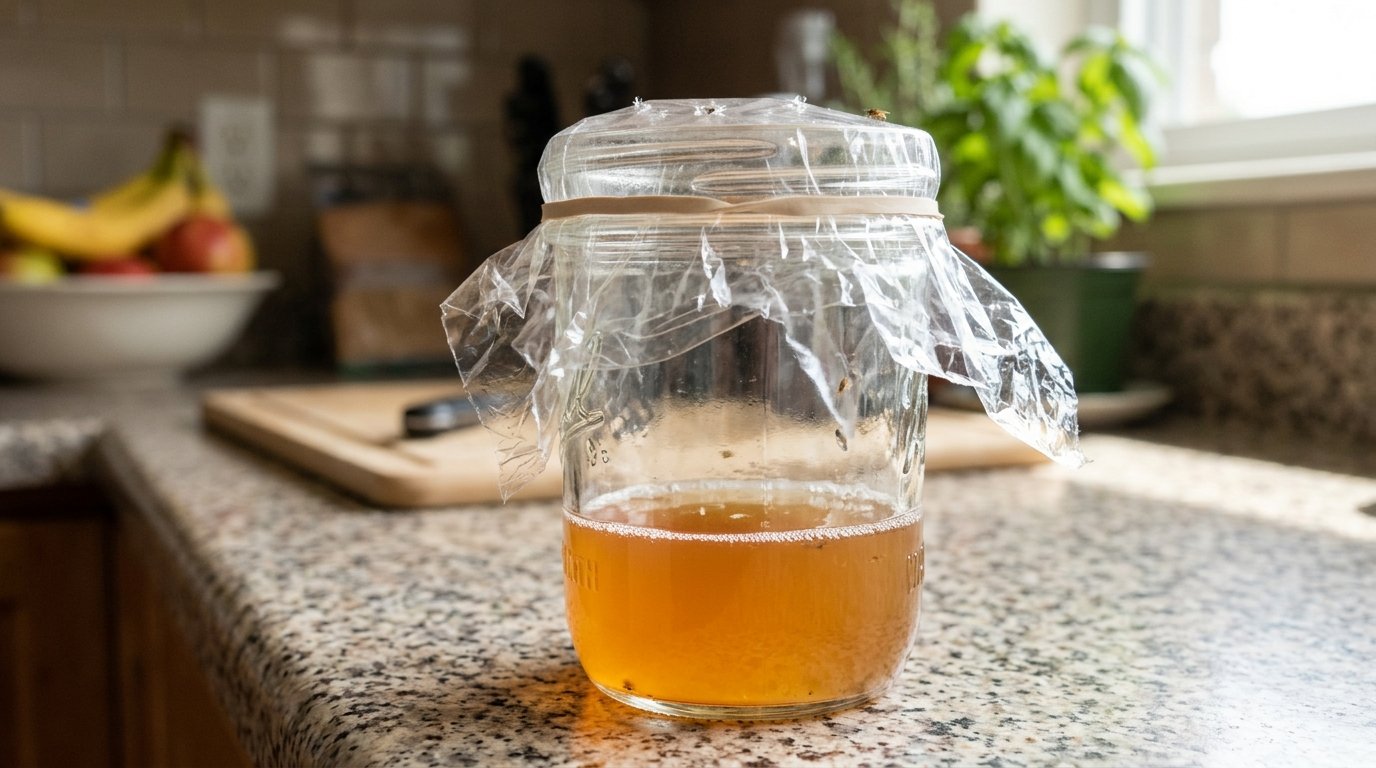
1. The Apple Cider Vinegar & Dish Soap Bowl (The Gold Standard)
Apple cider vinegar (ACV) smells of fermenting apples, drawing flies in from across the room. However, flies are light enough to land on liquid and take off again. Adding dish soap breaks the liquid’s surface tension so flies sink immediately.
Materials: A small glass ramekin or mason jar, 1/2 cup apple cider vinegar, and 2 drops of liquid dish soap.
Setup: Pour vinegar into the jar and gently stir in the dish soap without making foam. Cover tightly with plastic wrap, secure with a rubber band, and poke 6 to 8 small holes using a toothpick.
Placement: Set the trap beside your sink, trash bin, or fruit bowl. Refresh every 24 to 48 hours until no flies remain.
2. The Paper Cone & Wine Funnel Trap
If you lack cider vinegar, leftover red wine, beer, or a ripe banana slice works equally well. Place the bait in a drinking glass. Roll a sheet of paper into a funnel, tape the side, and snip a 1/4-inch hole at the tip. Insert the funnel tip-down into the glass, keeping the tip an inch above the bait. Flies fly in easily but cannot locate the small funnel exit.
How to Clear Fruit Flies from Kitchen Sink Drains
Traps catch flying adults, but if larvae continue to hatch inside your plumbing, the swarm persists. Garbage disposals and P-traps collect organic film that serves as a breeding nursery.
Renter tip: Avoid pouring pure bleach down rental drains. Bleach hardens slimy biofilm without dissolving it and can damage plumbing seals. Instead, use this non-corrosive flush:
Scrub the rubber disposal guard: Wear gloves and use an old toothbrush with dish soap to scrub underneath the black rubber splash guard where sludge gathers.
Foam with baking soda and vinegar: Pour 1/2 cup of baking soda down the drain, followed by 1 cup of white vinegar. Let the natural foaming action loosen grime for 15 minutes.
Flush with boiling water: Pour a kettle of boiling water down the drain to wash away softened residue and destroy lingering larvae. Repeat for 3 consecutive evenings.
Step-by-Step Apartment Kitchen Deep Clean
To eliminate fruit flies permanently, pair your traps with a rapid sanitization routine. For a complete room-by-room maintenance plan, consult our Apartment Cleaning Checklist: Your Complete Guide for a Spotless Home.

Wash produce immediately: Swish fresh fruits and vegetables in cool water with 2 tablespoons of baking soda to wash away hitchhiking eggs, then dry thoroughly.
Store fruit in the refrigerator: Move bananas, tomatoes, and stone fruits into the fridge during an active outbreak. Cold halts egg hatching.
Sanitize bins and compost caddies: Empty kitchen trash daily and wipe bins with disinfectant. If collecting food scraps, choose a carbon-filtered container from our review of which apartment compost bins actually stay odorless.
Keep sink basins dry: Fruit flies need moisture to thrive. Wipe counters and sink basins dry with a microfiber cloth before bed.
Natural Repellents to Prevent Future Swarms
Once your kitchen is clean and existing flies are gone, simple natural repellents will keep new flies from settling in:
Windowsill basil and mint: Fruit flies dislike aromatic herb oils. Keeping a potted herb on your sill is both practical and decorative. See our tips on how to keep an indoor apartment herb garden alive.
Peppermint spray: Mix 10 drops of peppermint essential oil with water in a small spray bottle. Lightly spritz around trash cans, window frames, and sink edges.
Check window screens: Ensure apartment window screens fit tightly without tears, especially on warm summer evenings.
When to Contact Your Landlord or Property Manager
In standard leases, minor indoor pest control is typically tenant maintenance. However, if you have maintained spotless counters and active traps for over a week with zero improvement, the source may be external. Notify property management if you suspect an adjacent vacant unit, an infested trash chute, or a plumbing leak inside wall cavities.
Frequently Asked Questions
Do fruit flies bite humans or pets?
No. Fruit flies lack biting mouthparts. However, they can mechanically transfer bacteria from drains and rotting food onto clean kitchen surfaces.
How long do fruit flies live without food?
Adults can survive up to 40 days when food is abundant, but without accessible moisture or open sugars, they dehydrate and die within 24 to 48 hours.
Can I pour bleach down the sink to kill fruit flies?
Bleach is generally ineffective against drain larvae because it runs past without penetrating the thick organic biofilm. Baking soda, vinegar, and boiling water work much better and protect rental plumbing.