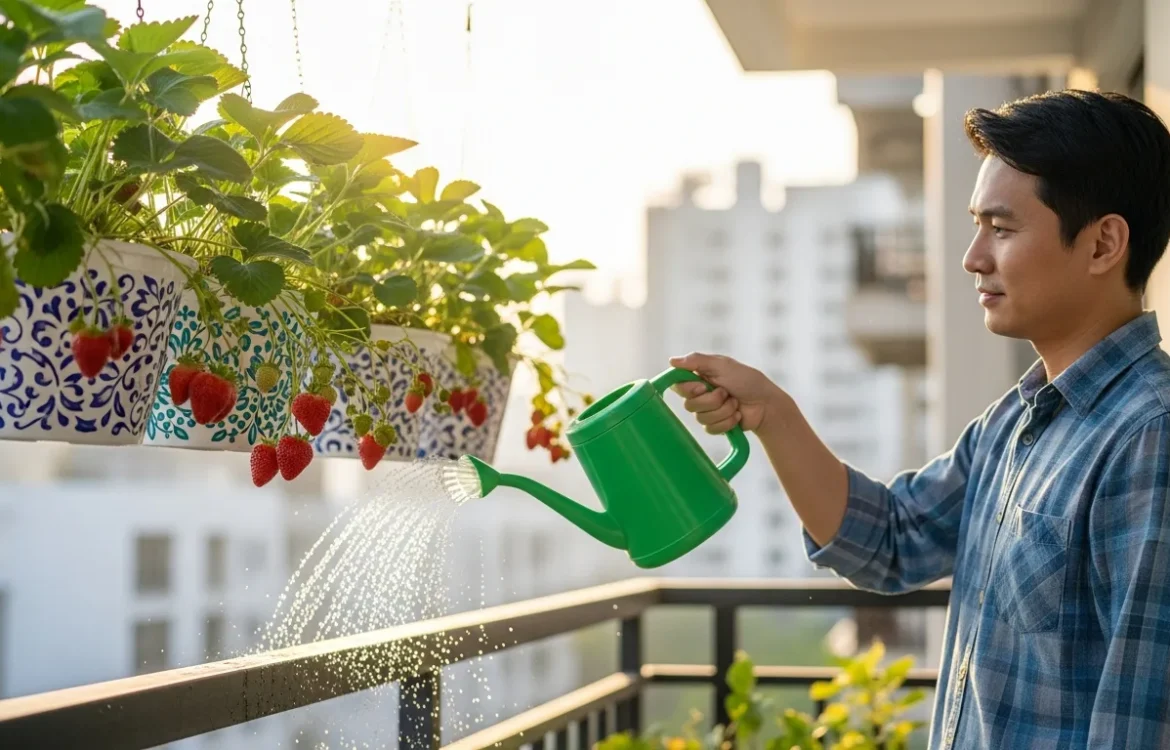
Can You Grow Strawberries in Hanging Pots on a Balcony?
The Secret to Balcony Strawberry Success
Fresh, sun-ripened strawberries are often associated with sprawling country gardens, but a man doesn’t need an acre of land to enjoy a harvest. If he has a balcony and a few well-placed hooks, he can grow high-quality fruit right outside his door. Hanging pots are particularly effective because they save floor space, keep the berries away from ground-dwelling pests, and allow the fruit to dangle cleanly in the air.
Growing strawberries in the air requires a different approach than traditional gardening. He must prioritize drainage, sunlight, and variety selection to ensure his plants don’t just survive, but thrive. When done correctly, a single hanging pot can produce a steady stream of berries throughout the summer.
Choosing the Right Strawberry Variety
Not all strawberries are built for life in a hanging basket. A man should avoid “June-bearing” varieties if he wants a consistent harvest, as they produce one large crop and then stop. Instead, he should look for Everbearing or Day-neutral varieties. These types produce fruit intermittently from late spring until the first frost.
- Albion: Known for large, firm berries and excellent disease resistance.
- Seascape: Highly productive and handles heat better than most varieties.
- Tristar: A compact plant that produces smaller, intensely sweet berries, perfect for tight spaces.
Selecting the Perfect Hanging Pot
The container is the plant’s entire world. A man should choose a pot that is at least 10 to 12 inches in diameter. While plastic pots retain moisture well, coco-fiber liners offer superior aeration, though they dry out faster. Regardless of the material, drainage holes are non-negotiable. Strawberries hate “wet feet,” and standing water will quickly lead to root rot.
Before hanging the pot, he must ensure the balcony railing or ceiling hook can support the weight of wet soil. A fully watered 12-inch pot can be surprisingly heavy. This setup is a core component of a successful apartment container gardening guide, allowing him to utilize vertical space that would otherwise go to waste.
The Right Soil and Planting Technique
Standard garden soil is too heavy and compact for hanging pots. He should use a high-quality potting mix enriched with organic matter. A mix containing peat moss, perlite, and compost provides the light, airy structure strawberries crave.
When planting, he must be careful with the “crown”—the point where the roots meet the stems. If he buries the crown, it will rot; if he leaves it too high, the roots will dry out. The goal is to set the plant so the midpoint of the crown is level with the soil surface. He should space 3 to 4 plants around the edges of a 12-inch basket to give them room to spill over the sides.
Sunlight and Watering Requirements
Strawberries are sun-worshippers. To produce sugar and ripen the fruit, the plants need at least 6 to 8 hours of direct sunlight daily. If his balcony is shaded, he might find the plants grow plenty of leaves but very little fruit. He should rotate the hanging pot every few days to ensure all sides of the plant receive equal exposure.
Watering is the most frequent task he will face. Because hanging pots are exposed to wind on all sides, they dry out much faster than pots on the ground. He should check the soil daily by sticking his finger an inch deep; if it feels dry, it’s time to water. Understanding how often to water balcony container plants is the difference between a bountiful harvest and a withered vine.
Feeding and Maintenance for Maximum Yield
Since the plants have a limited amount of soil, they will quickly exhaust the available nutrients. A man should apply a balanced liquid fertilizer every two weeks during the growing season. High-potassium fertilizers are particularly helpful once flowers appear, as they encourage fruit development.
He should also keep an eye out for “runners”—long, leafless stems that the plant sends out to create clones of itself. While these are great for expanding a garden, they drain energy away from fruit production. In a hanging pot, he should snip these off immediately so the plant focuses all its strength on growing big, juicy berries.
Dealing with Pests and Birds
One of the biggest advantages of hanging pots is that slugs and snails rarely reach the fruit. However, birds are a different story. They can spot a red berry from a mile away. If he finds his harvest is being stolen, he can drape a lightweight bird netting over the basket or use reflective tape to scare them off. Since he is growing on a balcony, he has the advantage of being able to monitor his plants closely every time he steps outside.
Frequently Asked Questions
How many strawberry plants can fit in one hanging basket?
For a standard 12-inch hanging basket, 3 to 4 plants are ideal. This provides enough room for the root systems to develop without competing too much for nutrients and water.
Do I need to bring my hanging strawberries inside for winter?
Strawberries are perennials, but their roots are vulnerable to freezing in hanging pots. He should either move the pot to an unheated garage or bury the pot in the ground (if possible) to insulate the roots until spring.
Why are my balcony strawberries small and sour?
Small, sour berries are usually a sign of insufficient sunlight or a lack of potassium. He should ensure the plants get at least 6 hours of sun and use a fruit-specific fertilizer once blooming begins.