How to Test for Mold in House
If you catch a musty odor in your hallway or spot dark speckles along a baseboard, your first instinct might be to buy a test kit. Before spending money on lab fees, knowing how to test for mold in your house starts with a simple rule: in most cases, you do not need to test visible mold to know you have a moisture problem.
Both the U.S. Environmental Protection Agency (EPA) and the Centers for Disease Control and Prevention (CDC) advise that routine sampling is unnecessary when mold is already visible or smelled. Identifying the species does not change the next step: stopping the water source and removing the growth safely. Still, targeted home mold testing helps when you suspect hidden mold behind drywall, need to confirm whether a stain is mold or soot, or want documentation for a landlord.
Do You Actually Need a Mold Test?
Because no federal limits exist for indoor mold spore counts, a test cannot certify whether a home is “safe” or “unsafe” (CDC/NIOSH). Use this quick filter before buying a kit:
- Skip testing when mold is visible: Focus on drying and cleanup. Under EPA guidelines, patches under 10 square feet (about 3 by 3 feet) can usually be cleaned yourself, while larger areas or HVAC contamination require a pro.
- Skip testing to predict health risks: Individual sensitivities vary widely, so spore counts cannot predict who will get sick (CDC).
- Use targeted testing for hidden or disputed mold: A tape-lift sample distinguishes mold from dirt or soot (EPA), while air sampling helps locate hidden sources or verify post-cleanup clearance (InterNACHI).
If you rent and notice water stains or recurring dampness, review our guide on signs of a bad apartment to document habitability red flags early.
Types of Mold Tests Compared: Costs and Accuracy
While professional mold inspection costs average around $689 ($303 to $1,075 typically), budget DIY kits often mislead renters and homeowners. Here is how the main options compare:
| Test Type | Typical Cost | Accuracy | Best For & Key Drawback |
|---|---|---|---|
| DIY Petri Dish / Settling Plate | $10–$50 | Very Low | Cheap, but gravity plates almost always grow background spores and miss slow growers. |
| Tape-Lift or Swab Surface Test | ~$50 (tape lab) to $200–$300 (pro swab) | High for visible spots | Confirms if a stain is mold vs. dirt, but cannot detect hidden mold elsewhere. |
| Air Sampling (Spore Traps) | $250–$350 (up to $700) | Moderate to High (with outdoor control) | Measures airborne spores/m³ to flag hidden growth; requires simultaneous outdoor baseline. |
| ERMI Settled Dust DNA Test | $200–$600 | Research-only | EPA advises against ERMI for homes; reflects historical dust, not active growth. |
| Full Professional Inspection | $303–$1,075 ($689 avg.) | Highest | Combines moisture meters, thermal imaging, and lab samples; hire an independent inspector. |
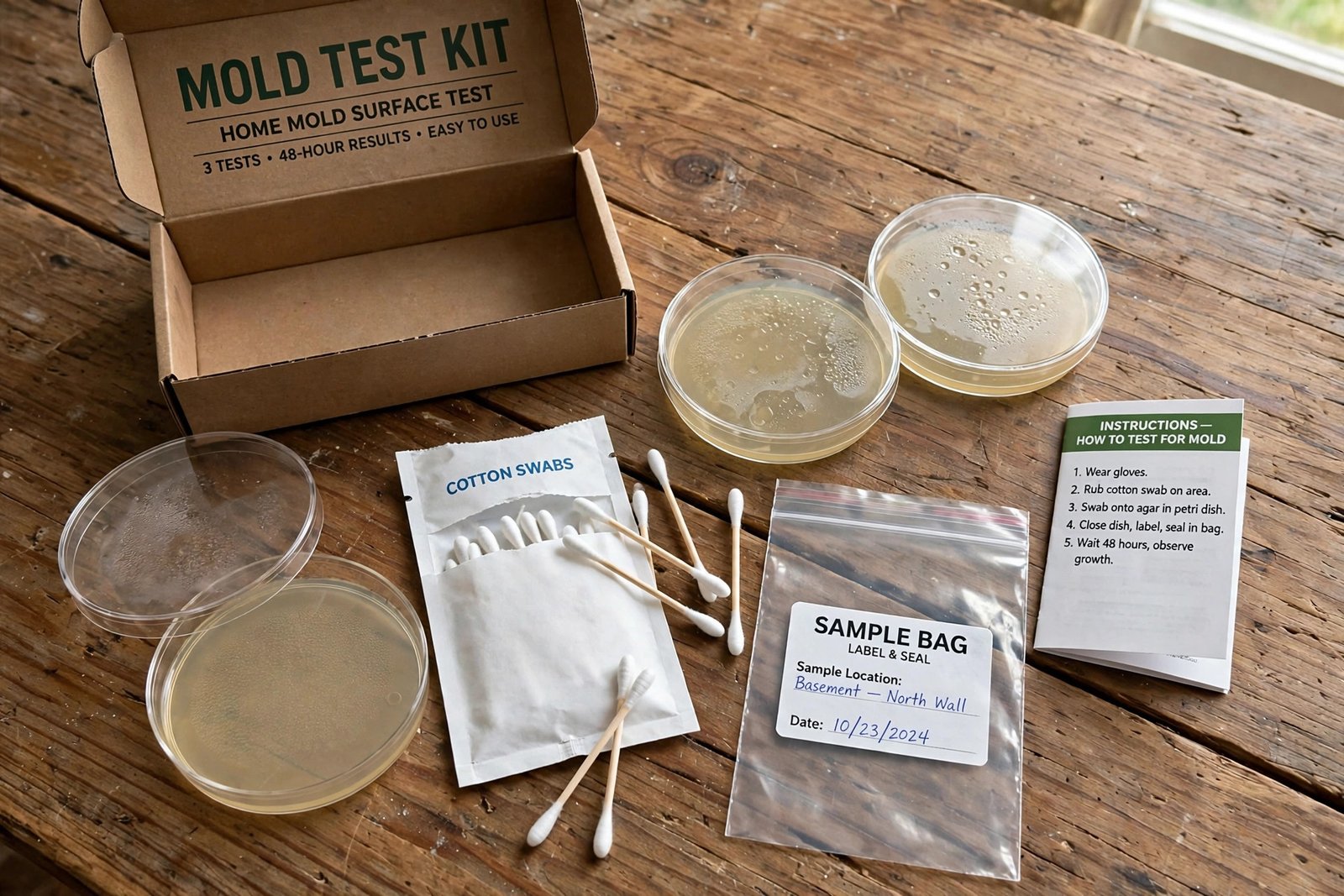
Many people buy $10–$20 settling plates only to panic when mold appears. Because background spores float in normal indoor air everywhere, passive dishes almost always grow mold without proving an active indoor colony exists (Georgetown EHS; Restoration Doctor). Likewise, the EPA cautions that ERMI dust DNA kits are unvalidated research tools and should not guide home decisions.
How to Check for Hidden Mold Step by Step
Before paying for air sampling for mold, follow these steps to locate moisture and hidden growth.
1. Scan for Visual Clues Without Cutting Drywall
Use a flashlight to check under sinks, behind toilets, along window sills, behind furniture on exterior walls, and under basement carpet (EPA). Watch for bubbling paint, warped baseboards, or water rings. Never rip wallpaper or cut suspect drywall yourself—disturbing a cavity without containment can release spores throughout your home (EPA). Also avoid patching damp drywall before fixing leaks, as noted in our apartment wall repair guide.
2. Trace Musty Odors to Their Source
A musty smell with no visible mold points to microbial volatile organic compounds (MVOCs) released by growing mold behind walls or under floors (Restoration Doctor). Pinpoint the strongest room, then sniff near outlets, baseboards, closets, and HVAC vents, noting if odors worsen after rain, showers, or AC cycles.
3. Measure Indoor Humidity and Material Moisture
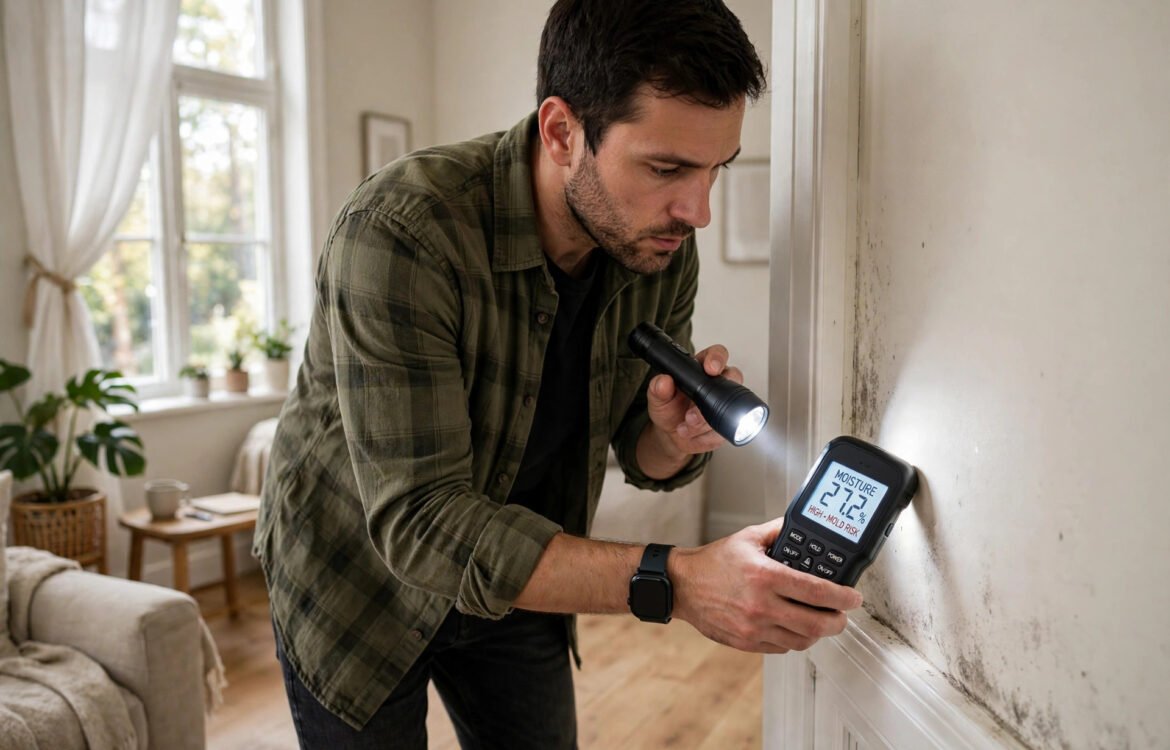
A $15–$40 digital hygrometer or pinless moisture meter gives far better data than a petri dish. Keep indoor relative humidity below 60%—ideally 30% to 50% (EPA; CDC). Lower-level renters can see our tips on keeping a garden-level apartment dry. When scanning drywall or framing with a moisture meter, always take a dry baseline reading on an unaffected wall first (Mass.gov). Dry wood reads 7%–12%, while readings above 17%–20% signal active moisture risk (InterNACHI).
4. Check HVAC Vents, Bathrooms, and Basements
Confirm bathroom exhaust fans vent outdoors, and check HVAC drip pans, filters, and vents for standing water or dark buildup. Turn off your HVAC system if you suspect contamination so it does not spread spores (EPA). For cleaner airflow, see our guide on HVAC filters and True HEPA air purifiers, and add vent checks from our apartment cleaning checklist.
What to Do After You Find Moisture or Mold
Drying wet materials within 24 to 48 hours prevents mold growth in most cases (EPA). For minor surface spots, skip harsh bleach (and never mix bleach with ammonia) and read how to clean apartment walls without ruining the paint. Renters should take dated photos, video, and moisture readings before contacting their landlord—just as you would when protecting your apartment security deposit—and request an independent certified inspector if hidden leaks persist.
Frequently Asked Questions
Is mold testing necessary if you can already see it?
No. Both the EPA and CDC state that if mold is visible, sampling is unnecessary because fixing the moisture source and physically removing the mold stay the same regardless of color or species.
Are DIY mold test kits accurate?
Cheap petri dish kits have very low accuracy because background spores exist in every home and settle onto the dish by gravity. A targeted lab-analyzed tape-lift sample is far better for confirming whether a visible stain is mold.
How much does a professional mold test cost?
A full professional mold inspection averages $689 nationally ($303 to $1,075 typically), while standalone air sampling with outdoor baseline controls runs $250 to $350.
How do I test for hidden mold behind walls?
Trace musty odors and scan baseboards, window frames, and plumbing walls with a pinless moisture meter against a dry baseline wall. If readings stay elevated, hire an independent certified inspector for thermal imaging, borescopes, or controlled air sampling.