
How to Get Smoke Smell Out of a House: A Practical, Step-by-Step Guide
Whether you moved into a rental where a previous tenant smoked indoors, burned dinner on the stove, or dealt with wildfire haze, smoke odor can feel impossible to shake. Air fresheners only mask the stench temporarily. To permanently solve how to get smoke smell out of house spaces, you must physically remove the microscopic tar, soot, and gases trapped in your air, hard surfaces, and soft fabrics.
Understanding why the odor lingers makes cleanup easier. Indoor air research cited by COIT notes that 80% to 90% of nicotine from cigarette smoke adsorbs onto indoor surfaces rather than staying in the air. That sticky film coats walls, ceilings, curtains, and carpets, slowly releasing odors for months. Follow this renter-friendly sequence to clear the smell without damaging your home.
1. Remove the Source and Cross-Ventilate Immediately
Start by clearing whatever is actively releasing odor molecules. Empty ashtrays, seal burnt items in outdoor trash bags, and vacuum loose ash with a HEPA-filtered vacuum.
Next, open windows and exterior doors on opposite sides of your home to create a cross-breeze. Place a box fan in one window facing outward to push smoky air outside, and set a second fan in an opposite window pulling fresh air in. One important exception: if the odor comes from active wildfire smoke outdoors, American Home Shield advises keeping windows closed until outside air quality improves.
2. Reset Your HVAC Filters and Run the Right Air Purifier
Your heating and cooling system circulates air through every room. If smoke particles clog a return filter, running the AC or furnace blows the smell straight back into clean rooms. Replace disposable HVAC filters right away, and vacuum dust off vent grates and registers.
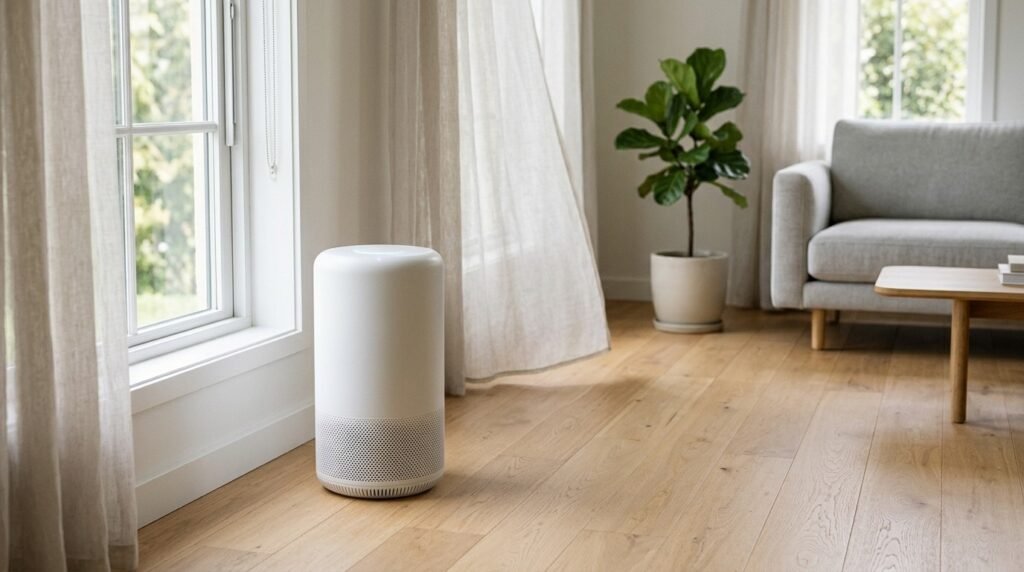
Run a portable air purifier continuously in the most affected rooms. Choose a model with two filter stages:
- True HEPA filtration: Captures up to 99.97% of airborne particles sized 0.3 to 1.0 micrometers, including ash and fine smoke particulates, per EPA data cited by COIT.
- Activated carbon filtration: Adsorbs the volatile organic compounds (VOCs) and gases that carry burnt or stale cigarette odors, as explained by Alen Air Purifiers.
3. Deep-Clean Walls, Ceilings, and Hard Surfaces Top to Bottom
Warm smoke rises, leaving an invisible film of tar and soot on walls, ceilings, blinds, and upper cabinets. Always wash from the top down so dirty water never streaks over clean baseboards.
Mix one part distilled white vinegar with three or four parts warm water, or use warm water with a few drops of grease-cutting dish soap. Test a hidden corner first on flat or matte rental paint. For safe scrubbing methods that protect your walls, see our guide on how to clean apartment walls without ruining the paint. Rinse your microfiber cloth often and swap out cloudy bucket water.
Sweep and damp-mop hardwood, tile, or vinyl floors, and wipe high-touch areas like doorknobs, light fixtures, and window sills.
4. Strip Smoke Odors Out of Fabrics, Carpets, and Upholstery
Soft textiles hold onto smoke molecules tightly. Treat each material based on its care label:
- Washable curtains, bedding, and clothes: Launder with your regular detergent plus one cup of distilled white vinegar. Texas A&M AgriLife Extension warns never to use a heated dryer until the smell is completely gone, as heat sets odors into fibers.
- Delicate fabrics: Keep wool drapes, silk covers, and structured blazers out of a standard washer. Use safe techniques from our guide on how to dry clean at home for delicate clothes, or take them to a dry cleaner.
- Carpets and upholstered furniture: Vacuum thoroughly first, sprinkle an even layer of baking soda across the fabric, let it sit overnight, and vacuum again. For deep residue, rent a steam cleaner or hire a professional upholstery service.
5. Use Natural Odor Absorbers for Lingering Pockets
After scrubbing surfaces and washing fabrics, place passive odor absorbers in closets, pantries, and bedrooms to catch remaining airborne molecules:
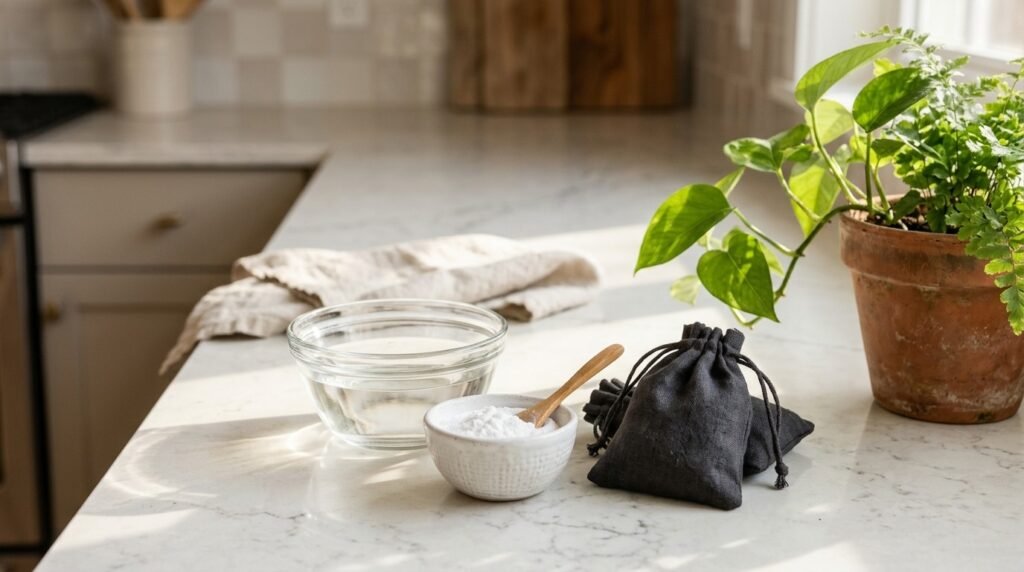
- White vinegar bowls: Leave shallow bowls of distilled white vinegar in affected rooms for 24 to 48 hours to neutralize alkaline smoke odors.
- Activated charcoal bags: Place bamboo charcoal bags in closets, near vents, and under furniture where air stagnates.
- Baking soda or coffee grounds: Tuck open boxes of baking soda or dry used coffee grounds inside cabinets to absorb stale smells.
DIY Methods vs. Professional Remediation
Light cooking smoke usually clears in a couple of days, while heavy tobacco or fire residue may penetrate drywall and ductwork. Compare your options below:
| Method | Best Used For | Key Benefit & Precaution |
|---|---|---|
| Cross-Ventilation + HEPA/Carbon Purifier | Fresh smoke, cooking mishaps, wildfire haze | Clears airborne particles and VOCs fast; keep windows shut during active outdoor wildfires. |
| Vinegar Wash & Baking Soda | Painted walls, floors, carpets, upholstery | Neutralizes surface residue affordably; patch-test flat paint before scrubbing. |
| Odor-Blocking Primer & Paint | Heavy nicotine stains on drywall | Seals trapped odors permanently; wash walls first and get landlord approval if renting. |
| Thermal Fogging or Hydroxyl | Post-fire or decades-old cigarette odor | Penetrates ductwork and framing; requires professional restoration equipment. |
| Ozone Generator Treatment | Severe odors in vacant homes | Breaks down odor molecules; people, pets, and plants must vacate during treatment. |
Per The Home Depot, never paint directly over uncleaned smoky walls, or trapped tar will bleed through fresh paint. Wash and dry walls thoroughly, apply an odor-blocking primer, and then repaint.
Keeping Your Home Fresh Long-Term
Once cleanup is done, run your HVAC fan for 30 minutes and check every room for hidden odor pockets. Replacing air filters on schedule, using kitchen exhaust fans, and keeping smoking outdoors will keep your home smelling clean. For more practical upkeep tips, browse our At Home Ideas guides on Renter Daily.