
How to Dry Clean at Home: Safe, Effective Methods for Delicate Clothes
Seeing a “Dry Clean Only” tag on your favorite sweater or work blazer can feel frustrating, especially when you are trying to keep monthly expenses down in a rental apartment. Weekly drop-offs add up fast, and hauling laundry to a cleaner is rarely convenient. Fortunately, you can safely refresh, deodorize, and spot-clean many delicate pieces at home.
Before you start, it helps to understand what professional dry cleaning actually is. Despite the name, commercial dry cleaning is not completely dry. Instead of water, cleaners immerse clothes in liquid solvents—such as hydrocarbon or silicone-based formulas—that dissolve body oils and grease without swelling delicate natural fibers. Home methods cannot replicate an industrial solvent bath, yet the right routine handles everyday upkeep between professional visits.
Step 1: Check the Care Label Before You Start
Not every garment with a dry-cleaning recommendation carries the same risk. Reading the care tag carefully tells you whether a piece can tolerate gentle moisture at home or belongs strictly with a professional.
“Dry Clean” (without “Only”): This usually means dry cleaning is the manufacturer’s preferred method, but the fabric—often sturdy cotton, linen, or polyester blends—can typically survive gentle hand-washing in cold water.
“Dry Clean Only”: This is a stronger warning. It often applies to structured garments with hidden interfacing, linings that shrink at different rates than the outer shell, or dyes that bleed in water.

If you are unsure whether a colored silk or wool garment will bleed, do a quick colorfastness test. Dampen a white cotton swab with cool water and press it gently against an inside seam for ten seconds. If any dye transfers onto the swab, skip water altogether and stick to steaming or professional care.
Method 1: How to Use an At-Home Dry Cleaning Kit
If your apartment has an in-unit dryer or easy access to a building laundry room, an at-home dry cleaning kit is the simplest way to refresh lightly worn suits, trousers, and dresses.
Pre-treat visible spots: Most kits include a mild stain-remover pen or spray. Dab the solution gently onto small food or makeup marks with a clean white cloth—never rub, as friction can fuzz wool or snag silk fibers.
Load the garment bag: Place up to three or four garments of similar color inside the reusable dryer bag included in the kit. Do not overstuff the bag; clothes need room to tumble gently so steam can circulate.
Add the dryer-activated sheet: Toss the moistened cleaning cloth into the bag and zip it shut. As the dryer warms up, the sheet releases gentle steam and a light freshening agent inside the enclosed bag.
Run a low-to-medium cycle: Set your dryer to medium or low heat for 15 to 20 minutes. In a shared apartment dryer, check that the drum is free of lint or residue first.
Hang immediately: As soon as the cycle ends, remove the garments and hang them on sturdy wooden or padded hangers so remaining creases fall out as they cool.
Method 2: How to Dry Clean at Home Without a Kit
You do not need a store-bought kit to get a similar refresh. A handheld garment steamer, a soft brush, and basic pantry staples can handle odors and wrinkles without taking up extra closet space.
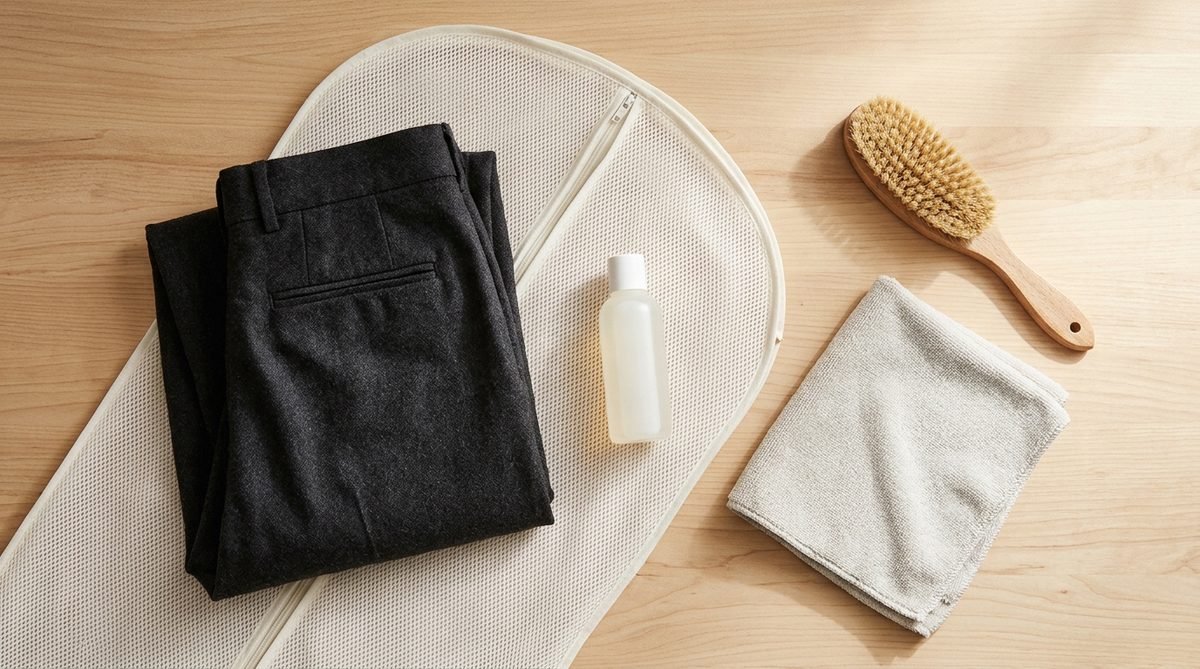
Steam away wrinkles and odors: Hang the garment on a sturdy hook or shower rod and run a handheld steamer smoothly from top to bottom, starting with the inner lining. Steam relaxes crushed fibers and neutralizes light odors without soaking the fabric. Let the piece air-dry completely before putting it back in your closet.
Brush off surface dust: For wool coats and blazers, use a natural-bristle garment brush in short, downward strokes following the fabric’s nap. This lifts dried dirt and lint that would otherwise grind into the weave.
Spot-clean with mild solutions: Mix a few drops of gentle, enzyme-free detergent in a cup of cool water. Blot fresh stains from the outside edge inward using a clean microfiber cloth, then blot again with plain water to rinse.
Method 3: Gentle Hand-Washing for Unstructured Delicates
Unlined wool sweaters, cashmere knits, and washable silks often respond better to a careful hand-wash than to chemical sprays. Fill a clean sink or basin with cool water and a teaspoon of mild wool or silk wash. Submerge the garment and swirl it gently for two to three minutes without scrubbing or twisting.
Drain the soapy water and rinse with fresh cool water until no suds remain. To dry, press the water out gently against the side of the sink—never wring it—and lay the garment flat on a clean white towel. Roll the towel up like a jelly roll to blot out excess moisture, then reshape the piece and let it air-dry flat away from direct heat. For more detailed knitwear steps, see our step-by-step guide to washing cashmere at home.
Fabrics You Should Never Dry Clean at Home
Knowing when to skip DIY methods protects your wardrobe from permanent damage. Leave the following items to a professional cleaner:
Leather and suede: Water leaves permanent dark rings and stiffens natural hides.
Structured blazers, coats, and tailored suits: Internal shoulder pads, canvas interfacing, and glued linings can bubble, warp, or shrink unevenly if exposed to too much moisture or dryer heat.
Beaded, sequined, or velvet garments: High steam or tumbling can melt decorative adhesives, crush velvet pile, or snag delicate threads.
Heavy oil or ink stains: Home kits and water-based spotters rarely dissolve set-in grease; repeated heat from a dryer will only bake the stain deeper into the fibers.
Renter-Friendly Tips for Small Spaces
In small apartments, always steam or hang-dry clothes near an open window or exhaust fan so moisture does not linger. When using a mesh bag on a cold delicate cycle for sturdier items, skip fabric softeners, which coat wool and synthetic fibers. Never store garments in dry-cleaner plastic bags—they trap humidity and cause yellowing. Use breathable cotton bags or open hangers instead.
Frequently Asked Questions
Can you put “Dry Clean Only” clothes in the washing machine? Only unstructured natural fibers like 100% cotton, linen, or sturdy unlined wool should ever go in a washer, and only inside a mesh bag on a cold, delicate cycle. Structured pieces, silk, and rayon are much safer when hand-washed or steamed.
Does an at-home dry cleaning kit actually remove stains? At-home kits are primarily designed to steam-refresh clothes and remove light odors. Their included stain pens can lift fresh surface marks, but set-in oil, wine, or ink stains still require professional solvent treatment.