
How to Save Water at Home: Simple Daily Habits That Actually Work
Learning how to save water at home does not require remodeling your plumbing or giving up basic comfort. Most household water waste happens quietly during routines you barely think about—leaving the faucet open while brushing your teeth, running half-empty appliances, or overlooking a slow drip under the sink. According to the Global Water Center, the average person in the United States uses roughly 82 gallons of water every day. Whether you own a house or rent an apartment, a few steady adjustments to your habits and fixtures can cut thousands of gallons of waste each year while keeping your daily routine effortless.
Start by Finding and Fixing Hidden Leaks
Before changing how you shower or wash dishes, make sure water is not slipping away unused behind the scenes. Data from US EPA WaterSense shows that household leaks waste an average of 180 gallons per week—adding up to nearly 9,400 gallons per year for a typical family.
Check these common trouble spots once a month:
- Silent toilet leaks: Drop a few drops of food coloring into the toilet tank and wait 10 minutes without flushing. If color appears in the bowl, the flapper valve is worn out and needs a quick replacement.
- Dripping faucets and pipe joints: A slow drip from a kitchen or bathroom tap can waste more than 100 gallons per week, as noted by the University of Nebraska–Lincoln Extension. Tightening a loose packing nut or replacing an inexpensive washer usually solves the problem.
- Under-sink cabinets: Feel around supply lines and drain traps for dampness. Persistent moisture does not just waste water—it can also trigger hidden dampness issues, so if you notice a musty odor near plumbing, review our guide on how to test for mold in a house.
If you rent, report leaks to your landlord or property manager in writing right away. It is also smart to know where your shut-off valves sit in case a supply line bursts; our walkthrough on how to turn off water to a house shows you how to locate both individual fixture valves and the main shut-off.
Easy Ways to Save Water in the Bathroom
The bathroom accounts for the largest share of indoor water use, which means small shifts here deliver the fastest payoff.
Trim Shower Time and Upgrade Your Showerhead
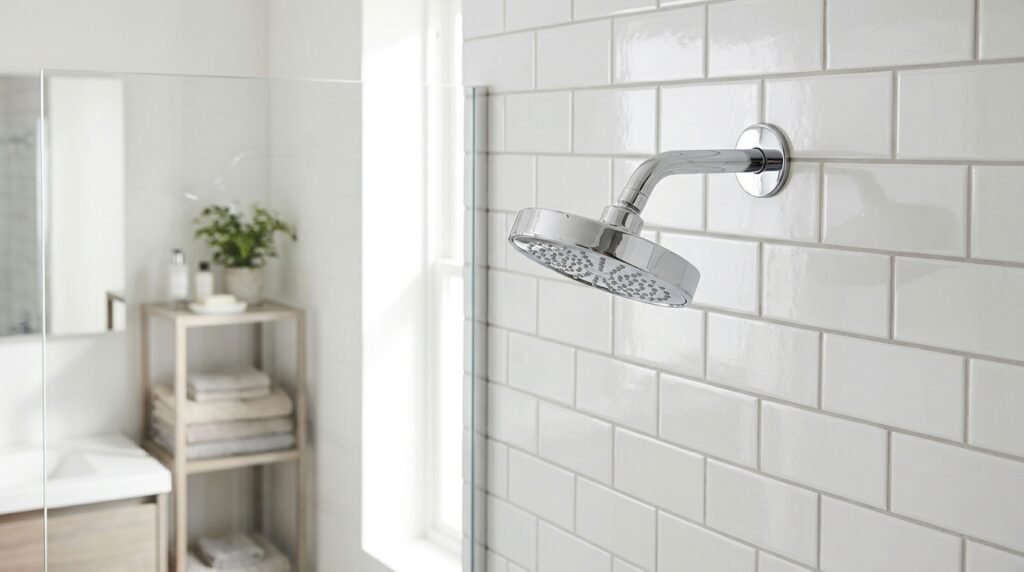
Showers make up roughly 20 percent of indoor water consumption (UNL Extension). Cutting a 10-minute shower down to 5 minutes saves 12.5 gallons of water with a standard 2.5-gallon-per-minute (gpm) showerhead, according to Home Water Works. If you want effortless savings without watching the clock, swap in a WaterSense-labeled showerhead that uses 2.0 gpm or less. US EPA WaterSense estimates this single swap saves the average family more than 2,700 gallons of water and $70 in water and energy costs annually. For renters, replacing a screw-on showerhead takes five minutes—just store the original fixture in a closet and screw it back on before move-out.
Turn Off the Tap and Add Faucet Aerators
Shutting off the bathroom faucet while brushing your teeth saves up to 8 gallons of water per day, and turning it off while shaving saves up to 10 gallons per shave (US EPA WaterSense). You can also twist an inexpensive WaterSense-labeled faucet aerator onto the tip of your bathroom tap. Aerators mix air into the stream so the pressure still feels full while capping flow at 1.5 gpm or less—reducing faucet water use by up to 60 percent (UNL Extension).
Use the Toilet Wisely
Never treat the toilet as a trash can for tissues, dental floss, or cotton swabs—every unnecessary flush sends clean water straight down the drain. Older toilets built decades ago can use 3.5 to 7 gallons per flush, whereas modern WaterSense-labeled models use 1.28 gallons per flush or less and can save a family up to 13,000 gallons per year (Home Water Works, US EPA WaterSense).
Smart Water-Saving Habits in the Kitchen
Kitchen routines offer some of the easiest everyday wins because most waste comes from letting clean tap water run continuously.

- Run full dishwasher loads only: Letting a kitchen faucet run for just five minutes while washing dishes wastes 10 gallons of water. Scraping food scraps into the trash or compost instead of pre-rinsing, and waiting until the dishwasher is completely full, can eliminate one load per week and save nearly 320 gallons a year (US EPA WaterSense).
- Use a basin when washing by hand: If your apartment does not have a dishwasher, fill one side of the sink (or a dishpan) with soapy water for washing and a second basin with clean water for rinsing rather than keeping the tap open.
- Wash produce in a bowl: Rinsing fruits and vegetables in a bowl of water uses a fraction of the water needed under a running faucet, and you can pour that leftover rinse water directly onto houseplants.
- Keep drinking water chilled in the fridge: Storing a reusable pitcher of water in the refrigerator gives you cold water immediately instead of running the tap for 30 seconds waiting for it to cool down (UNL Extension).
- Thaw frozen food in the fridge: Plan meals a day ahead so meat and vegetables defrost safely in the refrigerator overnight instead of under a steady stream of warm tap water.
Conserve Water During Laundry Day
Washing machines draw significant water with every cycle, especially older top-loading units. Always wait until you have a full load before starting a wash, or match the water-level setting accurately to smaller loads if your machine allows it. Washing clothes in cold water also lowers the energy used to heat water while keeping everyday fabrics looking newer for longer. If you are weighing portable or in-unit laundry setups in a rental, our apartment washer and dryer guide breaks down lease rules, hookup requirements, and compact efficiency options.
Cut Outdoor and Balcony Water Waste
If you have a yard, patio, or balcony container garden, outdoor watering is often the biggest hidden drain. US EPA WaterSense notes that outdoor use accounts for more than 30 percent of total household water consumption on average—and up to 60 percent in dry climates—with as much as 50 percent lost to wind, evaporation, and runoff.
Water plants early in the morning or after sunset when cooler temperatures let roots absorb moisture before it evaporates. Use a broom instead of a hose to sweep patios, walkways, and driveways, and place saucers beneath balcony planters so excess water does not run off unused.
Bring Your Savings Together
Saving water at home works best when it becomes automatic. Start with two quick actions this week—check your toilets for silent leaks and shut off the tap while brushing—then add a faucet aerator or low-flow showerhead next weekend. Over a year, those small habits protect a vital resource and trim monthly utility expenses at the same time. For a deeper look at lowering your monthly charges, check out our 2026 guide on how to reduce your water bill.