
How to Winterize Your Garden: A Practical Step-by-Step Guide
Cold weather does not mean your garden has to struggle until spring. Whether you tend a backyard vegetable plot, a few raised beds outside a rental house, or a row of container herbs on an apartment patio, one focused weekend in late fall protects plant roots, preserves soil structure, and saves you from replacing cracked pots or split hoses in April.
Learning how to winterize a garden is less about doing everything at once and more about timing a few simple tasks around your first frost. Follow this practical checklist to prepare in-ground beds, raised planters, and balcony containers for freezing temperatures.
When to Winterize Your Garden
Timing matters more than perfection. Most winterization chores work best after your final fall harvest and just before the ground freezes solid, as Utah State University Extension recommends.
- Six to eight weeks before first frost: Stop using high-nitrogen fertilizers so perennials and shrubs do not push out tender new shoots that cold snaps will burn.
- Around your first light frost (29°F to 32°F): Harvest remaining warm-season vegetables, pull spent annuals, and bring tender tropical plants and potted herbs indoors.
- After a few hard frosts (below 25°F): Spread winter mulch over dormant perennials and wrap outdoor containers once plants have settled into dormancy.
- Before the first hard freeze: Shut off exterior water lines, drain garden hoses, and move porous clay or ceramic pots into dry storage.
Step 1: Clear Spent Plants and Bag Diseased Debris
Start by pulling finished annual vegetables and flowers—such as spent tomato vines, squash, and marigolds—along with lingering weeds before they scatter seeds.
Sort debris carefully as you clean. Leaves showing powdery mildew, blight, rust, or heavy insect damage belong in the household trash or municipal green-waste bin rather than a backyard compost pile. According to the University of California Cooperative Extension, composting diseased foliage can reintroduce pests and pathogens to next season’s soil. Healthy perennial stems and seed heads, however, can stay standing through winter to shelter beneficial insects and feed local birds.
Step 2: Amend the Soil and Apply Winter Mulch
Bare soil loses nutrients and erodes quickly under winter rain and wind. Once beds are cleared, spread a one- to two-inch layer of finished compost across the surface. There is no need for heavy tilling—winter freeze-thaw cycles and soil microbes will work those nutrients down before spring.
Next, cover the soil with organic mulch such as clean straw, shredded dry leaves, pine needles, or bark chips. Purdue University Extension recommends two to four inches of organic mulch for tender perennials after dormancy sets in, while N.C. Cooperative Extension notes that raised garden beds benefit from three to six inches of mulch to buffer temperature swings and prevent frost heaving. Keep mulch pulled back a couple of inches from woody stems so moisture does not sit against the bark.
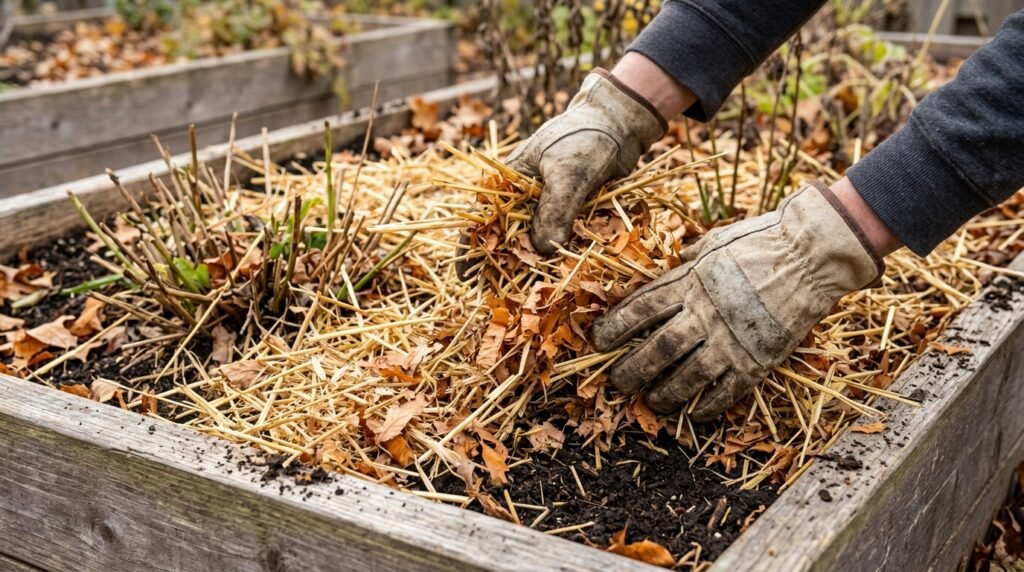
If you have an empty vegetable bed at least four weeks before hard freezes arrive, sowing a winter cover crop like winter rye or clover is another natural way to anchor soil and build fertility.
Step 3: Winterize Container Plants and Balcony Gardens
Renters often garden in pots, railing planters, or grow bags. Container plants need extra protection because freezing air hits their root zones from every side rather than being insulated by the earth—meaning potted plants behave as if they are one to two hardiness zones colder than in-ground plants.
Sort your patio or balcony pots into three groups:
- Tender plants to bring indoors: Rosemary, basil, and summered tropical houseplants should come inside before nights drop into the 40s. Rinse foliage and check soil surfaces carefully so pests do not hitchhike indoors; if indoor bugs are a worry, our guide on how to keep spiders out of your house shares renter-safe prevention habits.
- Hardy perennials staying outside: Move cold-hardy pots off windy railings and cluster them tightly against a sheltered exterior wall, where radiating building warmth creates a mild buffer, as noted by the UC Master Gardener Program. Wrap container sides with bubble wrap or burlap tied with twine, mulch the top of the potting mix, and lift pots slightly on pot feet for drainage. For cold-tolerant picks, see which plants actually survive winter on an apartment balcony.
- Empty pots to store dry: Penn State Extension advises storing unglazed terracotta, clay, and glazed ceramic pots in a frost-free closet, shed, or garage so trapped moisture does not freeze and crack the walls. Plastic, resin, and fiberglass planters can stay outdoors if emptied and turned upside down.

Step 4: Water Deeply Before Freezing Weather Arrives
Dry soil freezes faster and stresses dormant roots more than lightly moist soil. Water trees, shrubs, perennial beds, and overwintered containers thoroughly before the ground locks up. During mild, dry winter weeks above freezing, check sheltered balcony pots and water lightly if the mix feels bone dry.
Step 5: Drain Hoses, Shut Off Spigots, and Clean Tools
Water left inside a hose, nozzle, or outdoor faucet expands when frozen and can burst exterior pipes. Cornell Cooperative Extension recommends disconnecting and draining hoses, removing timers and splitters, closing the interior shutoff valve for outdoor faucets, and opening the outside tap so remaining water drains. If you need help locating main or isolation valves, check our walkthrough on how to turn off water to your house.
Finish by scrubbing soil off trowels, spades, and pruning shears with warm soapy water, drying them thoroughly, and wiping metal blades with a light coat of mineral or vegetable oil to prevent rust. Store tools, leftover seeds, and fertilizers in a cool, dry spot.
Frequently Asked Questions
Should I cut back all perennials before winter?
Cut back diseased or mushy foliage, but leave healthy ornamental grasses, coneflowers, and woody herbs like lavender standing until early spring to shelter plant crowns and beneficial insects.
Can I use fallen tree leaves as winter mulch?
Yes—dry leaves work well as long as you shred them first. Whole wet leaves can mat into a dense sheet that blocks airflow and moisture.
How late is too late to winterize a garden?
Even after the first frost, you can still mulch bare beds, wrap hardy containers, disconnect hoses, and clean tools before deep winter freezes arrive.