
How to Soundproof a Room in an Apartment: The Renter’s Complete Guide
Living in an apartment brings great convenience, but thin walls and noisy neighbors frequently ruin your peace. Whether it is hallway chatter, street traffic, or heavy footsteps overhead, excess noise disrupts your sleep and focus. For renters, structural renovations like tearing into drywall or replacing subflooring will forfeit your security deposit.
Fortunately, you do not need major construction to enjoy quiet living. By targeting acoustic leaks and applying damage-free soundproofing techniques, you can substantially dampen incoming noise. In this guide, we will walk you through proven, renter-friendly strategies on how to soundproof a room in your apartment without violating your lease agreement.

Understanding Apartment Noise: Airborne vs. Impact Sound
Before buying supplies, identify how noise enters your room. Residential acoustics fall into two categories:
Airborne Noise:
Sound waves traveling through the air and slipping through unsealed gaps. Examples include street traffic, voices, TV sound, and barking dogs. Airborne noise is stopped by airtight perimeter seals and physical mass.
Impact (Structure-Borne) Noise:
Physical vibrations caused by objects colliding with the building frame, such as footsteps and dropped items. Impact noise requires vibration-absorbing padding.
Crucially, understand the difference between sound blocking (preventing sound from entering a room) and sound absorption (reducing echo within a room). Foam panels soften indoor echo, but blocking outside noise demands dense barriers and airtight seals.
Step 1: Seal Entryway and Interior Doors
Doors are almost always the biggest acoustic weak spot in an apartment. Hollow-core doors and wide perimeter gaps allow sound to pass freely. Eliminating these air gaps delivers immediate relief.

Install a Heavy-Duty Door Sweep:
Slide-on or adhesive silicone draft stoppers seal the gap between the door bottom and floor, blocking hallway chatter.
Apply Self-Adhesive Weatherstripping:
Line the door jamb with dense rubber or foam tape. When closed, the door compresses against the gasket, sealing noise leaks.
Hang an Acoustic Door Blanket:
For thin doors, hanging a heavy quilted fiberglass sound blanket on removable over-the-door hooks adds sound-blocking mass.
Step 2: Silence Windows and Block Outdoor Traffic
Windows transmit street sirens, traffic rumble, and pedestrian chatter straight into your space. While renters cannot replace window glazing, you can buffer them effectively.
Invest in true multi-layer acoustic curtains. Standard drapes are too thin to absorb sound. Genuine soundproof curtains use dense velvet and triple-weave thermal linings weighing several pounds. Hang the curtain rod higher and wider than the window frame so fabric covers perimeter edges completely.
Next, apply peel-and-stick foam tape along window sashes to seal acoustic leaks, yielding a 3 to 5 dB reduction. For severe traffic noise, removable custom acrylic window inserts press into the frame with compression gaskets, cutting up to 70% of outside noise with zero permanent mounting.
Step 3: Add Protective Mass to Shared Party Walls
When you share a thin drywall partition with a neighbor, sound bleeds directly into your space. Adding removable mass dampens sound vibrations before they travel through the wall.
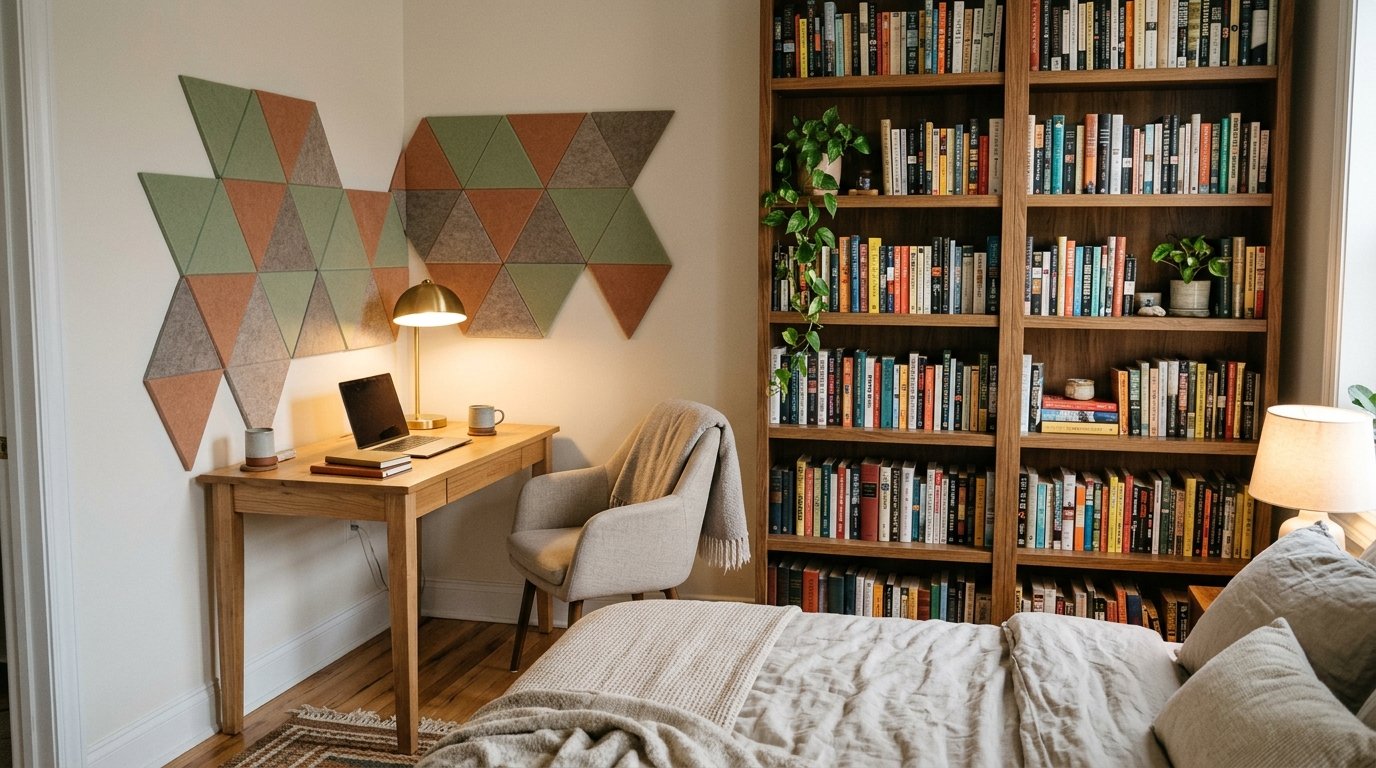
Create a Bookshelf Sound Barrier:
Placing a tall wooden bookcase against a shared wall and packing it tightly with books creates a dense acoustic buffer. A fully loaded bookshelf can reduce sound transfer by up to 25%. Pair this setup with our favorite cheap apartment decorating ideas for a stylish, multi-functional room layout.
Mount Aesthetic Felt Acoustic Panels:
Dense polyester felt tiles absorb medium and high frequencies to soften voices and TV resonance. Mount them using damage-free Command strips that pull off cleanly when you move. If you are decorating a compact space, consult our guide to one-bedroom decor ideas for space-saving placement tips.
Hang Heavy Fabric Wall Tapestries:
Bare drywall reflects sound waves. Woven wall tapestries or thick canvas art reduce echo and soften ambient chatter.
Step 4: Cushion Hard Floors Against Impact Noise
Hardwood, tile, and vinyl plank floors amplify footsteps and dropped objects. If you live on an upper floor, impact noise irritates downstairs neighbors; on a ground unit, bare ceilings vibrate with overhead movement.
Under international standard ISO 10140-3, pairing a thick area rug with an acoustic rug pad can reduce impact noise by 10 to 20 decibels. Layer dense felt or recycled rubber pads beneath plush shag or wool rugs. The rubber underlayment absorbs structural vibrations before they enter the subfloor, while felt furniture pads on chairs eliminate scraping sounds.
Step 5: Master Soft Furnishings and Sound Masking
Controlling room acoustics requires softening hard reflective surfaces. Furnish your room with plush sofas, upholstered chairs, dense throw blankets, and leafy indoor plants. Irregular plant foliage scatters sound waves and breaks up harsh flutter echoes.
To tackle stubborn background distractions, deploy active sound masking. A dedicated white noise machine elevates the ambient noise floor with steady soothing frequencies. Sudden sound spikes—like an elevator chime or distant door slam—blend smoothly into the background audio, keeping your sleep unbroken.
Renter-Friendly Soundproofing Solutions at a Glance
| Solution | Target Noise | Noise Reduction | Estimated Cost | Rental Friendly? |
|---|---|---|---|---|
| Door Sweep & Weatherstripping | Hallway voices, air leaks | 5 to 8 dB | $15 – $30 | Yes (Removable) |
| Acoustic Blackout Curtains | Traffic, street chatter | 6 to 12 dB | $40 – $80 | Yes (Standard rod) |
| Acoustic Rug Pad + Thick Rug | Footsteps, floor impact | 10 to 20 dB | $50 – $130 | Yes (Portable) |
| Loaded Bookshelf Barrier | Neighbor TV & speech | 5 to 10 dB | $0 – $80 | Yes (Furniture) |
| Felt Acoustic Wall Tiles | Echo & vocal bounce | 20%–40% echo drop | $30 – $65 | Yes (Command strips) |
| White Noise Machine | Intermittent noise spikes | Acoustic masking | $20 – $45 | Yes (Plug-in) |
Frequently Asked Questions (FAQ)
Can you completely soundproof a rental room?
Complete 100% sound isolation requires structural construction like double drywall and floating subfloors. However, combining door weatherstripping, acoustic curtains, and padded rugs can reduce perceived noise by 40% to 60%, creating a significantly quieter living space.
Do soundproof curtains really work?
Yes, but manage expectations. Heavy multi-layered acoustic curtains dampen high-frequency outdoor noises (chatter and wind) and reduce room reverberation, but cannot block low-frequency bass from passing subwoofers.
How do I soundproof my room without damaging the walls?
Use non-invasive methods: slide-on door sweeps, compression weatherstripping, heavy furniture placed against shared walls, layered area rugs with felt pads, and decorative felt tiles hung with removable adhesive strips.
What is the most cost-effective soundproofing upgrade?
Sealing your entryway door with a bottom sweep and weatherstripping tape costs under $30 and takes 20 minutes to install, delivering the highest noise reduction per dollar spent.
Final Thoughts
You do not have to accept poor sleep or noisy interruptions as an unavoidable reality of renting. By sealing door leaks, buffering windows with heavy acoustic curtains, and layering dense floor rugs, you can create a tranquil apartment retreat while protecting your security deposit. Prioritize the biggest air leaks first, and enjoy the quiet comfort of your home.