How to Get Rid of House Centipedes in Your Home or Apartment
Spotting a house centipede darting across your bathroom tile late at night is enough to startle anyone. With their long, delicate legs and sudden bursts of speed, these indoor visitors look far more intimidating than they actually are. According to Penn State Extension, house centipedes are generally harmless predators that hunt other household arthropods rather than damaging furniture, wood, or stored food. Even so, most renters and homeowners prefer not to share a bedroom or kitchen with them.
If you want to know how to get rid of house centipedes for good, squashing the occasional stray bug will not solve the problem. Lasting control comes from changing the indoor environment that invites them inside—specifically excess moisture, small entry gaps, and hidden prey insects. Below is a practical, apartment-friendly plan to clear them out and keep them from returning.
Why Do House Centipedes Come Inside?
Unlike outdoor garden centipedes, the common house centipede (Scutigera coleoptrata) is the only species known to survive and reproduce completely indoors, as noted by Utah State University Extension. Adults measure roughly 1 to 1.5 inches long with a yellowish-gray body, three dark stripes along the back, and banded legs built for fast hunting.
House centipedes settle inside homes and apartments for two main reasons:
- Persistent dampness: They lack a waxy outer coating to lock in moisture, so they gravitate toward humid bathrooms, laundry rooms, basements, and under-sink cabinets.
- A steady food supply: They actively hunt spiders, silverfish, ants, and cockroaches. Seeing centipedes regularly almost always means other small insects are living nearby.
If you also notice musty odors or dark speckles near damp baseboards, it is worth checking for hidden moisture issues early—our guide on how to test for mold in house walks through simple ways to spot damp problem areas before they escalate.
1. Lower Indoor Humidity and Fix Hidden Leaks
Moisture control is the single most effective way to get rid of centipedes in your house. Because house centipedes struggle to survive in dry spaces, drying out their favorite hiding spots forces them to move on.
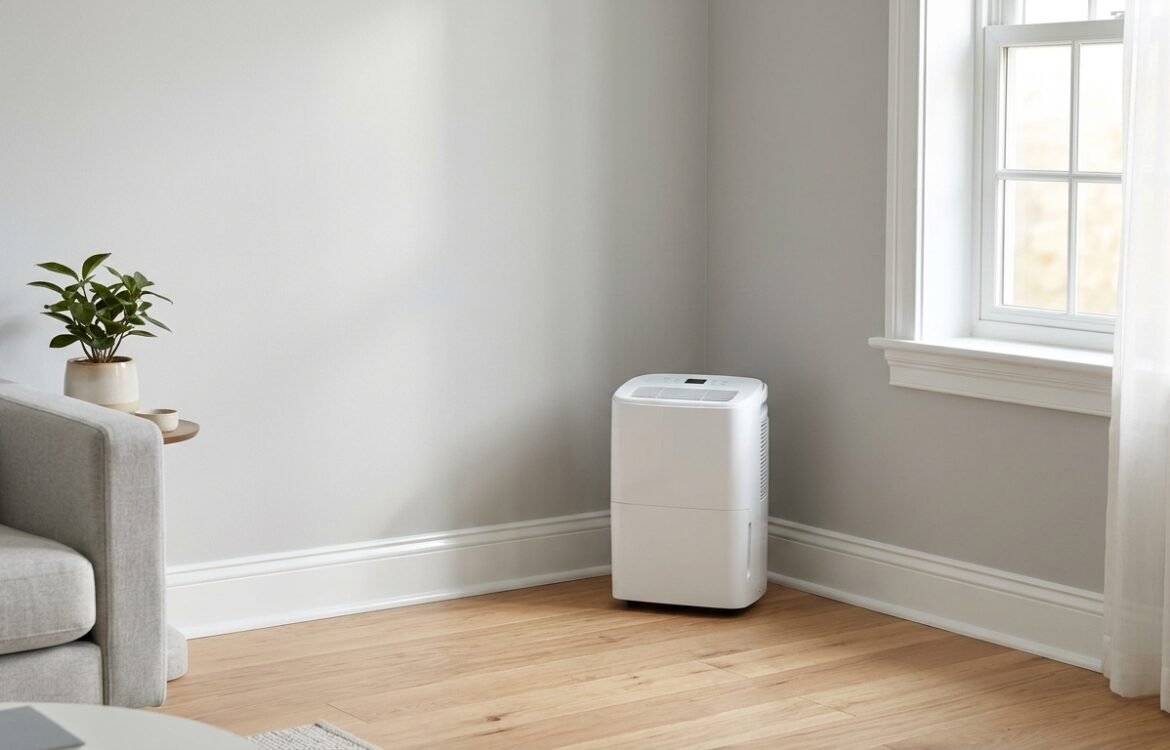
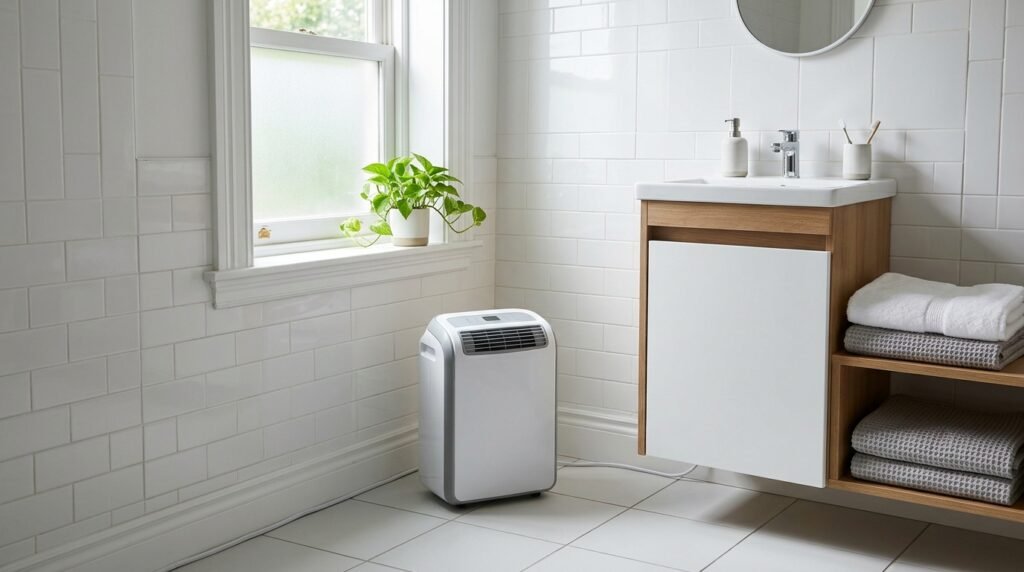
- Keep relative humidity below 50%: Run a compact dehumidifier in damp bathrooms, basements, or poorly ventilated studios to maintain indoor humidity between 30% and 50%, as recommended by Better Termite & Pest Control.
- Ventilate after showers and laundry: Run your bathroom exhaust fan during showers and for at least 15 minutes afterward, and wipe down wet tub edges or floor puddles promptly.
- Inspect under sinks and around appliances: Check supply lines, P-traps, and washing machine hoses for slow drips or condensation. If you discover a leaking shut-off line or need to stop water before a quick repair, review our step-by-step guide on how to turn off water to house.
2. Seal Cracks, Baseboards, and Entry Points
Once you dry out damp rooms, focus on harborage reduction—blocking the narrow gaps where centipedes hide during the day and enter from neighboring units or exterior walls. Penn State Extension highlights sealing cracks and crevices as the second most important long-term management step.
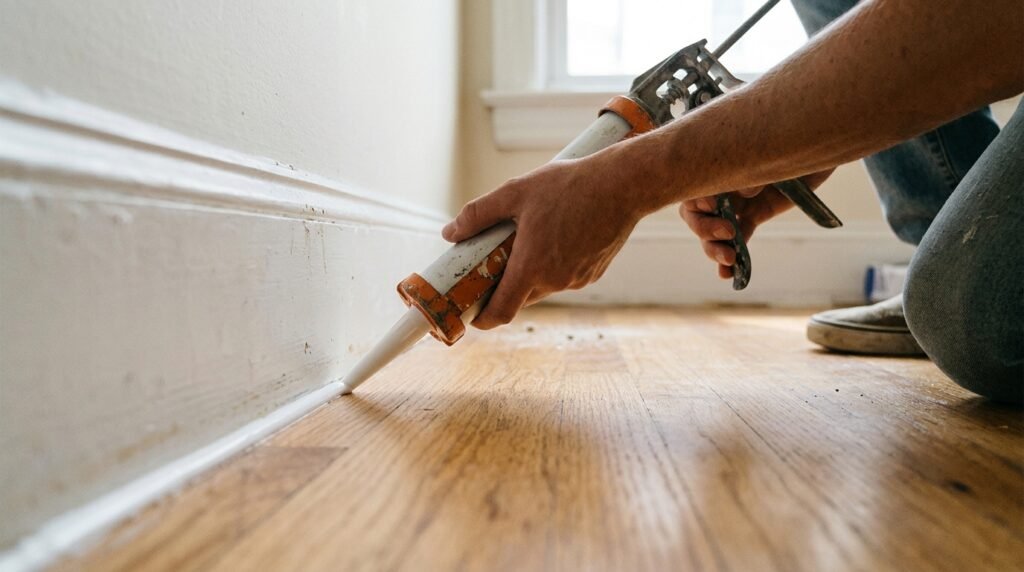
- Caulk baseboard and trim gaps: Apply a neat bead of paintable acrylic or silicone caulk along separated baseboards, window casings, and openings where plumbing pipes pass through walls.
- Add weatherstripping and door sweeps: Fit a peel-and-stick door sweep under exterior or hallway doors and repair torn window screens, as advised by Orkin.
- Cover floor drains: In basements or ground-floor laundry areas, place fine mesh strainers over floor drains so centipedes cannot travel up from dry drain traps.
Renters should keep modifications lease-friendly—removable weatherstripping and clean caulk lines protect your security deposit, while larger masonry cracks or foundation gaps should be reported to your landlord for repair.
3. Cut Off Their Food Supply
Because house centipedes follow their prey, eliminating the smaller insects they eat removes their main reason for staying. According to Anchor Pest Services, frequent centipede sightings are often a useful clue that another pest population is active behind your walls or cabinets.
- Set sticky monitoring traps: Place flat sticky insect traps along baseboards, under sinks, and behind refrigerators. They capture wandering centipedes and show you which prey bugs—such as silverfish, ants, or spiders—are present (Penn State Extension).
- Declutter cardboard and floor piles: Swap damp cardboard moving boxes for sealed plastic bins, and keep laundry and shoes off closet floors.
- Target common prey pests: Store pantry staples in airtight containers, vacuum corners weekly, and follow our practical tips on how to keep spiders out of your house to cut down indoor prey without harsh chemicals.
4. Safe Immediate Removal and Natural Deterrents
When you spot a house centipede in the open, you do not need heavy chemical sprays to deal with it.
- Vacuum or catch-and-release: Use a vacuum hose attachment to remove a stray centipede quickly, then empty the canister or bag outdoors. If you prefer a non-lethal approach, trap it under a glass, slide stiff paper underneath, and release it outside.
- Use low-risk mineral dusts sparingly: Penn State Extension notes that inorganic dusts such as food-grade diatomaceous earth or boric acid have very low risk to mammals when applied lightly into cracks and crevices behind baseboards. Keep any dust completely out of reach of children and pets, and avoid breathing in fine powder during application.
- Keep walls and baseboards clean: Regularly wiping down trim, corners, and damp wall areas discourages pests from settling. If you are scrubbing scuff marks or moisture spots in a rental, see our guide on how to clean apartment walls without ruining the paint.
- Save sprays as a last resort: Both Utah State University Extension and pest specialists recommend treating chemical insecticides as a final fallback only for severe, persistent outbreaks, since sprays wear off quickly if moisture and prey insects remain.
Frequently Asked Questions About House Centipedes
Are house centipedes dangerous or venomous?
House centipedes use tiny venom-injecting forelegs to subdue insects, but bites on humans are extremely rare because their jaws are too weak to easily pierce human skin. When a bite does occur, it is typically mild and comparable to a minor bee sting (Anchor Pest Services).
Does seeing one house centipede mean I have an infestation?
Not necessarily. A single sighting—especially after heavy rain or during humid summer weeks—often means one stray centipede wandered in looking for moisture. Seeing several per week in the same rooms is a stronger sign of high humidity or a hidden insect food source.
When should renters call their landlord?
If you have lowered indoor humidity, sealed visible gaps, and still spot house centipedes regularly, notify your landlord or property manager in writing. Recurring sightings in multi-unit buildings often trace back to shared plumbing leaks, damp crawl spaces, or neighboring units that require building-wide maintenance.