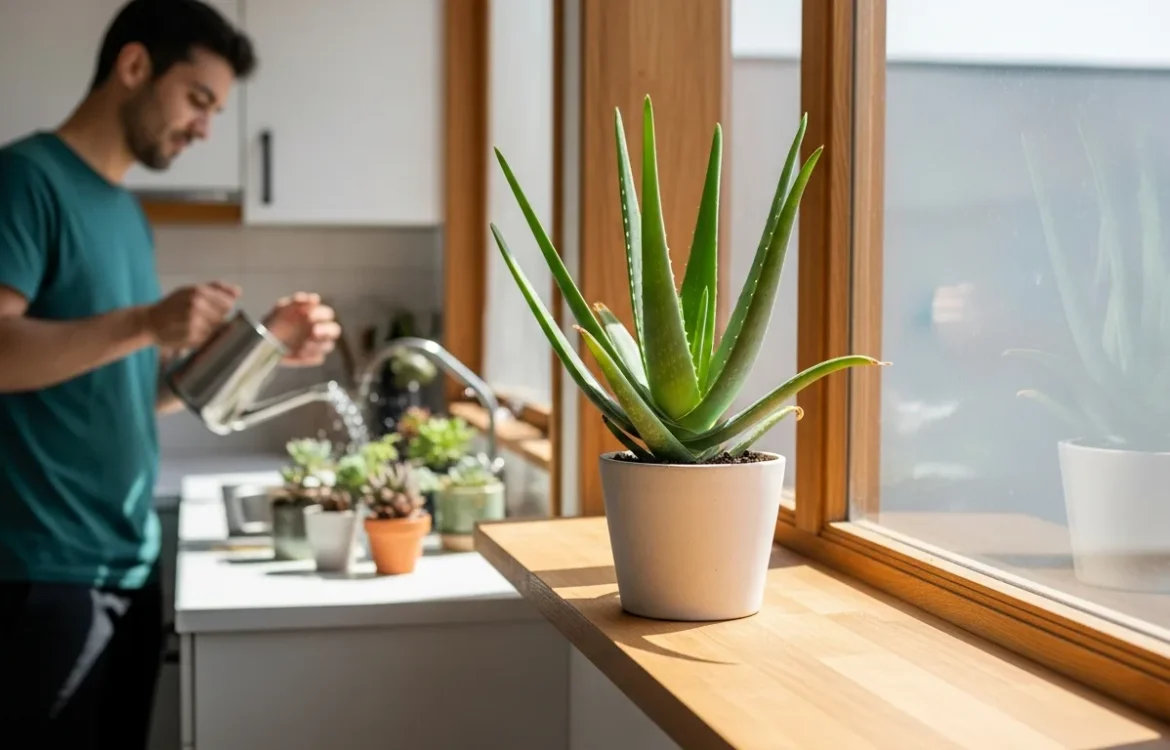
How Can You Successfully Grow Aloe Vera in a Tiny Apartment?
The Perfect Low-Maintenance Roommate
Aloe vera is the ultimate plant for a man who wants greenery without the high-maintenance drama. It is hardy, functional, and fits perfectly on a cramped desk or a narrow windowsill. In a small apartment, space is a premium commodity, but an aloe plant asks for very little in return for its air-purifying qualities and soothing gel. If he provides the right environment, this succulent will thrive for years with minimal intervention.
Prioritizing Light Over Everything
The biggest hurdle in a small apartment is often natural light. Aloe vera craves bright, indirect sunlight. He should place his plant near a south or west-facing window where it can soak up at least six hours of light daily. If the apartment is tucked away in a dark corner or a basement unit, the aloe might start to stretch and become “leggy” as it searches for the sun.
If natural light is scarce, he can supplement with a small LED grow light. Integrating an aloe plant into a windowsill succulent garden is a smart move for any urban dweller looking to maximize his limited surface area while keeping his plants healthy.
The Art of Not Overwatering
Most aloe plants in apartments die from kindness, not neglect. Overwatering leads to root rot, which is a death sentence for succulents. He must follow the “soak and dry” method: water the soil deeply until it drains out the bottom, then wait until the soil is completely dry—usually every two to three weeks—before watering again.
During the winter months, the plant’s growth slows down, and he should reduce watering even further. A simple finger test in the soil is the most reliable way to check moisture levels. For those just starting out, these indoor apartment gardening tips provide a solid foundation for keeping a plant alive in a confined environment.
Choosing the Right Pot and Soil
Drainage is non-negotiable. He should choose a pot made of terracotta or porous ceramic, as these materials allow the soil to dry out more efficiently than plastic. The pot must have at least one large drainage hole at the bottom. When it comes to soil, a standard potting mix is too heavy and retains too much moisture. He should use a dedicated cactus or succulent mix, or create his own by adding perlite or coarse sand to regular soil to improve aeration.
Managing Space and Growth
In a small apartment, he doesn’t want a plant that takes over his entire living area. Aloe vera grows relatively slowly, but it does produce “pups”—smaller offset plants that grow from the base. To keep the main plant manageable, he can periodically remove these pups and gift them to friends or pot them in smaller containers. This keeps the parent plant focused on its own growth and prevents the pot from becoming overcrowded and messy.
Troubleshooting Common Aloe Issues
If he notices the leaves turning thin and curled, the plant is likely dehydrated and needs a drink. Conversely, if the leaves feel mushy or look brown and translucent, he is likely overwatering. Brown spots on the leaves can also indicate “sunburn” if the plant is moved too quickly from a dark corner into direct, scorching afternoon sun. He should move the plant gradually to let it acclimate to higher light levels.
Frequently Asked Questions
Can aloe vera grow in a bathroom with no windows?
No, aloe vera requires bright light to survive. A windowless bathroom will eventually kill the plant unless he uses a high-quality grow light to simulate the sun’s rays.
How do I know when to repot my aloe?
He should consider repotting when the plant becomes top-heavy and starts to tip over, or when the roots begin to grow out of the drainage holes. This usually happens every two to three years.
Is aloe vera safe for pets?
While the gel is used for human skin, the outer leaf contains aloin, which can be toxic to dogs and cats if ingested. He should keep the plant on a high shelf if he has curious pets.
Why are my aloe leaves drooping?
Drooping leaves are usually a sign of insufficient light or overwatering. He should move the plant to a brighter spot and ensure the soil is dry before the next watering session.