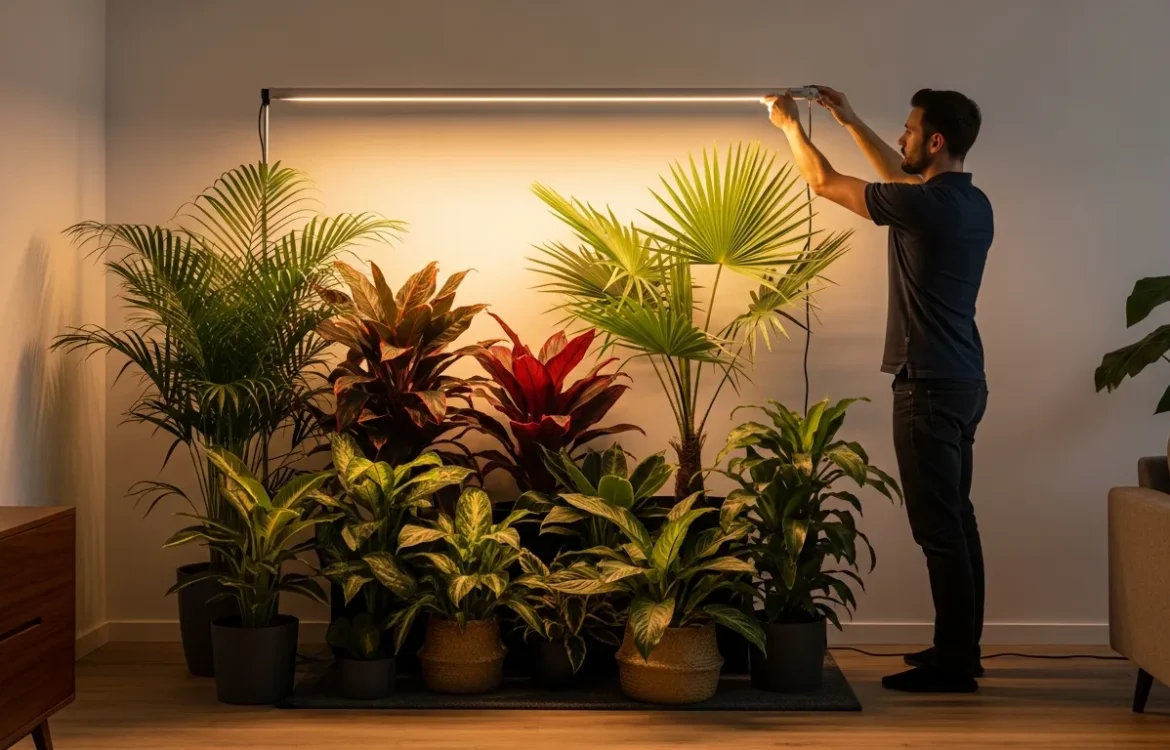
How Can You Successfully Use Grow Lights for Indoor Apartment Plants?
Overcoming the Low-Light Apartment Challenge
For many urban dwellers, the dream of a lush indoor jungle is often thwarted by a lack of natural sunlight. Whether a man lives in a basement unit or a studio shaded by skyscrapers, he doesn’t have to settle for plastic foliage. Modern grow light technology has advanced significantly by 2026, making it easier than ever to supplement the sun. Understanding how to use these tools effectively is the difference between a thriving garden and a collection of wilted stems.
Using grow lights is not just about turning on a lamp; it is about mimicking the specific qualities of the sun. When a man masters the balance of intensity, duration, and spectrum, he can grow everything from tropical monsteras to edible herbs right on his kitchen counter.
Selecting the Right Type of Grow Light for Small Spaces
The first step for any renter is choosing the right hardware. Not all bulbs are created equal, and the heat output of older technology can be a major drawback in a cramped apartment. LED (Light Emitting Diode) lights are currently the gold standard. They are energy-efficient, produce very little heat, and come in various form factors that fit into a man’s existing decor.
Fluorescent lights, specifically T5 tubes, are still viable for starting seeds or maintaining low-light plants, but they lack the punch needed for flowering or fruiting species. When a man is browsing for options, he should look for ‘Full Spectrum’ LEDs. These provide a balanced mix of blue and red light, ensuring his plants grow strong roots and vibrant leaves. To make these fixtures look intentional, he might integrate them into his apartment interior design ideas by choosing sleek, adjustable floor lamps or under-cabinet strips.
Understanding Light Spectrum and Intensity
Plants perceive light differently than the human eye. While a room might look bright to a man, it may be ‘dark’ to a plant in terms of Photosynthetically Active Radiation (PAR). PAR measures the light that plants actually use for photosynthesis.
- Blue Light: Essential for vegetative growth and thick, healthy leaves.
- Red Light: Crucial for flowering and fruit production.
- Full Spectrum: A combination that mimics natural sunlight, ideal for most apartment scenarios.
Intensity is equally important. If a man places his light too far away, the plant will become ‘leggy’ as it stretches toward the source. If he places it too close, he risks burning the foliage. A good rule of thumb for LEDs is to keep them 12 to 24 inches away from the top of the plant, adjusting as he observes his plant’s reaction.
Setting a Consistent Lighting Schedule
Consistency is the backbone of plant health. In nature, plants follow a circadian rhythm, and an indoor garden is no different. A man should never rely on his memory to flip a switch. Instead, he should invest in a simple plug-in timer or a smart plug.
Most indoor plants require between 12 and 16 hours of supplemental light per day. It is a common mistake to leave grow lights on 24/7. Plants actually need a period of darkness to complete their respiratory processes. By setting a schedule, he ensures his plants get the rest they need to process the energy they gathered during the day. This setup can become a key feature in his cozy apartment decorating ideas, providing a warm, ambient glow that doubles as mood lighting in the evening.
Placement and Aesthetic Integration
In an apartment, space is a premium. A man must be strategic about where he positions his grow lights to maximize their utility without cluttering his living area. Vertical shelving units with built-in lights are excellent for maximizing a small footprint. He can also use clip-on lights that attach to bookshelves or desks.
He should also consider the ‘Inverse Square Law’ of light: doubling the distance from the light source quarters the intensity. If he has a high-light plant like a fiddle leaf fig, he should position the light directly above it. For lower-light plants like snake plants or pothos, the light can be placed further away or off to the side.
Frequently Asked Questions
Can I use a regular LED bulb as a grow light?
While a standard household LED bulb will provide some light, it usually lacks the specific wavelengths and intensity required for long-term plant health. A man will see much better results by using a bulb specifically labeled as a ‘grow light,’ which is tuned to the PAR spectrum.
How do I know if my plant is getting too much light?
If he notices brown, crunchy spots on the leaves or if the leaves start to look bleached or pale, the light is likely too intense or too close. He should move the light source further away or reduce the number of hours it is active.
Will grow lights increase my electricity bill significantly?
Modern LED grow lights are very efficient. If a man uses a 20-40 watt LED fixture for 12 hours a day, the impact on his monthly utility bill is usually negligible, often costing only a few dollars per month.
Do grow lights emit harmful UV rays?
Most consumer-grade LED grow lights emit very little to no UV radiation. They are generally safe for a man to have in his living space, though he should avoid staring directly into the high-intensity diodes for extended periods.