
How to Keep Spiders Out of Your House: A Practical, Renter-Friendly Guide
Spotting a spider on the living room wall or in a bathroom corner is enough to make anyone reach for a broom. While most household spiders are harmless and actually eat other nuisance insects, sharing your bedroom or kitchen with eight-legged roommates is rarely part of the plan. Learning how to keep spiders out of your house does not require harsh chemical foggers or permanent renovations that could put your security deposit at risk.
In most cases, spiders wander indoors for two simple reasons: shelter and food. According to South Dakota State University (SDSU) Extension, spiders look for quiet, undisturbed hiding spots and follow prey insects like flies, moths, and ants inside—especially when outdoor temperatures shift. By blocking entry points, cutting off their food supply, and using targeted natural deterrents, you can keep your home spider-free year-round.
1. Seal Entry Points Around Windows, Doors, and Pipes
The most reliable way to spider-proof your house is physical exclusion. Spiders can squeeze through hairline gaps around window frames, loose door thresholds, and utility openings. Before reaching for any spray, walk through each room with a flashlight and check for daylight or drafts.
- Install door sweeps and weatherstripping: Gaps under exterior doors are one of the most common entryways for crawling spiders, as noted by University of Kentucky Entomology. Peel-and-stick foam weatherstripping and slide-on door sweeps are inexpensive, removable, and ideal for renters.
- Repair torn window screens: Even a tiny tear in a mesh screen lets both spiders and the flying insects they hunt slip inside. Use a self-adhesive screen patch kit or ask your landlord to replace damaged frames.
- Seal utility and baseboard gaps: Check under kitchen and bathroom sinks where plumbing pipes enter the wall. For small gaps around pipes or vents, removable caulk or copper mesh (recommended in the Texas A&M AgriLife IPM Action Plan) blocks entry without damaging rental surfaces.

2. Remove Cobwebs, Egg Sacs, and Indoor Clutter
Routine cleaning does more than tidy up your space—it disrupts the exact environment spiders need to settle in and reproduce. University of Kentucky Entomology emphasizes that vacuuming or sweeping away webs and egg sacs is one of the most effective ways to discourage spiders from returning, since a single egg sac can hold hundreds of spiderlings.
Focus your weekly cleaning on quiet, low-traffic zones:
- Vacuum corners, ceilings, and under furniture: Use a vacuum crevice attachment along baseboards, behind sofas, inside closets, and around window trim. Empty the canister or seal and discard the vacuum bag outdoors afterward.
- Wipe walls safely: When clearing cobwebs from painted drywall, use a soft microfiber duster rather than scrubbing aggressively. If you need to remove marks or web residue, follow a gentle method for how to clean apartment walls without ruining the paint.
- Switch cardboard for sealed plastic bins: Spiders love hiding inside folded cardboard boxes in closets, basements, and storage rooms. Moving seasonal clothes and gear into airtight plastic totes—and keeping clothes and shoes off the floor—eliminates dark hiding spots.
3. Cut Off Their Food Supply (Other Household Pests)
Spiders rarely stay in a home where there is nothing to eat. If you are seeing frequent webs, there is a good chance smaller insects are already present. Managing those prey insects is one of the smartest long-term steps to keep spiders out of bedrooms, kitchens, and living areas.
Start with basic pest-prevention habits outlined by the U.S. Environmental Protection Agency (EPA):
- Store dry food in sealed containers: Keep cereal, flour, sugar, and pet food in airtight glass or plastic containers, and wipe up crumbs and spills promptly so ants, fruit flies, and pantry pests do not move in.
- Fix moisture and leaks early: Standing water and damp basements attract silverfish, cockroaches, and gnats, which in turn draw spiders. Wipe down wet bathroom surfaces, run exhaust fans, and report leaky pipes to your landlord right away. If you notice a musty smell near damp walls or baseboards, check our guide on how to test for mold in your house before moisture issues escalate.
- Take out trash regularly: Keep kitchen bins covered with tight-fitting lids and empty them often so flies do not breed indoors.
4. Try Natural, Renter-Friendly Spider Repellents
If you prefer to avoid synthetic insecticides—especially in a smaller apartment or around kids and pets—botanical scents can help deter spiders from settling near windows and doorways. As Banner Health notes, essential oils such as peppermint and eucalyptus are popular natural spider repellents because spiders dislike strong aromatic compounds.
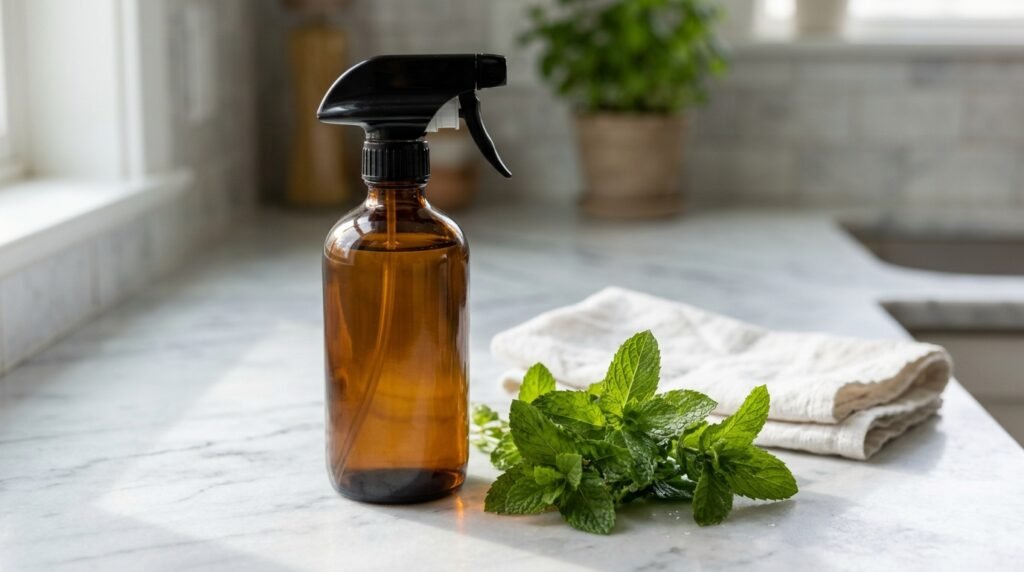
To make a simple DIY spider spray:
- Mix 10 to 15 drops of pure peppermint essential oil with 1 cup of water and a few drops of mild dish soap in a clean spray bottle.
- Shake well and lightly mist along exterior windowsills, door thresholds, and baseboard corners.
- Reapply every one to two weeks, or after wiping down surfaces, since natural essential oils evaporate faster than chemical sprays.
Pet safety note: Essential oils can be irritating or toxic to cats and dogs if ingested or inhaled in concentrated amounts. Spray only in areas pets cannot lick, or skip essential oils altogether and rely on physical sealing and vacuuming.
5. Adjust Outdoor Lighting and Perimeter Habits
Even if you rent an apartment or townhouse, what happens just outside your door affects how many spiders make it inside. Bright white exterior porch lights attract moths, beetles, and mosquitoes at night, turning your entryway into an all-you-can-eat buffet for web-building spiders.
- Switch to warm or yellow bulbs: University of Kentucky Entomology recommends yellow or sodium-vapor outdoor bulbs because they attract far fewer night-flying insects than standard white bulbs. If you cannot change building hallway lights, keep interior blinds closed after dark so indoor light does not draw bugs to your window screens.
- Clear perimeter debris: Keep potted plants, welcome mats, leaf buildup, and firewood piles away from exterior doors and ground-floor windows. Trimming back shrubs or vines that touch exterior walls also removes the natural bridges spiders use to reach windowsills, per SDSU Extension.
When to Call Your Landlord or Pest Control
Most common house spiders—like cellar spiders and wolf spiders—are harmless, and consistent sealing and cleaning usually solve the problem within a couple of weeks. However, if you spot medically significant species such as a black widow or brown recluse, or notice repeated webs despite sealing gaps, document the locations with photos and notify your landlord or property manager. Many rental leases include routine exterior pest control, and University of Kentucky Entomology advises professional treatment when dangerous species are established indoors.
Stocking a few basics—a vacuum with a crevice tool, weatherstripping, airtight storage bins, and a microfiber duster—makes ongoing prevention effortless. If you are setting up a new place, add these items to your essentials for a new apartment so you can stop spiders before they ever move in.