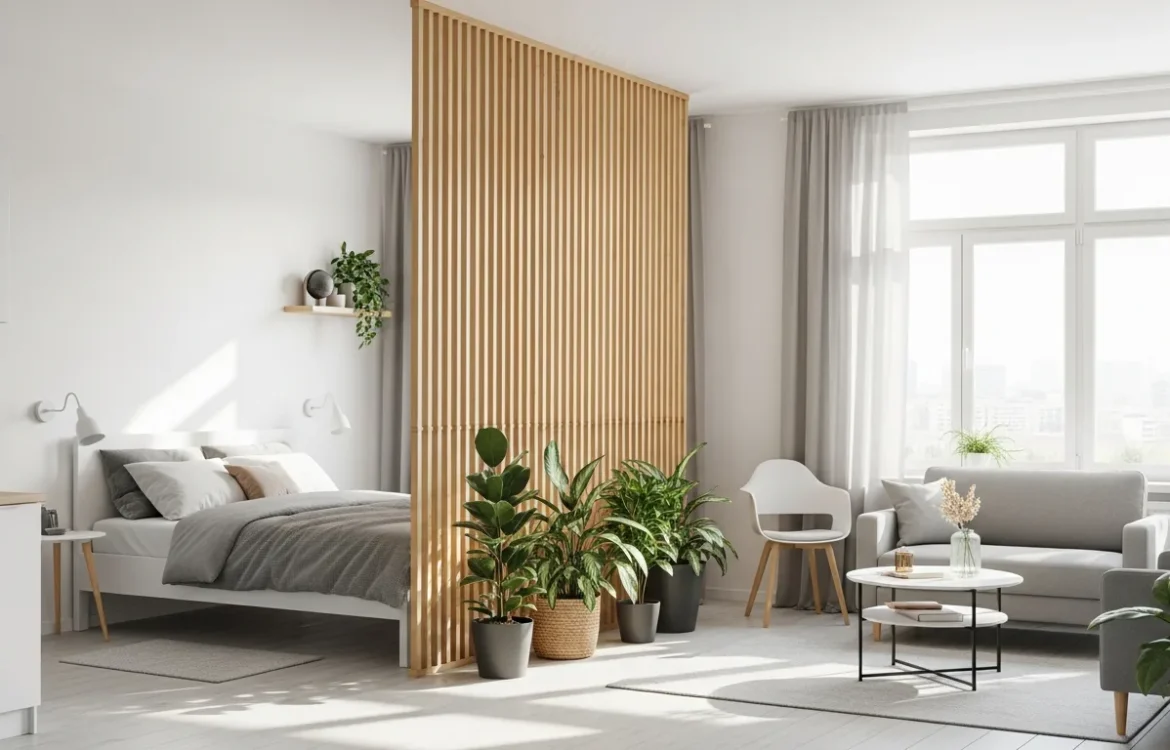
How to Use Studio Apartment Wall Dividers to Create a Multi-Room Feel
The Art of Zoning Your Studio Apartment
Living in a studio apartment often feels like a constant battle for personal space. When a man sleeps, works, and eats in the same twenty-foot radius, the environment can quickly become claustrophobic. The secret to reclaiming his sanity isn’t moving to a bigger place—it is mastering the use of studio apartment wall dividers to create distinct zones.
By strategically placing barriers, he can simulate the feel of a one-bedroom apartment. This doesn’t just improve the aesthetics; it improves his productivity and sleep hygiene by mentally separating his professional life from his rest area.
Bookshelves: The Dual-Purpose Powerhouse
One of the most effective ways to split a room is by using open-backed bookshelves. Unlike a solid wall, an open shelf allows light to pass through, ensuring the apartment doesn’t feel like a series of dark cubicles. He can use these to house his collection of books, tech gear, or plants.
- Stability is key: He should ensure the unit is sturdy enough to stand on its own or use discreet floor-to-ceiling tension mounts.
- Visual Depth: By leaving some cubbies empty, he maintains a sense of openness while still providing a clear physical boundary.
- Storage: It turns a wasted footprint into a functional storage solution for his everyday carry items.
The Professional Edge of Flex Walls
For those who want a more permanent feel without the permanent commitment, installing a temporary flex wall is the gold standard. These are pressurized walls that stay in place without nails or screws, making them perfectly renter-friendly for the modern professional.
A flex wall provides actual privacy, which is essential if he frequently hosts guests or needs a dedicated home office that is completely out of sight from his sleeping quarters. In 2026, many of these systems come with integrated cable management, allowing him to run power for his workstation directly through the divider.
Tension Rods and Heavy Curtains
If he is on a budget or prefers a softer look, tension rods paired with floor-to-ceiling curtains are an underrated solution. This setup is incredibly easy to install and can be pulled back whenever he wants to open the space up for a party or a workout.
He should opt for blackout or heavy velvet fabrics. Not only do these look premium, but they also assist in reducing noise transfer between zones, which is a common complaint in open-concept living. A heavy curtain can dampen the hum of a refrigerator or the clicking of a keyboard, allowing for a more peaceful sleep environment.
Using Furniture as a Natural Border
He doesn’t always need a vertical wall to divide a room. Sometimes, the layout of his furniture does the heavy lifting. Placing a sofa with its back to the bed immediately signals that the area behind it is a private zone.
Adding a console table behind the sofa further reinforces this line. He can use the table as a charging station for his devices or a place to set his morning coffee. This creates a physical path through the apartment, guiding movement and defining the “living room” as a separate entity from the “bedroom.”
Folding Screens for Maximum Versatility
The classic folding screen remains a staple for a reason. It is the most portable option available. If he decides he wants to change his layout on a Sunday afternoon, he can move a folding screen in seconds.
Modern designs have moved away from flimsy paper screens. Today, a man can find industrial metal frames, reclaimed wood panels, or even acoustic felt dividers that soak up echoes. These screens act as a piece of art while serving a vital structural purpose in his home.
Frequently Asked Questions
Do wall dividers make a studio look smaller?
Answer
If chosen correctly, no. Using low-profile or transparent dividers like open bookshelves actually makes a space feel larger by creating the illusion of multiple rooms. It provides a sense of discovery as he moves through the apartment.
Are pressurized walls legal in most rentals?
Answer
Generally, yes, because they do not cause structural damage. However, he should always check his lease agreement or ask his landlord before installation to ensure he doesn’t risk his security deposit.
What is the best divider for a home office?
Answer
A solid divider, such as a flex wall or a heavy folding screen, is best for a home office. It blocks visual distractions and helps him maintain a professional mindset during his working hours.