How Can You Effectively Soundproof Apartment Walls Without Losing Your Security Deposit?
The Physics of Quiet: Why Your Walls Are Leaking Sound
Thin drywall is the enemy of peace. Most modern apartments are built with speed in mind, not silence. Sound travels through vibrations, and if a wall lacks mass, those vibrations pass right through to the other side. A man living in a modern complex often finds himself hearing his neighbor’s late-night gaming sessions or early-morning alarms. To stop this, he needs to address three things: mass, damping, and sealing.
Mass blocks sound, while damping absorbs the energy of the sound waves. If he only focuses on one, he will likely still hear the muffled thuds of a subwoofer or the sharp clatter of dropped keys. Effective soundproofing requires a multi-layered approach that creates a barrier the sound simply cannot penetrate.
High-Density Solutions That Do Not Require Construction
Adding mass is the most effective way to block sound. While he cannot tear down the walls to add professional-grade insulation, he can use Mass Loaded Vinyl (MLV). This is a heavy, flexible material that he can hang like a curtain or tack onto the wall. It is incredibly effective at stopping low-frequency noises that usually bypass thinner materials.
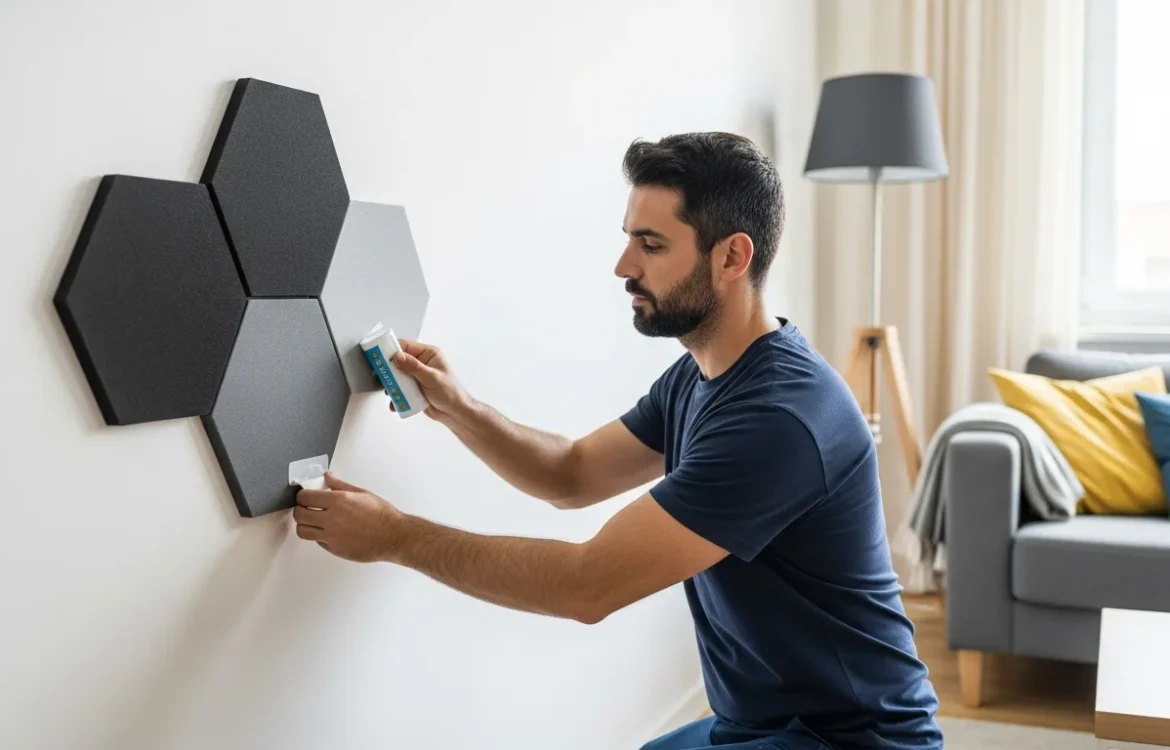
For those looking for a more aesthetic approach, acoustic foam panels or fabric-wrapped fiberglass panels can help absorb mid-to-high frequency sounds, preventing echoes within his own space. He can find several proven methods for soundproofing apartment walls for renters that focus on these non-destructive additions. These panels are lightweight enough to be held up with adhesive strips, making them perfect for a temporary living situation.
Using Furniture as a Strategic Sound Barrier
Sometimes the best solution is already in the room. A heavy, floor-to-ceiling bookshelf filled with books acts as a massive sound absorber. If he places a large wardrobe or a series of bookcases against the offending wall, he creates a secondary layer of mass. The air trapped between the furniture and the wall also acts as a buffer, further decoupling the sound waves.
- Bookshelves: Fill them completely. Gaps between books allow sound to leak through.
- Wardrobes: A heavy wooden wardrobe filled with clothes provides excellent damping.
- Tapestries: While not as effective as MLV, thick wool rugs or tapestries hung on the wall can reduce high-frequency reflections.
Sealing the Gaps: The Often Overlooked Culprits
Sound is like water; it will find the smallest hole and pour through it. He should inspect the baseboards and electrical outlets. Often, there are significant gaps behind the outlet covers where sound travels between units. Using foam gaskets behind the plates is a cheap and invisible fix that can make a noticeable difference.
Additionally, if there is a gap at the bottom of the door or around window frames, weatherstripping or a heavy draft stopper will prevent airborne noise from entering his sanctuary. He should look for “acoustic” grade sealants or tapes, as these are specifically designed to be denser than standard hardware store foam.
Mounting Heavy Acoustic Treatments Safely
When hanging heavy acoustic blankets or MLV, he must be careful not to damage the drywall. Using heavy-duty Command hooks or specialized picture-hanging hardware is a start, but for the heaviest items, he must find the structure behind the plaster. He should spend time locating the standard spacing of wall studs to ensure his soundproofing setup does not come crashing down in the middle of the night.
By securing his soundproofing materials directly into the studs, he ensures the weight is distributed into the frame of the building rather than just the thin surface layer of the drywall. This is especially important in 2026, as many newer builds use thinner gypsum boards that cannot support significant weight without proper anchoring.
Frequently Asked Questions
Does soundproofing actually work in apartments?
Yes, but it is about reduction rather than total elimination. By adding mass and sealing gaps, a man can reduce ambient noise by 50% to 70%, making a loud neighbor sound like a distant murmur.
What is the cheapest way to soundproof a wall?
The most budget-friendly method is moving heavy furniture against the wall and using thick blankets or rugs as wall hangings. Sealing gaps around outlets and baseboards with foam is also very inexpensive.
Can I use egg cartons to soundproof?
No. This is a common myth. Egg cartons are too thin to block sound and too hard to absorb it. They are a fire hazard and provide virtually zero acoustic benefit.
Will my landlord be okay with these changes?
As long as he uses non-destructive mounting methods like adhesive strips, tension rods, or small nail holes that can be easily patched, most landlords will not have an issue with soundproofing efforts.