How Can You Automate Balcony Plant Watering Without a Faucet?
Why Every Balcony Gardener Needs an Automatic Drip System
Lugging a heavy watering can across a small apartment every morning quickly loses its charm. For the man who values his time and his plants, an automatic drip system is the ultimate upgrade. It ensures that his greenery receives consistent hydration, even when he is stuck at the office or away for a long weekend. Beyond convenience, a drip system delivers water directly to the soil, which prevents evaporation and keeps the foliage dry, reducing the risk of fungal diseases.
Setting up a system doesn’t require a background in plumbing. Most modern kits are designed for renters and can be installed in under an hour without drilling or permanent modifications. Whether he has a collection of hardy succulents or a demanding vegetable patch, automation provides the precision needed for a thriving outdoor space.
Choosing Between Gravity-Fed and Pump-Based Systems
The first decision a gardener must make is how the water will reach his pots. If he has an outdoor faucet, a simple battery-operated timer and a pressure regulator are all he needs. However, most apartment balconies lack a dedicated water line. In this case, he has two primary options:
- Gravity-Fed Systems: These involve placing a large water reservoir (like a five-gallon bucket) on a raised surface. Gravity pushes the water through the lines. While simple, they require the reservoir to be significantly higher than the plants to maintain pressure.
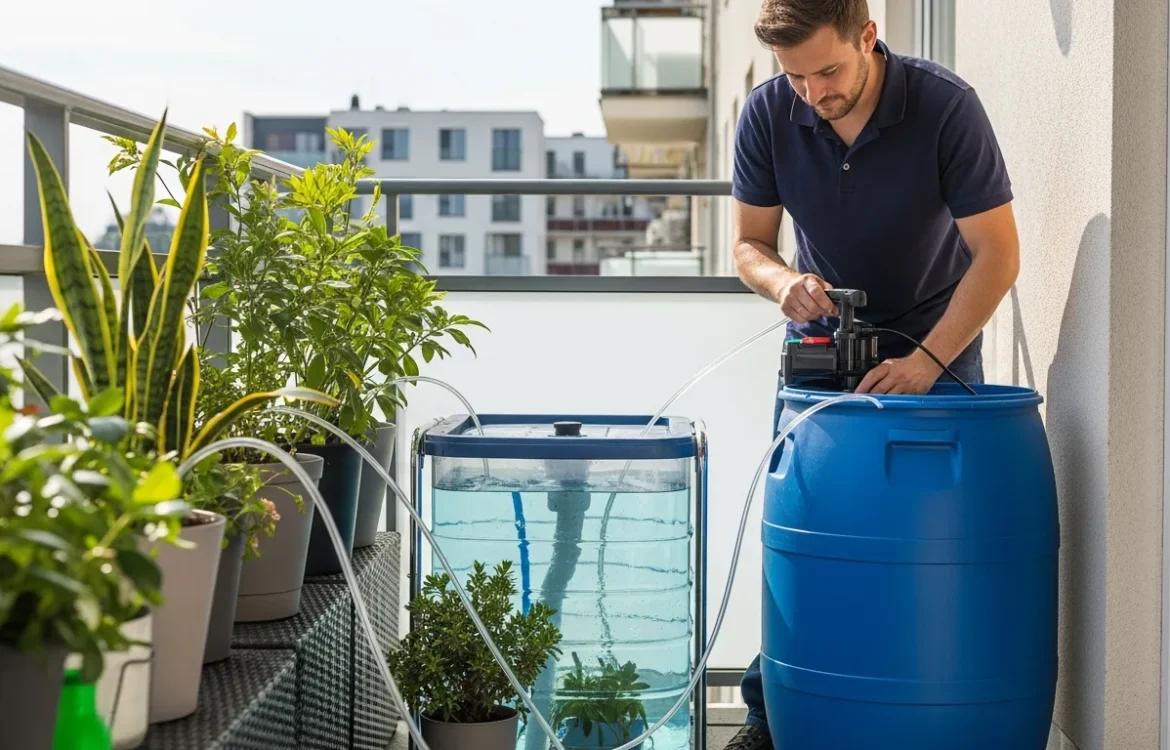
- Solar-Powered Pump Systems: This is the gold standard for balcony setups. A small pump sits inside a water container and is powered by a solar panel. He can program the frequency and duration, and the pump does the heavy lifting, ensuring even distribution regardless of height.
Understanding how often to water balcony container plants is the first step in programming his new system correctly, as different species have vastly different thirst levels.
Essential Components for Your Drip Kit
Before starting the assembly, he should ensure he has the following components ready. Most all-in-one kits include these, but buying higher-quality individual parts can lead to a more reliable setup.
- The Controller/Timer: The brain of the operation. He should look for one with a manual override button for extra-hot days.
- Main Supply Line: Usually 1/4-inch vinyl or polyethylene tubing that carries water from the source to the pots.
- Emitters/Drippers: These are the small nozzles that control the flow rate. Adjustable drippers are best, allowing him to give more water to a thirsty tomato plant and less to a small herb.
- T-Connectors and End Plugs: These allow him to split the line to reach multiple pots and seal the end of the circuit.
- Stakes: These hold the drippers securely in the soil so they don’t spray water onto the balcony floor.
Step-by-Step Installation Guide
1. Map Out the Route: He should place his pots in their final positions. He then measures the distance from the water reservoir to the furthest pot, accounting for corners and obstacles. It is helpful to lay the tubing out in the sun for 15 minutes to make it more flexible and easier to work with.
2. Connect the Source: If using a pump system, he attaches the main line to the pump outlet. For a faucet-based system, he screws the timer onto the tap, followed by the backflow preventer and the tubing adapter.
3. Run the Tubing: He should run the main line along the base of the pots. Using T-connectors, he can branch off smaller sections of tubing to reach individual containers. This keeps the setup tidy and prevents tripping hazards.
4. Install the Emitters: At each pot, he cuts the tubing and inserts a dripper or uses a stake to position the emitter directly over the root zone. Automation is also the best way to water apartment balcony plants without making a mess on the neighbor’s patio below, as it eliminates the splashing common with manual watering.
5. Test and Calibrate: He should run a manual cycle to check for leaks. He must ensure water is dripping from every emitter. If the last pot in the line isn’t getting enough water, he may need to shorten the overall length of the tubing or increase the pump’s power.
Maintenance and Troubleshooting Tips
Even the best system requires occasional oversight. He should check the water reservoir weekly to ensure it hasn’t run dry, as running a pump without water can burn out the motor. If he notices a specific plant looking wilted, the emitter might be clogged with mineral deposits. Soaking the dripper in a bit of vinegar usually clears the blockage.
As the seasons change, he must adjust the timer. In the height of summer, his plants might need two short watering cycles per day, whereas, in the cooler autumn months, once every three days might suffice. Before the first frost, he should drain the lines and bring the timer and pump indoors to prevent ice damage.
Frequently Asked Questions
How long do the batteries last in a balcony watering timer?
Most high-quality timers will last an entire growing season (6-9 months) on a single set of AA or AAA alkaline batteries. However, he should always start the spring with fresh batteries to avoid failure while he is away.
Can I use a drip system for hanging baskets?
Yes, but he will need a pump with enough “head height” to push water upward. He should check the pump’s specifications to ensure it can lift water to the height of his hanging hooks.
Is it okay to use tap water in a reservoir?
Tap water is fine for most plants, but if he lives in an area with very hard water, mineral buildup will happen faster. Using a large bucket also allows chlorine to dissipate before the water reaches the plants, which is a hidden benefit for sensitive species.
What happens if it rains?
Some advanced controllers come with a rain sensor that pauses the schedule. If his system doesn’t have one, he can simply use the manual delay feature on the timer when the forecast calls for heavy rain.