How Can I Stop Hearing My Neighbors Through the Walls?
Understanding the Science of Sound in Thin Apartment Walls
Living in a multi-unit building often means sharing more than just a lobby; it means sharing your life with the sounds of the person next door. Before a man can effectively block out his neighbor’s late-night television or early-morning conversations, he must understand how sound travels. Sound moves in two ways: airborne noise (voices, music) and impact noise (footsteps, vibrations). In most modern apartments, the walls are built with standard drywall that acts like a drum, vibrating and passing sound through the wall cavity.
To achieve true silence, a resident needs to focus on adding mass and damping. While he may not be able to tear down the drywall to install insulation, he can certainly apply surface-level treatments that significantly reduce the decibel levels entering his living space.
The Power of Mass Loaded Vinyl (MLV)
One of the most effective tools for soundproofing walls in an apartment is Mass Loaded Vinyl. This is a heavy, flexible material impregnated with metal particles to increase its density without increasing its thickness. Because it is so dense, it is incredibly difficult for sound waves to vibrate through it.
A renter can hang MLV directly on his wall like a heavy curtain or staple it behind a layer of decorative fabric. While he works on this project, he should ensure he has a partner to help, as a single roll can be quite heavy for him to manage alone. By creating this dense barrier, he effectively stops the wall from acting as a speaker for the noise next door.
Strategic Furniture Placement as a Sound Buffer
Sometimes the best defense is a heavy bookshelf. If a man is looking for a low-cost way to dampen sound, he should look at his existing furniture. A floor-to-ceiling bookshelf filled with books provides a significant amount of mass. The irregular shapes of the book spines also help to diffuse sound waves, preventing them from bouncing directly into the room.
While he explores different strategies for handling loud neighbors, he should also consider placing his wardrobe or a heavy dresser against the offending wall. The more “stuff” he puts between himself and the noise source, the more the sound energy will be absorbed before it reaches his ears.
Acoustic Panels and Aesthetic Soundproofing
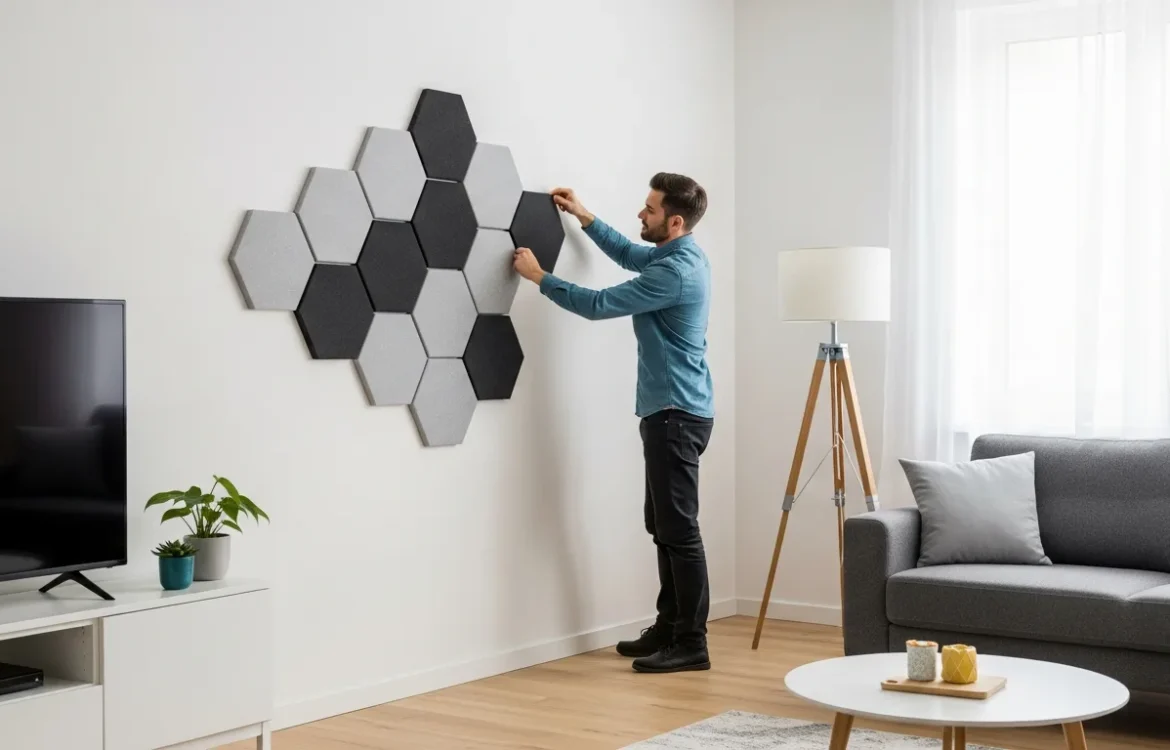
In 2026, soundproofing technology has moved beyond ugly egg-carton foam. Modern acoustic panels come in various colors and geometric shapes, allowing a man to treat his walls without making his apartment look like a recording studio. These panels are designed to absorb mid-to-high frequency sounds, which are common in apartment settings.
Integrating these acoustic solutions with his general functional interior design choices can keep the space looking professional and intentional. For the best results, he should cover at least 20% to 30% of the wall surface area to notice a significant difference in noise reduction.
Sealing the Gaps: Weatherstripping and Acoustic Caulk
Sound is like water; it will find the smallest hole and leak through. Many renters forget to check the gaps around electrical outlets, baseboards, and window frames. A man can use acoustic caulk, which remains flexible even after drying, to seal these tiny cracks. Unlike standard caulk, acoustic sealant does not crack when the building shifts, ensuring the sound seal remains intact.
If he notices sound coming from the hallway, he should check the gap under his door. Installing a heavy-duty door sweep or using weatherstripping around the door frame can block a surprising amount of airborne noise. He should ensure his door sweep is adjusted so it creates a tight seal against the floor when the door is closed.
Using Sound-Dampening Curtains and Wall Hangings
Hard surfaces reflect sound, while soft surfaces absorb it. If a man has large, bare walls, he is essentially living in an echo chamber. To fix this, he can hang heavy, multi-layered soundproofing curtains. These are often marketed as “blackout” curtains, but the thickest versions are specifically designed to dampen sound.
- Thick Tapestries: Decorative rugs or heavy fabrics hung on the wall can act as a secondary barrier.
- Sound Blankets: Moving blankets can be used in a pinch, though they are less aesthetically pleasing.
- Felt Tiles: These are easy to apply with renter-friendly adhesive and provide excellent high-frequency absorption.
Frequently Asked Questions
Can I soundproof my apartment without losing my security deposit?
Yes. Most methods, such as hanging acoustic panels with Command strips, using heavy furniture, or installing removable door sweeps, are completely non-destructive. As long as he avoids permanent structural changes, his deposit should remain safe.
Do egg cartons actually work for soundproofing?
No. This is a common myth. Egg cartons are too thin to block sound and too flimsy to absorb it effectively. They might slightly reduce echoes within a room, but they will do nothing to stop a man from hearing his neighbor’s music.
What is the cheapest way to soundproof a wall?
The most cost-effective method is moving heavy furniture, like a bookshelf or a sofa, against the wall. Adding thick blankets or rugs to the wall surface is another inexpensive way for a resident to dampen noise on a budget.
Is it possible to 100% soundproof an apartment wall?
Total soundproofing, or “sound isolation,” usually requires construction-grade changes like adding a second layer of drywall with Green Glue or installing resilient channels. However, a man can achieve a 50-70% reduction in perceived noise using the renter-friendly methods mentioned above.