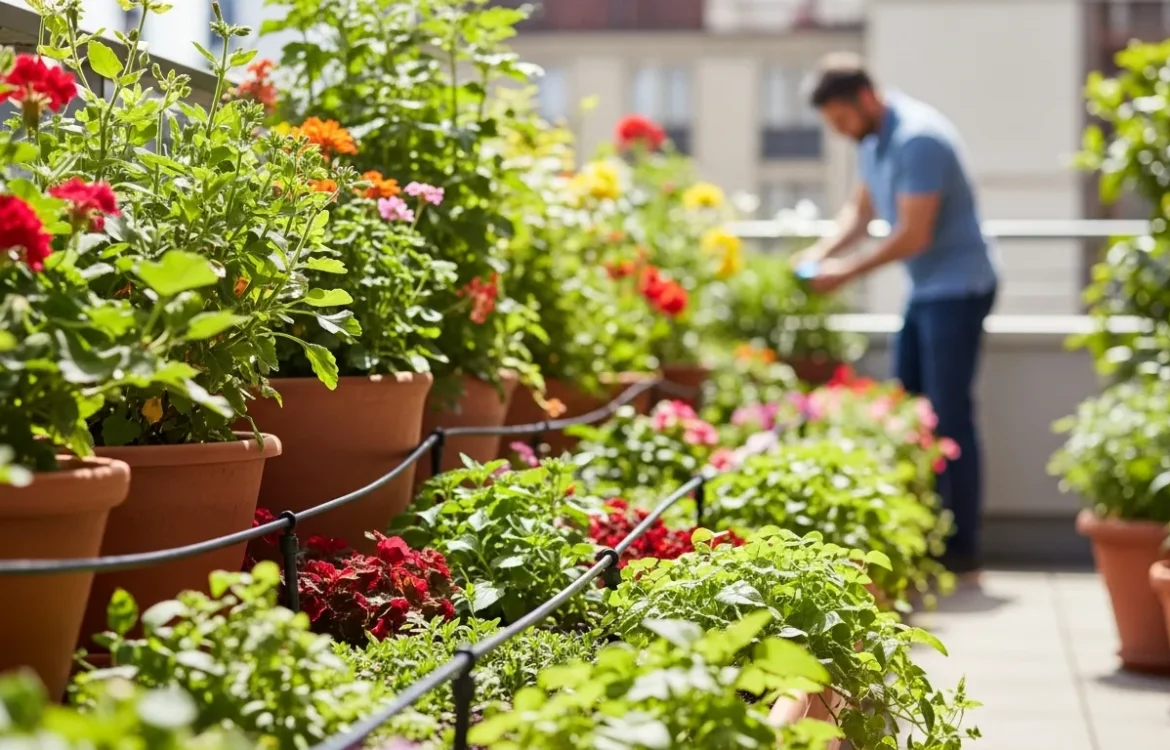
How to Automate Your Balcony Garden: A Step-by-Step Drip Irrigation Guide
Why Every Balcony Gardener Needs an Automatic Drip System
For the modern urbanite, maintaining a lush balcony garden can be a challenge. Whether he is busy with a demanding career or enjoys frequent weekend getaways, his plants often suffer from inconsistent watering. An automatic drip system solves this by delivering precise amounts of water directly to the soil, ensuring that his greenery thrives even when he is away.
Beyond convenience, these systems are remarkably efficient. By optimizing water delivery, a gardener is not only saving his plants but also lowering his monthly utility expenses through efficient resource management. In 2026, smart irrigation technology has become more accessible than ever, making it a must-have for any high-end apartment setup.
Choosing the Right Irrigation System for Your Space
Before purchasing equipment, a gardener must evaluate his specific needs. There are generally three types of systems suitable for a balcony environment:
- Faucet-Connected Systems: These connect directly to an outdoor tap. They are the most reliable and provide consistent pressure.
- Pump-Based Systems: Ideal for balconies without a water source, these use a pump to draw water from a bucket or decorative reservoir.
- Gravity-Fed Systems: These rely on a raised water tank. While simpler, they often require more careful calibration of the emitters.
Every renter should consider adding a compact irrigation kit to his standard apartment essentials list to ensure his outdoor space remains vibrant and professional.
Essential Components of a Drip Setup
To build a high-quality system, he will need to gather several key components. High-quality materials prevent leaks and ensure the longevity of the setup.
The Smart Timer
The brain of the system is the digital timer. In 2026, many of these are Bluetooth or Wi-Fi enabled, allowing a man to adjust his watering schedule from his smartphone. He should look for a model that offers “rain delay” features to avoid overwatering during storms.
Distribution Tubing
Standard systems use a 1/2-inch main line with 1/4-inch distribution lines branching off to individual pots. Using UV-resistant tubing is critical, as the intense sun on a balcony can degrade cheaper plastics quickly.
Emitters and Micro-Drippers
These are the nozzles that control the flow rate. A gardener can choose between fixed-flow drippers or adjustable ones, which allow him to customize the water volume for a thirsty fern versus a drought-tolerant succulent.
Step-by-Step Installation Guide
Setting up the system is a straightforward afternoon project. He should follow these steps to ensure a leak-free experience.
1. Plan the Layout
He should place his pots in their permanent positions and measure the distance between them. This helps him determine the total length of tubing required and the number of T-connectors he will need to purchase.
2. Install the Timer and Backflow Preventer
He should attach the timer to the faucet, followed by a backflow preventer. This ensures that no water from the irrigation lines can flow back into his clean water supply. If he is using a pump system, he should place the pump at the bottom of his reservoir.
3. Lay the Main Line
He should run the primary tubing along the perimeter of the balcony. He can use cable clips to secure the line to the railing or baseboard, keeping the setup tidy and out of the way of foot traffic.
4. Connect the Micro-Lines
Using a punching tool, he should make small holes in the main line and insert the 1/4-inch connectors. He then attaches the smaller tubing and runs it to each individual pot, finishing with a dripper secured by a support stake.
Maintenance for Long-Term Success
Once the system is operational, a gardener must perform occasional maintenance to keep it running smoothly. He should check the emitters every few weeks to ensure they aren’t clogged with mineral deposits. If he lives in a cold climate, he must drain the system before the first frost to prevent the tubing from cracking.
By taking these small steps, he ensures his balcony remains a private oasis of calm and beauty throughout the year.
Frequently Asked Questions
Can I set up a drip system if I don’t have an outdoor faucet?
Yes. You can use a pump-based system that draws water from a large container or rain barrel. These pumps are often solar-powered, making them perfect for balconies.
How long should I run the irrigation system each day?
Typically, 5 to 10 minutes once or twice a day is sufficient for most balcony plants. However, a gardener should monitor the soil moisture for the first week to fine-tune his schedule.
Will the system leak and cause trouble with neighbors below?
If installed correctly with a pressure regulator and secure fittings, the system should not leak. It is also wise to use saucers under pots to catch any minimal runoff.