
How Much Does It Cost to Move a Mobile Home? (2026 Price Guide)
If you are planning to relocate a manufactured residence to private land or a new community, your first question is probably how much does it cost to move a mobile home. In 2026, most homeowners spend between $5,000 and $20,000 for a professional relocation, with the national average landing around $9,000 to $9,750 according to Angi and Forbes Advisor.
That price gap is wide because moving a structure is very different from packing boxes into a rental truck. Your final bill depends on the size of your home, how many miles it travels, whether you book transport-only or full-service movers, and how much site preparation your new lot needs. Breaking those line items down ahead of time helps you build a realistic budget—much like planning other major housing and property costs.
Average Mobile Home Moving Costs by Home Size
The width and weight of your home are the biggest drivers of your quote. A single-wide travels in one piece on a single truck, while a double-wide or triple-wide must be separated into sections, hauled individually, and rejoined on-site.
| Mobile Home Size | Transport-Only (Under 60 Miles) | Full-Service Move (Local) | Typical Average |
|---|---|---|---|
| Single-Wide | $1,000 – $3,500 | $4,000 – $8,000 | $6,000 – $6,500 |
| Double-Wide | $3,000 – $7,000 | $8,000 – $15,000 | $11,500 |
| Triple-Wide | $5,000 – $10,000 | $12,000 – $25,000+ | $18,500 |
Sources: HomeAdvisor, This Old House, and Braustin Homes.
Transport-Only vs. Full-Service Mobile Home Movers
When requesting estimates, you will usually choose between two service tiers:
Transport-Only Moves ($1,000 – $5,000): The crew hitches your move-ready home, hauls it to the destination, handles basic transit permits, and sets it on the lot. You remain responsible for disconnecting utilities, removing skirting or decks, and hiring local contractors to level and hook up the home afterward (This Old House).
Full-Service Moves ($4,000 – $25,000+): One company coordinates everything from teardown and utility disconnection to hauling, re-leveling, anchoring, and reconnecting water, sewer, and power. Setup and teardown labor alone typically adds $3,000 to $4,000 to the base transport rate (Angi).
How Distance Affects Your Moving Quote
Most licensed movers charge a flat base rate for local relocations within 50 to 60 miles, then bill per mile beyond that threshold. Towing rates typically run $4.00 to $5.50 per mile for the hauling vehicle alone (Extra Space Storage).
- Very short moves (under 5 miles): $1,000 – $5,000
- Short-distance moves (under 100 miles): $5,000 – $9,000
- Long-distance moves (100+ miles or across state lines): $15,000 – $25,000+ (Angi, Braustin Homes)
Longer routes also trigger overnight crew stays, multi-state permit filings, and stricter highway travel curfews, which push total moving costs higher.
Hidden and Additional Costs to Budget For
A low transport quote rarely tells the whole story. Before signing a contract, factor in these common extra expenses:
- Transit and Installation Permits ($100 – $2,000+)
Every state requires oversized-load transit permits to haul a manufactured home on public roads, and most counties require building or installation permits at the new address. Depending on local jurisdictions and route length, permit fees range from $100 to $2,000+ (Extra Space Storage). - Escort Vehicles ($1.50 – $3.50 Per Mile)
If your home is wide enough to encroach on adjacent traffic lanes—common with 16-foot single-wides, double-wides, and triple-wides—state laws often mandate front and rear pilot cars. Escort vehicles generally cost $1.50 to $3.50 per mile per vehicle, adding several hundred dollars to a 100-mile trip (Braustin Homes). - Site Preparation and Foundation Work ($10,000 – $30,000+ on Raw Land)
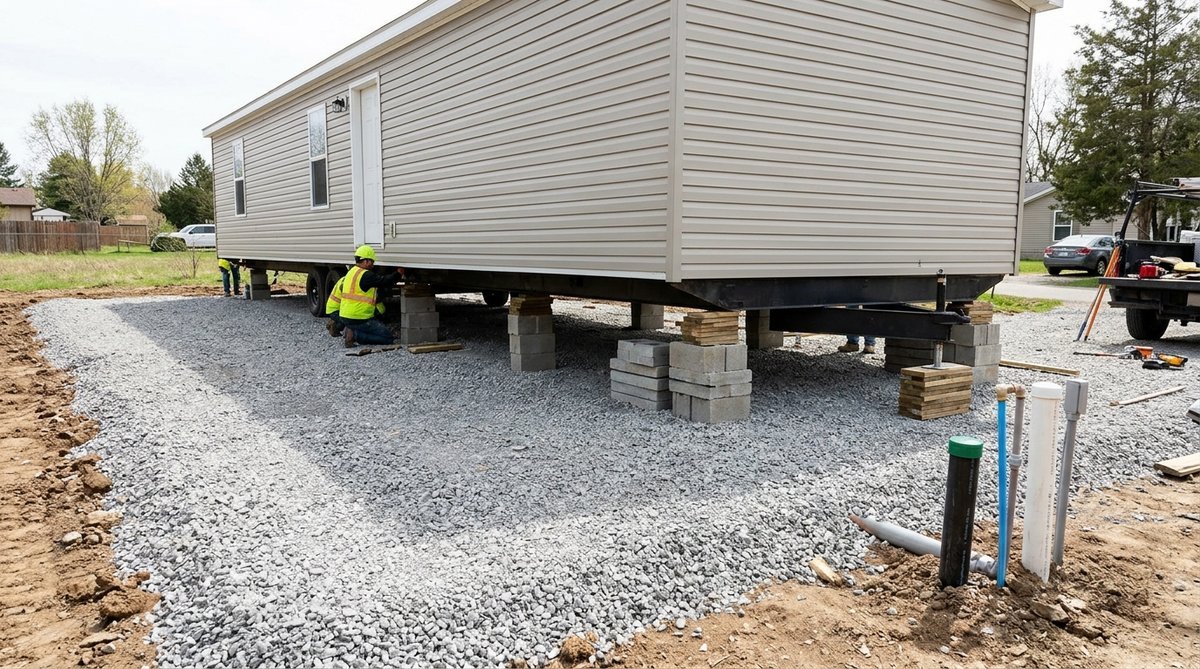
If you are moving into an established mobile home park with a concrete pad and existing hookups, setup is straightforward. Moving onto undeveloped private land is much pricier. Clearing trees, grading soil, pouring a gravel or concrete pad, and installing a septic system or well can add $10,000 to $30,000+ (Angi, Braustin Homes). - Skirting, Steps, and Anchoring ($1,000 – $8,000)
Once the home is leveled, it must be secured with tie-downs and anchors to meet local wind-zone codes. Reinstalling or replacing vinyl skirting, rebuilding porches or steps, and reconnecting water, sewer, and electricity typically cost $1,000 to $8,000 depending on whether materials can be reused (Extra Space Storage). - Transit Insurance
Standard homeowners policies usually exclude structural damage that happens on the highway. Confirm that your mover carries active USDOT licensing and cargo liability coverage, and ask whether you need a temporary trip-transit policy.
Can You Move an Older Pre-1976 Mobile Home?
Homes built before June 15, 1976 predate federal Department of Housing and Urban Development (HUD) safety and construction standards (Forbes Advisor). Many counties and manufactured home communities prohibit relocating pre-1976 units onto new lots. Even where legal, older frames and roofs may need costly structural reinforcement before a licensed hauler will touch them—making it worth comparing your moving quote against the home’s current market value.

Smart Ways to Lower Your Mobile Home Moving Cost
- Handle non-structural prep yourself: Remove vinyl skirting, detach wooden steps or awnings, pack loose items, and unhook non-hardwired appliances before the crew arrives.
- Compare at least three itemized quotes: Ask each USDOT-licensed mover to separate towing, permits, escort cars, and setup fees so you can spot hidden markups.
- Choose a move-in-ready pad: Selecting a lot that already has water, sewer, and 200-amp electrical service saves thousands in site development.
- Keep a 10% to 20% contingency buffer: Unexpected tire replacements, rusted axle repairs, or tree trimming along narrow driveways can pop up on moving day. For more practical moving logistics tips, explore our full relocation guides.
Frequently Asked Questions
Can I move a mobile home myself to save money?
In almost all cases, no. Towing an oversized residence requires commercial heavy-haul trucks, specialized hitching gear, USDOT authority, state transit permits, and liability insurance. Focus on DIY prep work rather than DIY hauling.
Is it worth paying $10,000+ to move a mobile home?
Moving usually makes financial sense if your home is in good structural shape, built after 1976, and you are moving it onto land you own—eliminating ongoing lot rent. If the home needs major roof or frame repairs, selling it in place and buying another unit closer to your destination may be cheaper.
How long does it take to move a mobile home?
While the highway drive might take a single day, permits, route approvals, utility disconnections, and post-move leveling usually stretch the full timeline to 2 to 6 weeks. Have questions or a moving cost story to share? Reach out through our contact page.