How Far Apart Are Wall Studs? The Standard Measurements for Your Home
Understanding Standard Wall Stud Spacing
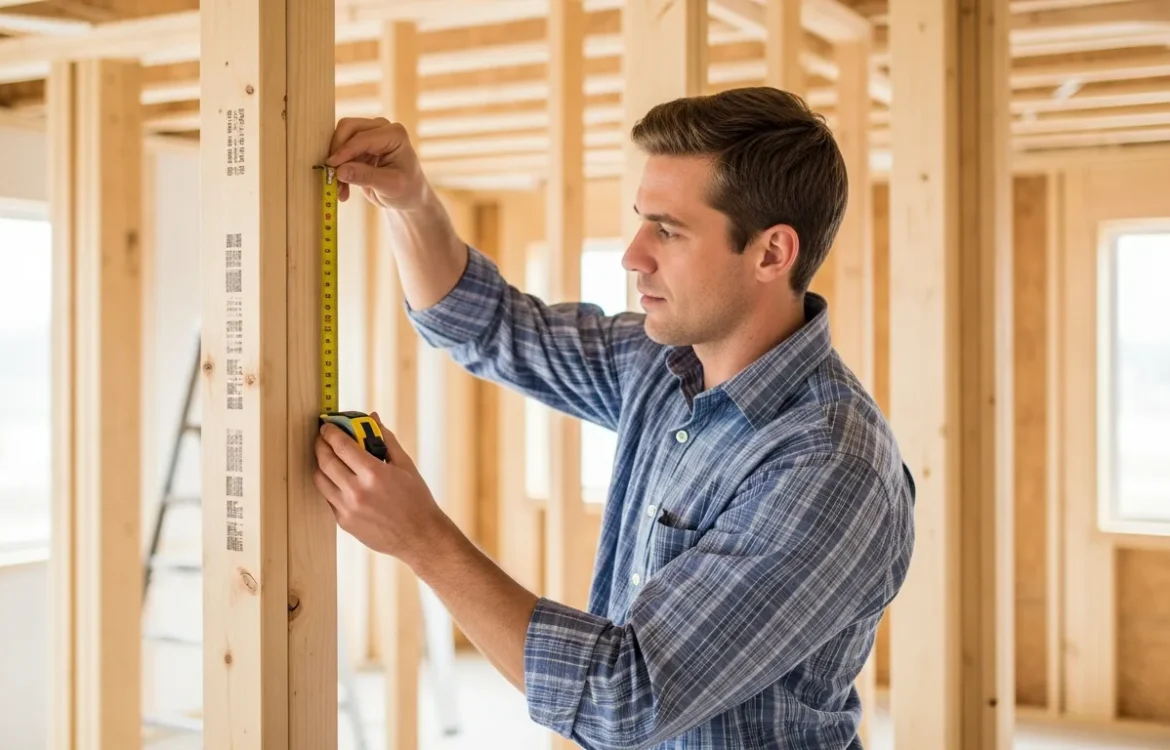
When a man decides to mount a heavy television or install floating shelves, his first priority is locating the structural support behind the drywall. In most residential constructions, wall studs are spaced exactly 16 inches apart from the center of one stud to the center of the next. This is known as “on-center” spacing.
This 16-inch standard has been the industry benchmark for decades because it provides optimal structural integrity while fitting standard 4-foot by 8-foot sheets of plywood or drywall perfectly. When he measures from the corner of a room, he will likely find a stud every 16 inches, allowing him to secure his projects with confidence that the weight is supported by the frame rather than just the brittle plaster.
The 24-Inch Spacing Exception
While 16 inches is the most common measurement, he may encounter homes where the studs are 24 inches apart. This is often found in newer, “advanced framing” constructions or in non-load-bearing interior walls. Builders use this wider spacing to increase energy efficiency by reducing the amount of wood (which conducts heat) and increasing the amount of insulation within the wall cavity.
If he is working in a modern apartment or a recently renovated space in 2026, he should verify the spacing before drilling. If he finds that the first few studs are further apart than the standard 16 inches, he is likely dealing with a 24-inch on-center layout. This knowledge is essential for executing his unique apartment interior design ideas without creating a mess of unnecessary holes.
How to Locate Studs Without Professional Tools
He does not always need an expensive electronic stud finder to locate the wood behind his walls. A few time-tested tricks can help him identify where the support lies:
- The Knock Test: He can rap his knuckles against the wall. A hollow sound indicates the space between studs, while a solid, higher-pitched thud suggests he has found a stud.
- The Outlet Trick: Electrical boxes for outlets and switches are almost always nailed to the side of a stud. By removing the cover plate, he can often see which side the wood is on.
- Measuring from Corners: Since studs usually start at the corner of a room, he can measure 16 or 24 inches out to find the likely position of the first internal support.
- Visual Cues: If he looks closely at the baseboards or crown molding, he might see small filled-in holes where the trim was nailed into the studs.
By being precise with his measurements, he can ensure he knows how to get his apartment deposit back by avoiding the structural damage that comes from missed drill attempts and crumbling drywall.
Why Stud Spacing Matters for Renters
For a tenant, understanding wall anatomy is a matter of safety and financial prudence. If he mounts a heavy object into the drywall alone, the weight will eventually pull the anchors through the wall, potentially causing injury or expensive property damage. By hitting the center of the stud, he ensures the load is transferred to the building’s foundation.
In 2026, many landlords allow for minor modifications, but they expect the work to be done professionally. When he uses a level and measures the standard 16-inch intervals, his installations will be straight, secure, and easy to patch when his lease ends.
Frequently Asked Questions
How many inches apart are wall studs in older homes?
In very old homes, stud spacing can be irregular. While many follow the 16-inch rule, some older constructions used 12-inch spacing for extra strength, or completely random intervals based on the materials available to the builder at the time.
Are studs always made of wood?
No, in many high-rise apartment buildings and commercial structures, he will find metal studs. These are usually spaced at the same 16 or 24-inch intervals but require specific self-tapping screws for mounting.
What is the easiest way to find the center of a stud?
Once he locates the edge of a stud using a magnet or a stud finder, he should remember that a standard 2×4 stud is actually 1.5 inches wide. He can find the center by measuring 3/4 of an inch inward from the edge.
Can I hang a TV between studs?
It is highly discouraged for him to hang a heavy TV between studs using only drywall anchors. If the VESA mount does not align with his stud spacing, he should use a mounting board (a piece of plywood) that spans across two studs, then attach the TV mount to that board.