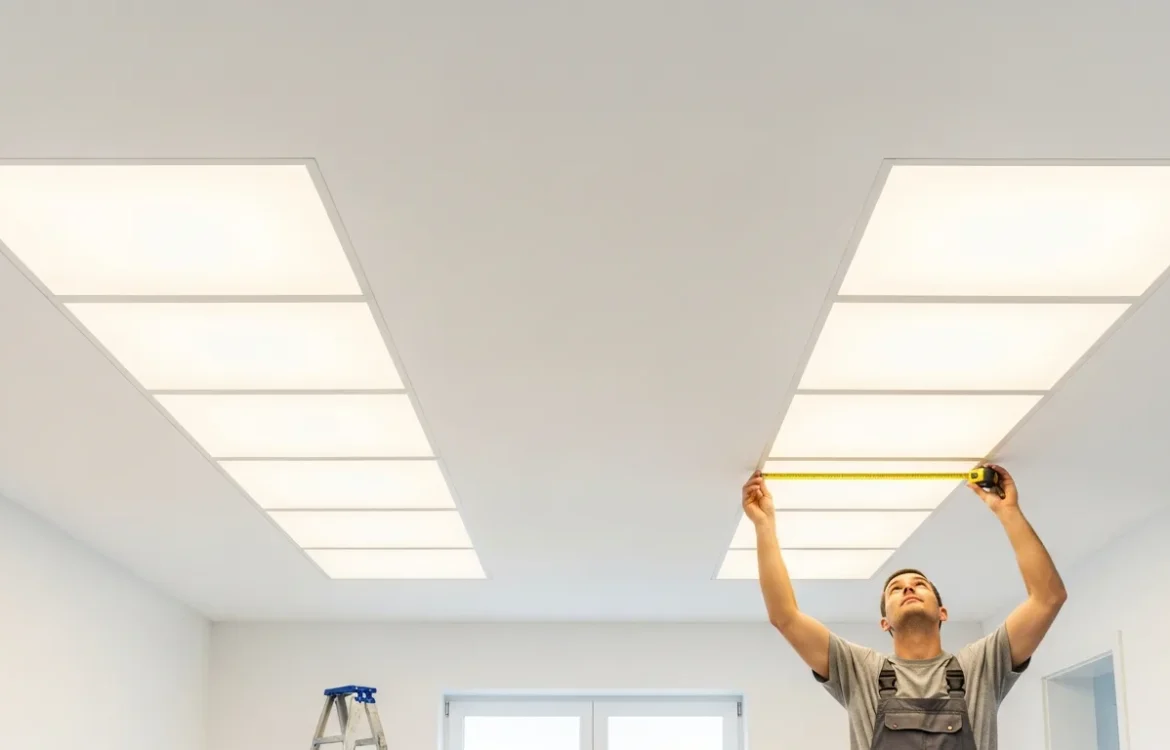
How Far Apart Should Recessed Lights Be? The Professional Spacing Formula
Understanding the Core Rule of Recessed Lighting Spacing
Achieving the perfect lighting layout is both a science and an art. When a homeowner decides to upgrade his space, the most common question he faces is how to avoid creating a room that feels like a dark cave or, conversely, an over-bright surgical suite. The fundamental rule of thumb used by professionals is the ceiling height divided by two formula.
For example, if a man is working with an 8-foot ceiling, he should space his recessed lights approximately 4 feet apart. If the ceiling is 10 feet high, the spacing increases to 5 feet. This calculation provides a reliable baseline for general ambient lighting, ensuring that the light cones overlap sufficiently to eliminate shadows without overwhelming the senses. Integrating these fixtures into your broader apartment interior design ideas can transform a cramped space into an open, airy environment.
The Impact of Room Function on Spacing
While the “divide by two” rule is a great starting point, the specific function of a room often dictates a more nuanced approach. Not every space requires the same intensity of illumination, and a wise installer will adjust his plan accordingly.
Kitchen and Task Lighting
In the kitchen, lighting is primarily about utility. A man needs clear, bright light to see what he is doing while prepping meals or reading recipes. For this reason, spacing in a kitchen is often tighter. Over countertops and islands, recessed lights should be placed closer together—roughly 2 to 3 feet apart—to ensure that task areas are fully illuminated. He should also align the lights with the edge of the counter to prevent his own shadow from falling on his workspace.
Living Rooms and Hallways
In living areas, the goal is usually a relaxed, ambient glow. Here, he can stick strictly to the 4-to-5-foot rule. In hallways, the focus is on safety and navigation. Spacing can be slightly wider, but the lights should be centered along the path to provide a clear guide through the home. Before a homeowner begins his installation, he should understand how to set up electricity safely or consult a licensed professional to ensure the circuit can handle the load.
Calculating Distance from the Walls
One of the most frequent mistakes in recessed lighting layout is placing the cans too close or too far from the walls. If the lights are too close, they create a “scalloping” effect—bright arcs of light on the wall that can be distracting. If they are too far away, the corners of the room remain in shadow.
The standard practice is to place recessed lights approximately 2 to 3 feet away from the walls. This allows the light to reflect off the vertical surfaces, which actually makes the room feel larger. A man should measure from the center of the light fixture to the wall to maintain consistency throughout the layout.
Technical Factors: Trim Size and Beam Angle
In 2026, the variety of LED recessed lighting options is greater than ever. The size of the light (the trim) and the angle at which the light leaves the bulb (the beam angle) significantly affect how far apart they should be placed.
- 4-Inch Fixtures: These smaller lights are popular for modern, minimalist looks. Because they produce a narrower beam, he may need to space them closer together to achieve full coverage.
- 6-Inch Fixtures: These are the traditional standard. They offer a wider wash of light, allowing for the standard 4-to-5-foot spacing in most residential settings.
- Beam Angle: A bulb with a narrow beam angle (spotlight) requires tighter spacing, while a wide flood beam allows for more distance between units.
Common Pitfalls to Avoid
Even with a solid plan, a man can run into issues if he doesn’t account for the physical structure of his home. He must check for joists, HVAC ducts, and plumbing lines before cutting holes in his ceiling. Using a stud finder and a small pilot hole can save him hours of frustration. Additionally, he should always use a dimmer switch. This allows him to adjust the intensity of the light to suit his mood, providing flexibility that fixed-output lighting simply cannot match.
Frequently Asked Questions
How far apart should recessed lights be in a bedroom?
In a bedroom, you typically want softer lighting. Spacing them 4 to 5 feet apart is standard, but many homeowners prefer to place them toward the perimeter of the room rather than directly over the bed to avoid glare while lying down.
Can I mix 4-inch and 6-inch recessed lights?
Yes, a man can mix sizes, but he should do so purposefully. For example, he might use 6-inch lights for general illumination in a large living room and 4-inch lights to highlight a specific architectural feature or a piece of art.
What is the best height for recessed lighting?
Recessed lighting is designed to be flush with the ceiling. The “height” factor refers to the ceiling itself; higher ceilings require more powerful bulbs (higher lumens) or tighter spacing to ensure the light reaches the floor effectively.
How do I avoid shadows in the corners?
To avoid dark corners, ensure the first light in a row is no more than 3 feet from the corner. This ensures the light spread reaches the intersection of the walls, maintaining a bright and uniform appearance throughout the space.