How Do You Start an Apartment Hydroponic Garden? A Practical Setup Guide
Why Hydroponics is the Ultimate Apartment Hack
Living in a high-rise shouldn’t stop a man from growing his own food. Traditional soil gardening is messy, heavy, and often attracts pests that are a nightmare to manage in a small rental. Hydroponics eliminates the soil, using nutrient-rich water to deliver exactly what plants need directly to their roots. This results in growth rates up to 50% faster than soil-based methods.
For the apartment dweller, the benefits are clear: no heavy bags of dirt to haul up the elevator, no muddy runoff on the floor, and the ability to stack systems vertically to maximize every square inch of a studio or one-bedroom layout. While indoor apartment gardening tips for beginners usually focus on pots and potting mix, switching to a water-based system is the most efficient way to turn a corner of a living room into a productive farm.
Choosing the Right System for Small Spaces
Not all hydroponic setups are built for apartment life. You need something quiet, leak-proof, and compact. Here are the three best options for a beginner:
- Kratky Method: The simplest entry point. It requires no electricity or pumps. A plant sits in a net pot above a reservoir of nutrient water. As the plant drinks, the water level drops, creating an air gap for the roots to breathe.
- Deep Water Culture (DWC): This involves a reservoir and an air pump with an air stone. The pump oxygenates the water, preventing root rot and exploding growth rates. It’s slightly louder due to the hum of the pump but highly effective.
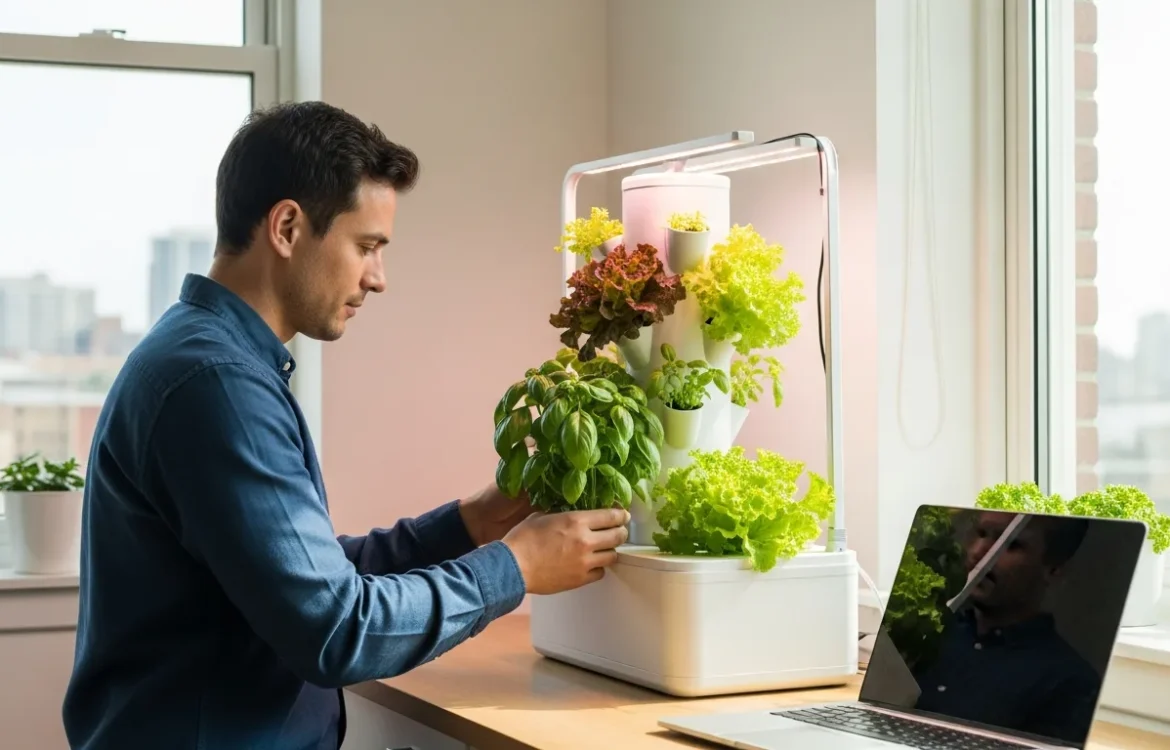
- Countertop Plug-and-Play: Brands like AeroGarden offer all-in-one units. These are perfect for a man who wants a “set it and forget it” experience, though they offer less customization than a DIY build.
Essential Gear for Your Indoor Setup
To succeed, you need to control the environment. Since your plants won’t have access to direct, high-intensity sunlight, LED grow lights are non-negotiable. Modern LEDs are energy-efficient and won’t spike your electric bill. Properly calibrating your grow lights ensures your greens don’t become leggy or weak as they reach for a light source.
Beyond lighting, you will need a pH testing kit. Hydroponic plants are sensitive; if the water is too acidic or alkaline, they cannot absorb nutrients. Aim for a pH between 5.5 and 6.5 for most leafy greens. You’ll also need a high-quality liquid nutrient solution specifically formulated for hydroponics—standard garden fertilizer will not work here as it lacks the micronutrients necessary for water-only growth.
Best Crops for Your First Harvest
Don’t try to grow corn or watermelons in your first month. Start with high-turnover crops that provide immediate value to your kitchen. Loose-leaf lettuce, kale, and spinach are incredibly forgiving and thrive in water-based systems. Herbs like basil, mint, and cilantro also grow like weeds in a hydroponic environment.
These plants have shallow root systems and low light requirements compared to fruiting plants like tomatoes or peppers. Once a man masters the nutrient balance for greens, he can graduate to more complex crops that require pollination and higher-intensity light cycles.
Step-by-Step Assembly Guide
Setting up a basic DWC system can be done in under an hour. Follow these steps to get your first seeds in the water:
- Prepare the Reservoir: Use a food-grade black plastic bin (to block light and prevent algae growth). Drill holes in the lid that match the size of your net pots.
- Install the Air Stone: Place the air stone at the bottom of the bin and connect it to the air pump via silicone tubing. This keeps the water oxygenated.
- Mix the Nutrients: Fill the bin with filtered water and add your nutrient solution according to the bottle’s instructions. Check the pH and adjust until it hits the 5.8 to 6.2 range.
- Insert the Plants: Place your seedlings into net pots filled with an inert medium like clay pebbles (hydroton). Ensure the very bottom of the net pot touches the water surface.
- Set the Timer: Plug your grow lights into a digital timer. Most leafy greens need 14–16 hours of light per day to thrive indoors.
Maintenance and Troubleshooting
The most common mistake a beginner makes is neglecting the water level. As plants grow, they drink faster. Check the reservoir weekly and top it off with pH-balanced water. Every two to three weeks, perform a full reservoir change to prevent salt buildup from the nutrients.
If you notice yellowing leaves, it’s usually a sign of a pH imbalance or a nutrient deficiency. If the roots look brown and slimy instead of white and fuzzy, your water lacks oxygen—check your air pump immediately. Keeping the water temperature cool (under 75°F) is also vital to prevent root rot and keep the system running smoothly.
Frequently Asked Questions
How much does a basic apartment hydroponic setup cost?
A DIY Kratky or DWC setup can be built for $50 to $100, including the light. High-end automated countertop systems typically range from $150 to $400 depending on the size and features.
Does a hydroponic system use a lot of electricity?
No. Modern LED grow lights and small air pumps are very efficient. Running a small system 16 hours a day usually adds less than $5 to $10 to a monthly utility bill.
Can I grow vegetables without a window?
Yes. In fact, hydroponics is often more successful away from windows where temperatures fluctuate. With a quality grow light, you can grow plants in a closet, a basement, or a dark corner of your kitchen.
Is hydroponic food as healthy as soil-grown food?
Yes. Because you are providing the exact minerals the plant needs, hydroponic produce is often more nutrient-dense than store-bought produce that has been sitting in transport for days.