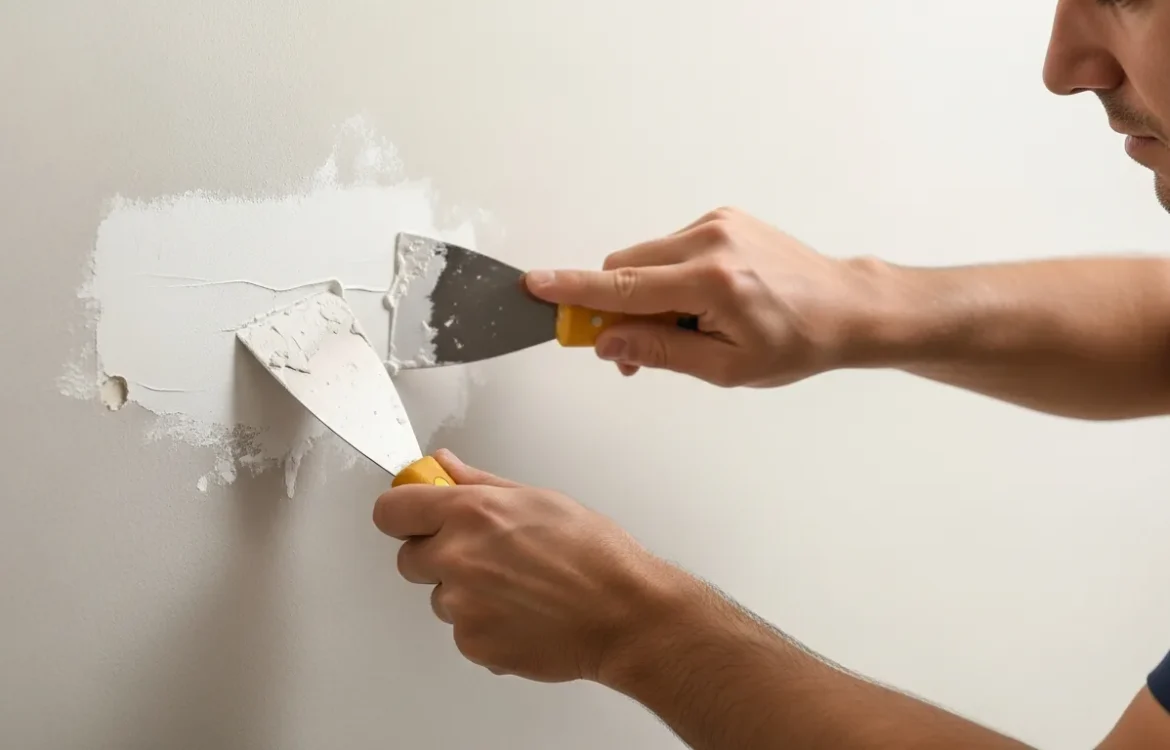
How to Fix a Hole in Your Apartment Wall and Save Your Security Deposit
Assessing the Damage: Small Dings vs. Large Gaping Holes
A hole in an apartment wall usually happens in the blink of an eye. Maybe he was moving a heavy dresser and the corner caught the drywall, or perhaps he misjudged the distance while trying to find out how far apart wall studs are to mount a shelf. Before he panics about his security deposit, he needs to categorize the damage.
Small holes, such as those from nails or tacks, are considered normal wear and tear by many landlords, but it is always safer to patch them. Medium holes, often caused by door handles or furniture impacts, require a bit more finesse. Large holes—anything bigger than five inches—usually require a California patch or a mesh bridge to provide structural support for the joint compound.
The Essential Renter’s Repair Kit
He doesn’t need a full contractor’s van to fix a standard hole. A trip to the local hardware store for a few basics will suffice. He should grab a small tub of lightweight spackle, a putty knife (plastic is fine for one-time use), and fine-grit sandpaper (220 grit works best). For larger repairs, a self-adhesive mesh patch is a lifesaver.
If he wants to avoid this hassle in his next unit, he might consider apartment wall decoration damage-free options like high-quality adhesive hooks or tension rods. These prevent the need for drilling and keep the drywall intact from day one.
Step-by-Step Guide to Patching Small Holes
For those annoying nail holes left behind after taking down pictures, the process is straightforward. He should start by cleaning the area. If there is any protruding drywall or loose paper, he can use the handle of his putty knife to gently tap it into the hole, creating a small indentation.
- Apply the Spackle: He should take a small amount of spackle on the edge of the putty knife and swipe it across the hole.
- Level it Out: Using a clean edge of the knife, he should scrape away the excess in one smooth motion.
- Dry and Sand: Once the spackle is dry (usually 30 minutes to an hour), he should lightly sand the area until it is flush with the surrounding wall.
Fixing Larger Holes with Mesh Patches
When the hole is too large for spackle alone, he needs a mesh patch. He should center the adhesive patch over the hole and press it firmly against the wall. He then applies a thin layer of joint compound over the mesh, feathering the edges outward to blend the repair into the wall.
He must resist the urge to apply one thick layer. Two or three thin layers, with sanding in between, will result in a much more professional finish. If he rushes this part, the landlord will notice the “bump” on the wall during the final walkthrough, which could lead to a deduction from his deposit.
Matching the Paint: The Renter’s Biggest Challenge
The patch is the easy part; matching the paint is where most men fail. He should never guess the color. If he can find a small, loose flake of the original paint (perhaps from inside the hole or behind a baseboard), he can take it to a paint store for a professional color match.
If he cannot get a sample, he should ask the property manager for the specific paint brand and color code. Most apartment complexes use a standard “Contractor White” or “Antique White” in a flat or eggshell finish. Applying the paint with a small foam roller rather than a brush will help mimic the texture of the rest of the wall, making the repair invisible.
When to Call the Landlord Instead of DIY
There are times when a DIY fix is a bad idea. If the hole was caused by a burst pipe, electrical issues, or if it’s located in a high-moisture area like the bathroom, he should report it to maintenance immediately. Attempting to cover up structural or plumbing-related damage can lead to mold or electrical fires, which will cost him far more than a simple repair fee. He should be honest about accidental damage; often, a landlord appreciates the transparency and may only charge a nominal fee for the repair.
Frequently Asked Questions
Can I use toothpaste to fill a hole in the wall?
No. While this is a common “hack,” toothpaste shrinks, cracks, and eventually yellows. A landlord will spot this immediately, and it may result in a professional repair charge being deducted from the security deposit.
How long does it take for wall patch to dry?
Lightweight spackle usually dries in 30 minutes. However, deeper holes filled with joint compound may take 24 hours to cure completely before they are ready for sanding and painting.
Do I have to paint the whole wall after a patch?
If he has an exact color match, he can usually “feather” the paint around the patch. However, if the wall is faded or the match is slightly off, he might need to paint the entire section from corner to corner to ensure it looks uniform.