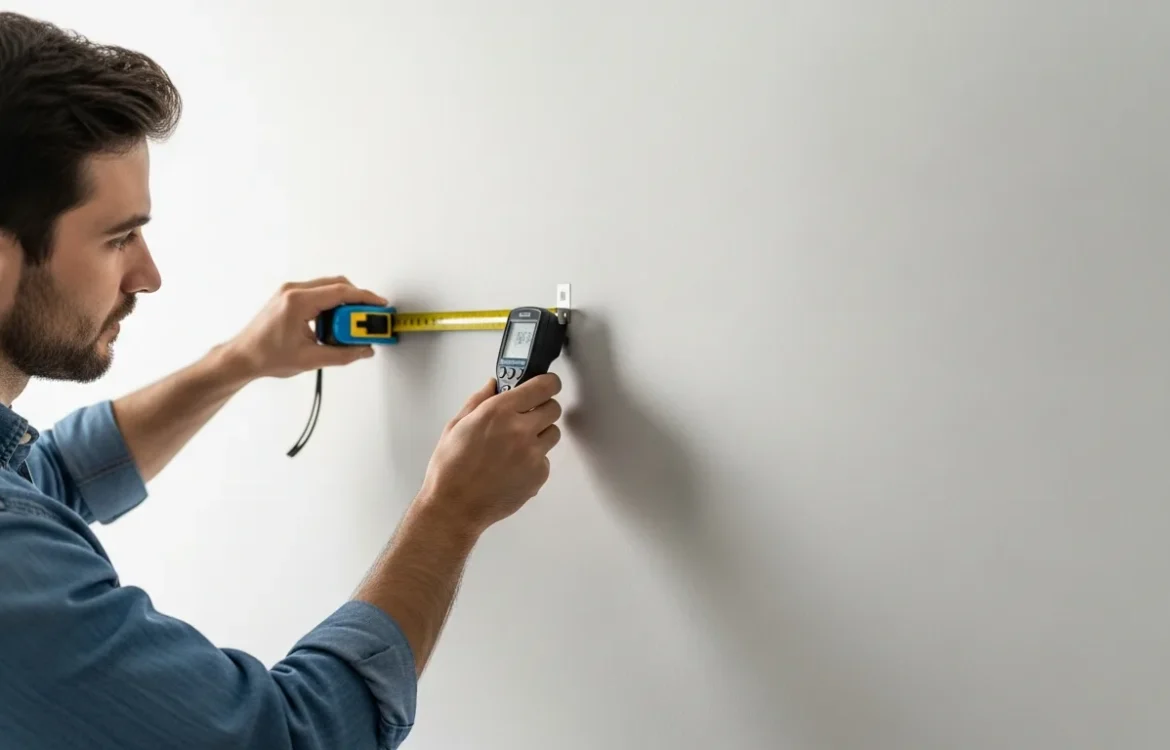
How Far Apart Should Wall Studs Be? A Practical Guide for Renters
The Standard Spacing for Wall Studs
When a man decides to mount a heavy shelf or a flat-screen TV, his first priority is finding solid wood behind the drywall. In the vast majority of modern residential construction, wall studs are spaced 16 inches apart. This measurement is taken “on center,” meaning from the center of one vertical stud to the center of the next.
This 16-inch standard exists for a reason. It provides the necessary structural integrity to support the weight of the roof and upper floors while perfectly accommodating standard 4×8 sheets of drywall or plywood. If he measures from a corner and finds a stud at 16, 32, or 48 inches, he can be confident he has found the framing.
When Studs Are 24 Inches Apart
While 16 inches is the norm, he might encounter 24-inch spacing in specific scenarios. This is often referred to as “advanced framing” or “Ove-framing.” It is more common in newer, energy-efficient builds or on interior non-load-bearing walls where the extra vertical support isn’t strictly necessary.
If he is working in a utility room, a garage, or a newer apartment complex designed with material efficiency in mind, he should check for this wider gap. Knowing this prevents the frustration of drilling a pilot hole where he expects a stud to be, only to hit empty air. When hanging a TV on the wall in an apartment, he must verify this spacing before buying a mount, as some smaller mounts are only designed to span 16-inch gaps.
How to Locate Studs Without a Stud Finder
He doesn’t always need a battery-powered gadget to find wood. Most builders follow predictable patterns that a savvy renter can exploit. Here are a few reliable tricks:
- Check the Outlets: Electrical boxes are almost always nailed to the side of a stud. He can remove the plastic cover plate and look inside to see which side the wood is on.
- The Knock Test: Tapping the wall with a knuckle produces a hollow sound between studs and a solid, muffled thud directly over a stud.
- Look for Trim Nails: Baseboards and crown molding are nailed into the studs. If he looks closely for small filled-in dimples in the trim, he’ll likely find his vertical supports.
- The Flashlight Trick: By holding a flashlight flush against the wall, he can see small imperfections or “nail pops” in the drywall that indicate where the sheet was fastened to the timber.
Why Precision Matters for Apartment Dwellers
For a man living in a rental, precision isn’t just about safety; it’s about protecting his security deposit. Missing a stud creates unnecessary holes that he will have to patch and paint later. If he is hesitant about drilling into the walls at all, he might consider apartment wall decoration damage-free alternatives that rely on adhesives or tension rather than structural framing.
However, for heavy mirrors, large art pieces, or bike racks, the stud is non-negotiable. Drywall anchors have weight limits, and they can fail spectacularly if overloaded. By confirming the 16-inch or 24-inch pattern, he ensures his belongings stay on the wall and his floor remains undamaged.
Frequently Asked Questions
Are studs always 16 inches apart?
No, while 16 inches is the most common standard for load-bearing walls, some interior walls or energy-efficient homes use 24-inch spacing. Older homes built before modern building codes may also have irregular spacing.
How do I know if my wall is load-bearing?
Generally, exterior walls are load-bearing. For interior walls, he can check the attic or basement; if a wall runs perpendicular to the floor joists or sits directly above another wall or beam, it is likely load-bearing.
Can I hang a TV on a 24-inch stud gap?
Yes, but he needs to ensure the wall mount bracket is wide enough to reach both studs. Many standard mounts are 17 to 20 inches wide, which works for 16-inch studs but will not bridge a 24-inch gap.
What if I find a stud at an odd interval?
Sometimes builders add “fire blocks” (horizontal wood) or extra studs near windows, doors, and corners. If he finds a stud at 12 or 20 inches, it’s likely a specialized support piece rather than the main framing pattern.