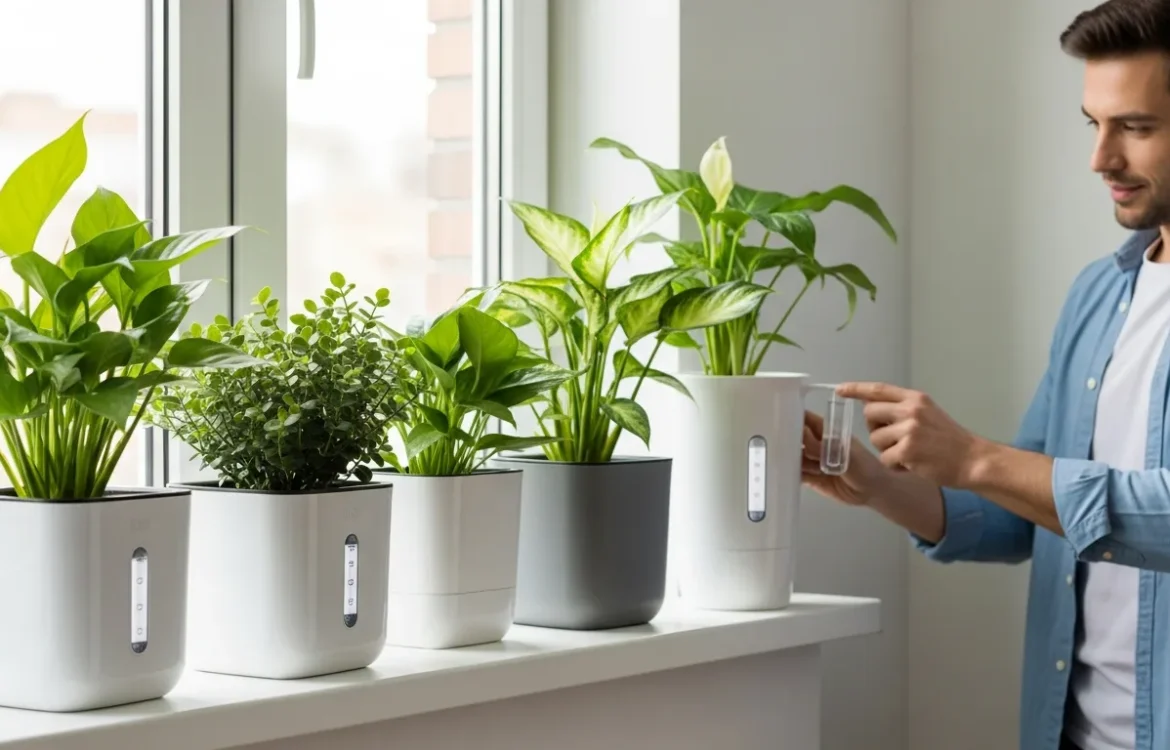
Which Self-Watering Pots Actually Keep Your Apartment Plants Alive?
The Renter’s Solution to the Black Thumb
Forget the guilt of coming home to a wilted fiddle leaf fig after a long weekend away. For the busy man living in a high-rise or a compact studio, keeping greenery alive is often a battle against a hectic schedule. Self-watering pots are the ultimate hack, acting as a reservoir system that allows plants to drink at their own pace.
These systems are particularly vital for renters who may deal with fluctuating indoor temperatures or limited natural light. Instead of guessing when his soil is dry, a man can rely on a built-in mechanism to handle the hydration. This not only saves time but also prevents the common mistake of overwatering, which is the leading cause of plant death in apartments.
Top-Rated Self-Watering Pots for Modern Apartments
When choosing a pot, he needs to look for a balance between aesthetics and engineering. Not all reservoirs are created equal. Some rely on simple cotton wicks, while others use sophisticated sub-irrigation platforms.
- The Window Box Specialist: Ideal for herbs in a kitchen, these long, narrow planters use a water-level indicator to show exactly when a refill is needed.
- The Decorative Ceramic Hybrid: These look like high-end decor but hide a plastic inner liner that holds the water, preventing leaks on expensive hardwood floors.
- The Vertical Tower: For the man with zero floor space, these stackable self-watering units turn a corner of the living room into a lush green pillar.
Integrating these pots into a broader apartment container gardening guide ensures his indoor jungle stays manageable without turning into a full-time chore.
Essential Features for the Busy Renter
Before he drops money on a set of new planters, he should check for three specific features that make life easier. First is the water level indicator. A simple float or transparent window eliminates the guesswork. He shouldn’t have to stick his finger in the dirt every morning to see if the plant is thirsty.
Second, he needs to ensure the pot has an overflow hole. This is especially important if he keeps plants on a balcony. During a heavy rain, an overflow hole prevents the reservoir from flooding the roots and causing rot. When he wants to maintain a lush balcony without dripping water onto the neighbor below, he should learn how to water apartment balcony plants without making a mess by using these contained systems.
Finally, consider the reservoir capacity. A larger reservoir means he can go longer between refills—sometimes up to three weeks depending on the plant type and the humidity of his apartment.
Avoiding Common Pitfalls: Root Rot and Algae
While self-watering pots are designed to be “set and forget,” they aren’t entirely maintenance-free. If he leaves stagnant water in the reservoir for months, he might notice a funky smell or algae growth. He should aim to flush the reservoir once every few months to keep the system fresh.
Root rot can also occur if the soil mix is too heavy. In a self-watering setup, he should use a well-draining potting mix—usually one with extra perlite or coco coir. This ensures that while the bottom of the soil stays moist, the top layers allow the roots to breathe. If he notices his plant’s leaves turning yellow and mushy, he likely needs to let the reservoir run dry for a few days to let the root system oxygenate.
Frequently Asked Questions
Do self-watering pots work for all plants?
No. They are excellent for tropical plants like peace lilies, ferns, and pothos that love consistent moisture. However, he should avoid using them for succulents or cacti, which require their soil to dry out completely between waterings.
How often do I need to refill the reservoir?
Typically, a reservoir lasts between 10 to 20 days. This depends on the size of the pot, the plant’s thirst, and the temperature of the apartment. In the heat of summer, he may find himself refilling it weekly.
Can I use these pots outdoors on a balcony?
Yes, but he must ensure the pot has an overflow drain. Without it, a heavy rainstorm will fill the reservoir and the soil chamber, essentially drowning the plant’s roots in standing water.
Do self-watering pots attract gnats?
They can, as fungus gnats love moist soil. To prevent this, he can add a layer of decorative sand or pebbles on top of the soil to discourage gnats from laying eggs, while the self-watering system keeps the roots hydrated from below.