How to Use Mirrors to Brighten a Dark Apartment: Best Placements and Styles
The Secret to Doubling Your Natural Light
Walking into a dim, shadowy apartment can immediately dampen a man’s mood. Whether he is dealing with a north-facing unit or a space tucked away in a narrow alley, the lack of sunlight is a common struggle. However, he doesn’t need to rewire the ceiling or buy dozens of floor lamps to fix it. The most effective tool in his arsenal is a strategically placed mirror.
Mirrors act as secondary windows. By capturing whatever light enters the room and throwing it back into the shadows, a well-chosen mirror can make a cramped studio feel like a sprawling loft. It’s not just about seeing his reflection; it’s about manipulating physics to his advantage.
The Best Mirror Styles for Light Distribution
Not all mirrors are created equal when it comes to illumination. If his goal is to maximize brightness, he should look for specific designs that prioritize surface area and reflection quality.
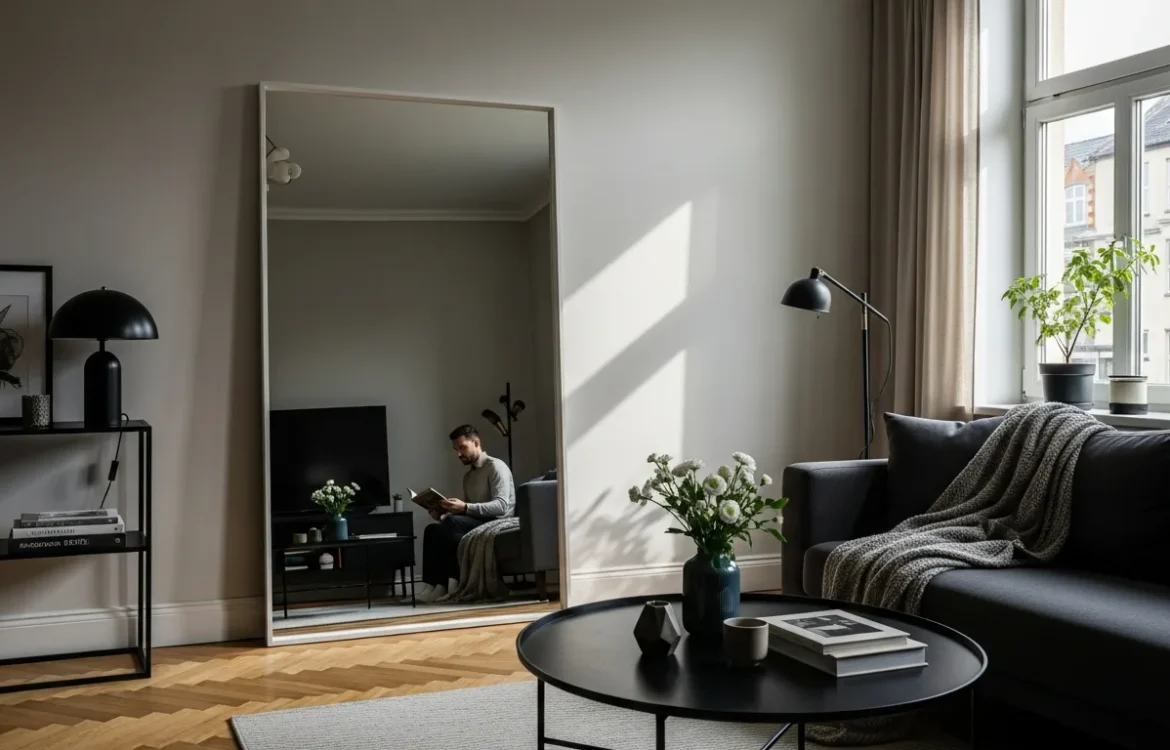
- Oversized Floor Mirrors: A large, leaning mirror is the heavy hitter of light reflection. Because of its massive surface area, it catches light from multiple angles. When he leans it against a wall, the slight upward tilt helps bounce light toward the ceiling, making the entire room feel airier.
- Window-Pane Mirrors: These are designed with frames that mimic a traditional window. For a man living in a room with only one small window, placing a window-pane mirror on an adjacent wall creates the optical illusion of a second light source, tricking the brain into thinking the space is naturally brighter.
- Sunburst and Round Mirrors: While smaller, these are excellent for breaking up dark corners. The circular shape helps diffuse light in a 360-degree radius rather than a single direction.
Strategic Placement: Where to Hang Them
Placement is more important than the mirror itself. If he hangs a mirror in a dark hallway where no light reaches, it will simply reflect the darkness. To truly brighten up a basement-level living room or a dim apartment, he needs to follow the “opposite rule.”
The Opposite Rule: He should place the mirror directly across from his largest window. This allows the mirror to catch the maximum amount of incoming daylight and bounce it deep into the room. If the layout doesn’t allow for this, placing the mirror perpendicular to the window is the next best move.
He should also consider the entryway. Most apartment foyers are notoriously dark. A mirror here catches light from the living area and pulls it into the entrance, ensuring he isn’t walking into a black hole the moment he opens his front door.
Renter-Friendly Mounting Solutions
Most landlords aren’t fans of tenants drilling heavy-duty anchors into the drywall. If he wants to avoid losing his security deposit, he needs to think about damage-free wall decoration techniques. For lighter mirrors, high-strength adhesive strips are a solid choice. However, for those heavy, light-bouncing floor mirrors, leaning them is the safest and most stylish option.
If he must mount a heavy mirror, he should use a stud finder to ensure the weight is supported by the building’s frame rather than just the plaster. This prevents the mirror from crashing down and damaging both the floor and the wall.
Maximizing the Effect with Furniture
Mirrors don’t have to be confined to the walls. He can incorporate mirrored or metallic furniture to further enhance the brightness. A glass-top coffee table or a sideboard with mirrored doors can act as additional reflective surfaces that catch low-level light that wall mirrors might miss.
By combining a large floor mirror with light-colored rugs and minimalist furniture, he creates an environment where light is constantly moving rather than being absorbed by dark fabrics and heavy woods.
Frequently Asked Questions
Can a mirror make a room feel warmer?
While a mirror doesn’t generate heat, it can make a room feel visually warmer by reflecting the golden tones of sunset or the warm glow of indoor lamps, reducing the “cold” feeling of a dark space.
How big should the mirror be?
Generally, the larger the better for light. He should aim for a mirror that covers at least 25% to 30% of the wall it’s on if the primary goal is increasing brightness.
Does the frame color matter?
Yes. A light-colored or metallic frame (silver, gold, or white) will help reflect more light, whereas a thick black or dark wood frame can absorb light and make the mirror feel like a heavy “hole” on the wall.