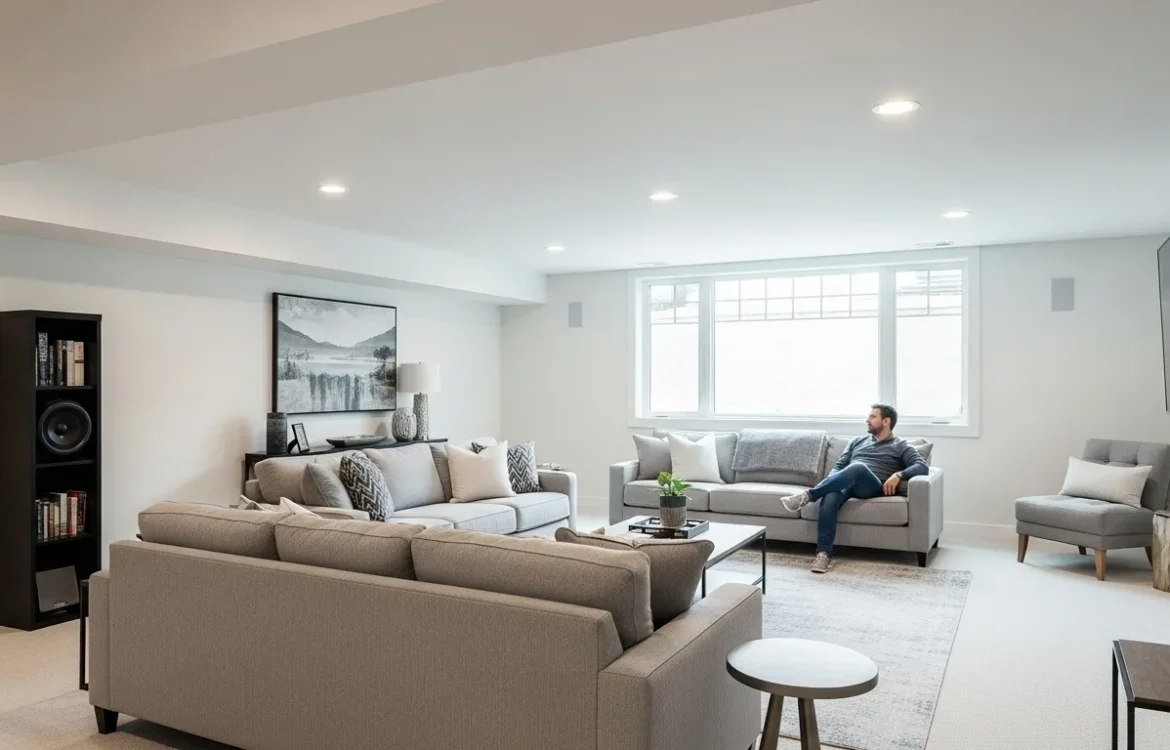
How Can You Make a Basement Living Room Feel Brighter and More Inviting?
Master the Art of Layered Lighting
The biggest mistake a man makes when moving into a basement-level living room is relying solely on a single overhead light fixture. This creates harsh shadows and makes the ceiling feel like it is closing in. To fix this, he needs to implement layered lighting. This involves combining ambient, task, and accent lighting to fill every corner of the room.
- Floor Lamps: Position tall torchiere lamps in corners to bounce light off the ceiling, creating an illusion of height.
- LED Strips: He can install warm-white LED strips behind a TV or under shelving to add depth and eliminate dark pockets.
- Table Lamps: Use these on side tables to provide a warm glow at eye level, which makes the space feel more intimate and less like a cellar.
Use Reflective Surfaces Strategically
In a space with limited natural light, every photon counts. Mirrors are the most effective tool for multiplying the light that does manage to enter the room. By placing a large mirror directly opposite a window, he can catch the incoming daylight and throw it back into the darker parts of the living area.
Choosing the best mirrors to bounce light in dark apartments can instantly double the perceived brightness of a room. Beyond mirrors, he should consider furniture with metallic accents, glass tops, or high-gloss finishes. A glass coffee table, for instance, allows light to pass through it rather than blocking it, which keeps the floor plan looking open and airy.
Choose a Light and Airy Color Palette
While dark, moody colors are trendy, they can make a basement feel claustrophobic. To brighten the space, he should stick to a palette of whites, soft grays, or light beiges. These colors have a high Light Reflectance Value (LRV), meaning they reflect more light than they absorb.
If he finds an all-white room too sterile, he can introduce color through light-toned woods or pastel accents. When selecting renter-friendly wall decor for garden-level apartments, he should focus on pieces that don’t absorb too much light. Large-scale art with plenty of white space or metallic frames works best to maintain a sense of openness.
Optimize Window Impact and Treatments
Basement windows are often small and high up, but they are still vital. He must keep the glass spotless; even a thin layer of dust can significantly reduce the amount of light filtering through. Furthermore, he should avoid heavy, dark drapes that eat up the limited window real estate.
Instead, he should opt for sheer curtains or light-colored linen panels. If privacy is a concern, top-down, bottom-up shades are an excellent choice. They allow him to keep the bottom half of the window covered while leaving the top open to let in the maximum amount of sky-view light.
Select Furniture with a Small Footprint
Bulky, overstuffed sofas that sit directly on the floor can make a basement feel heavy and cramped. To combat this, he should look for “leggy” furniture—pieces that are raised off the ground on tapered legs. This allows the eye to see more of the floor, which trick the brain into thinking the room is larger and brighter.
He should also prioritize low-profile furniture. Keeping the height of the sofa and chairs lower prevents them from blocking the sightlines across the room, making the ceiling appear higher than it actually is. Acrylic or “ghost” chairs are another pro-level move, as they provide seating without adding any visual weight to the room.
Incorporate Low-Light Greenery
Nothing breathes life into a subterranean space like actual living plants. Even if the living room doesn’t get direct sunlight, several species thrive in low-light conditions. Adding greenery helps break up the “concrete box” feel of a basement and improves air quality.
He should consider Snake Plants, ZZ Plants, or Pothos. These are incredibly resilient and can handle the lower light levels of a basement. Placing a plant in a corner next to a floor lamp not only highlights the foliage but also adds a natural, vibrant element that makes the room feel less like a basement and more like a curated living space.
Frequently Asked Questions
What is the best light bulb color for a basement?
He should aim for “Cool White” or “Daylight” bulbs (around 3500K to 5000K) for general tasks, as they mimic natural light. However, for a cozy living room feel, “Warm White” (2700K) is better for accent lamps to avoid a clinical atmosphere.
Can I use dark furniture in a basement living room?
Yes, but he should limit it to one or two statement pieces. If he has a dark leather sofa, he should balance it with a light-colored rug and bright throw pillows to prevent the piece from becoming a “black hole” in the room.
How do I make a basement ceiling look higher?
He can paint the ceiling a brighter white than the walls and use vertical elements, such as floor-to-ceiling shelving or tall floor lamps, to draw the eye upward.