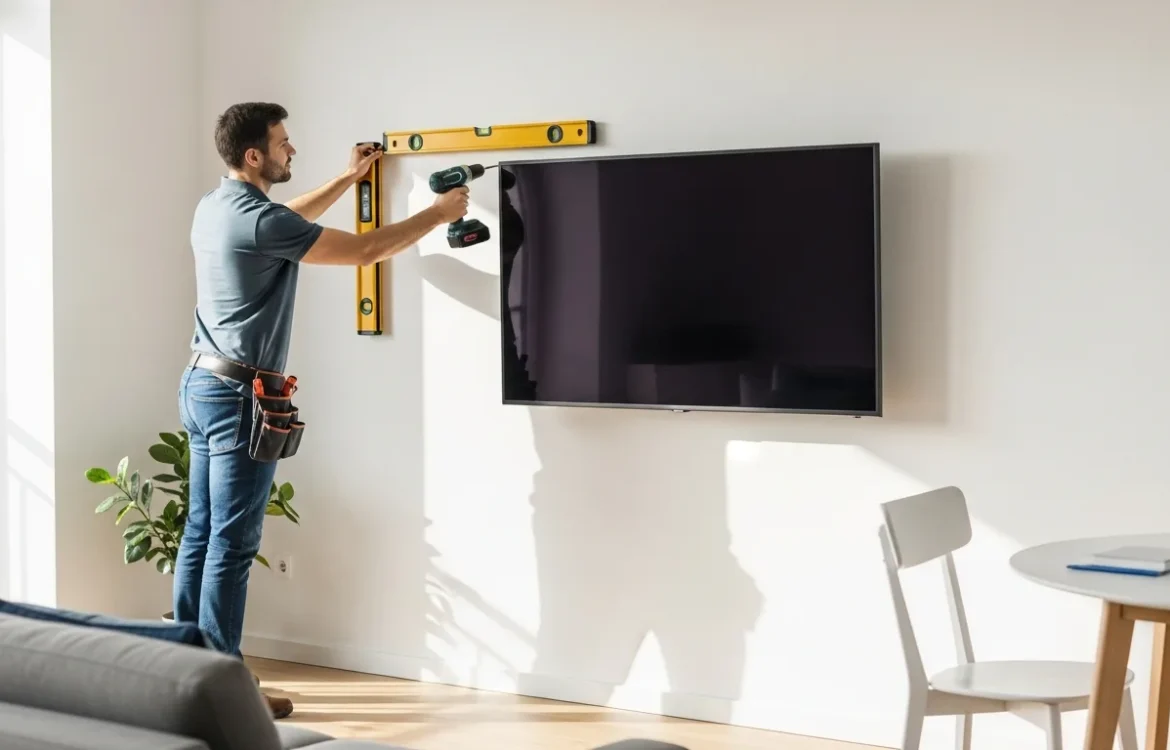
Is Hanging a TV on Your Apartment Wall Allowed? A Complete Renter’s Guide
Understanding Your Lease and Permission
Before a tenant picks up a drill, he must first consult his lease agreement. Most modern rental contracts include a clause regarding wall alterations. While small nail holes for pictures are often considered normal wear and tear, the larger bolts required for hanging a TV on a wall in an apartment may fall under a different category. A responsible tenant will check if he needs written consent from his landlord to avoid any disputes later on.
In 2026, many property managers have become more lenient with TV mounting, provided the work is done professionally. If a man is unsure, he should send a brief email to his landlord explaining his plan. This proactive approach shows he is a conscientious occupant who respects the property. When he starts planning his modern apartment living room layout, the position of the television is usually the first decision a man makes to maximize his space and comfort.
Essential Tools and Materials for a Professional Install
To ensure the TV stays secure and the wall remains intact, a man needs the right equipment. Using the wrong hardware is the fastest way to cause structural damage or, worse, have an expensive OLED screen crash to the floor. He should gather the following items before starting:
- Stud Finder: Essential for locating the wooden or metal beams behind the drywall.
- Power Drill and Bits: For creating pilot holes.
- Level: To ensure the mount isn’t slanted.
- Socket Wrench: To tighten the heavy-duty lag bolts.
- Painter’s Tape: Useful for marking the wall without leaving residue.
Using high-quality anchors is non-negotiable. If he cannot locate a stud, he must use specialized heavy-duty toggle bolts designed for hollow walls, though mounting directly into a stud is always the preferred method for maximum security.
Finding Studs and Avoiding Utilities
The most critical step in hanging a TV on an apartment wall is finding a solid anchor point. Most apartment buildings use studs spaced 16 or 24 inches apart. A man should use his stud finder to locate the edges of the stud and mark the center. This ensures the lag bolt has the most wood to grip onto.
He must also be mindful of what lies behind the drywall. In many urban apartments, electrical wires and water pipes run through the wall cavities. A tenant should look for nearby outlets or light switches; usually, wires run vertically or horizontally from these points. By avoiding these areas, he ensures he doesn’t cause a utility emergency that would require expensive repairs.
Step-by-Step Guide to Mounting the TV
Once the studs are located and the height is determined, it is time for the installation. A man should follow these steps to ensure a perfect result:
- Position the Mount: He should hold the wall plate against the wall and use a level to make sure it is perfectly straight.
- Mark the Holes: Using a pencil or painter’s tape, he marks the exact spots where the bolts will go.
- Drill Pilot Holes: He should drill a small hole first to confirm he has hit the stud. If the drill bit meets resistance and comes out with wood shavings, he has successfully hit his mark.
- Secure the Wall Plate: He then drives the lag bolts through the mount and into the wall using a socket wrench.
- Attach Brackets to the TV: He must carefully screw the mounting brackets into the VESA holes on the back of his television.
- Hang and Lock: With a steady hand, he lifts the TV onto the wall plate and engages the locking mechanism.
No-Drill Alternatives for Renters
If a tenant’s lease strictly forbids drilling, or if he is simply uncomfortable with the process, there are several 2026-era alternatives that provide a similar aesthetic. No-drill TV mounts often use a series of small nails angled into the drywall, which can support significant weight while leaving holes no larger than a standard picture hook.
Another popular option is the “leaning” mount or a floor-to-ceiling tension mount. These allow a man to achieve the look of a wall-mounted TV without actually penetrating the wall surface. These solutions are ideal for those living in historical buildings where the walls may be made of brittle plaster rather than modern drywall.
Patching Walls Before You Move Out
Eventually, every tenant must move on. Taking the time to patch small holes ensures a tenant can successfully claim his security deposit upon moving out. He should remove the mount carefully, fill the bolt holes with a high-quality spackling compound, and sand it flush once dry.
If the apartment has a specific paint color, he can often take a small flake of the original paint to a local hardware store for a color match. By applying a small amount of touch-up paint with a foam brush, he makes the wall look as if the TV was never there. This attention to detail reflects well on his character and protects his financial interests.
Frequently Asked Questions
Will hanging a TV ruin my security deposit?
Not necessarily. If a tenant patches the holes and touches up the paint professionally before he moves out, the landlord likely won’t have grounds to deduct from the deposit. However, leaving large, gaping holes will almost certainly result in a charge.
Can I mount a TV on a brick wall in an apartment?
Yes, but it requires a masonry drill bit and lead anchors or concrete screws. A man should be extra careful here, as brick is permanent and harder to “patch” than drywall if he makes a mistake.
How high should I hang my TV?
The general rule is that the center of the screen should be at eye level when seated. For most men, this is approximately 42 inches from the floor to the center of the TV.
What is the best way to hide wires in a rental?
Since cutting holes for in-wall cable routing is usually forbidden in apartments, a man should use paintable cable raceways. these plastic tracks adhere to the wall and neatly hide all HDMI and power cords.