How Far Apart Are Studs on a Wall? Standard Spacing and Finding Tips
Understanding Standard Wall Stud Spacing
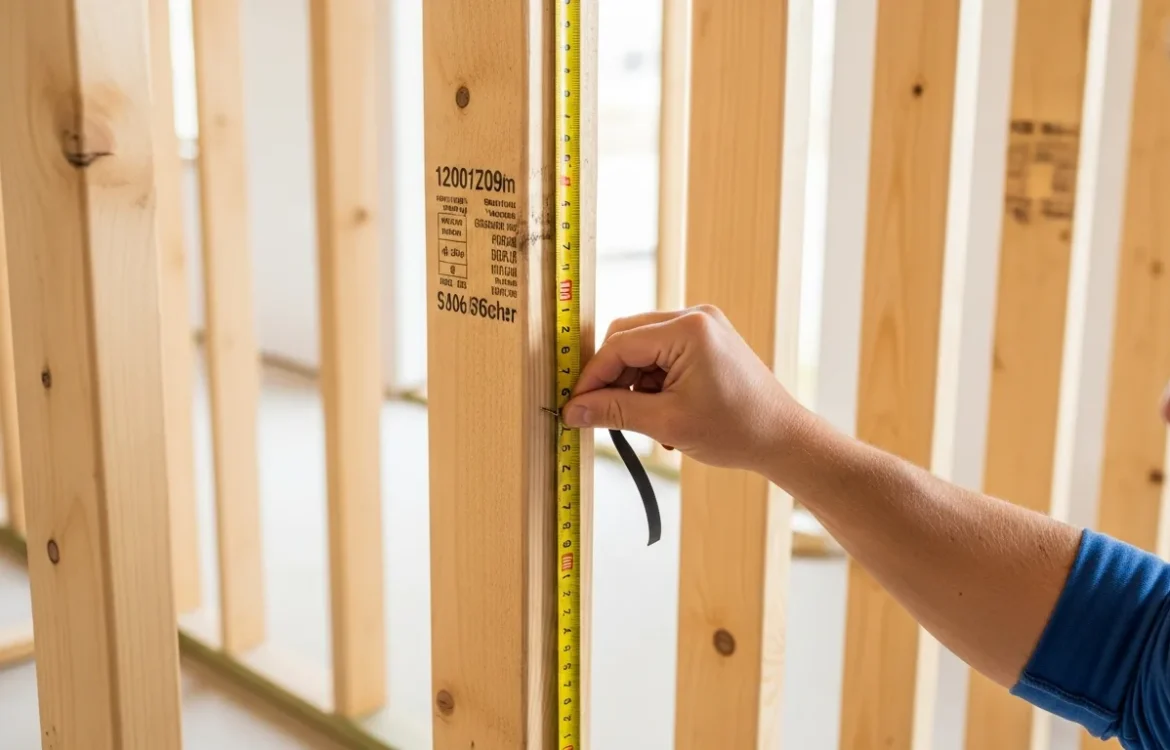
When a man decides to mount a heavy television or install sturdy shelving, his first priority is locating the structural support behind the drywall. In the vast majority of North American homes, wall studs are spaced 16 inches apart, measured from center to center. This industry standard ensures that the vertical framing can adequately support the weight of the structure and the materials attached to it.
While 16 inches is the gold standard, some modern constructions or non-load-bearing walls may feature studs spaced at 24 inches. This wider spacing is often used in utility sheds or specific residential designs to save on material costs where structural demands are lower. Knowing these two primary measurements allows a handyman to predict where he should begin his search before he ever touches a drill.
Why Stud Spacing Matters for Renters
For those living in apartments, understanding wall anatomy is essential for maintaining the integrity of the unit. If he plans on implementing some cheap apartment decorating ideas that involve hanging heavy mirrors or art, he must ensure he hits wood. Driving a screw into hollow drywall without an anchor is a recipe for property damage, which could lead to complications when he eventually tries to get his apartment deposit back at the end of his lease.
How to Find Studs Without a Stud Finder
He does not always need an electronic gadget to locate a stud. By using a few logical techniques, he can find the framing with high accuracy:
- Measure from the Corner: Since studs are spaced at regular intervals, they almost always start at the corner of a room. He can measure 16 inches out from a corner to find his first likely candidate.
- The Knock Test: By rapping his knuckles against the wall, he can listen for a change in pitch. A hollow sound indicates the space between studs, while a solid, higher-pitched thud indicates he is knocking directly over wood.
- Check the Trim: Baseboards and crown molding are nailed directly into the studs. He should look for small indentations or filled nail holes in the trim, as these usually align perfectly with the vertical framing.
- The Flashlight Trick: By holding a flashlight flush against the wall and shining the beam sideways, he can often spot small imperfections or “nail pops” in the drywall where the board was fastened to the stud.
Exceptions to the 16-Inch Rule
In 2026, many newer “green” buildings or modular homes utilize advanced framing techniques. In these cases, he might encounter 24-inch spacing even on exterior walls. Furthermore, horizontal blocking—small pieces of wood placed between studs—might be present in bathrooms or kitchens to support heavy cabinetry. If he encounters resistance where he didn’t expect it, he should move his search up or down a few inches to confirm the orientation of the wood.
Frequently Asked Questions
Are all wall studs 16 inches apart?
No, while 16 inches is the most common spacing, 24 inches is also a standard used in certain types of construction, particularly for non-load-bearing interior walls or energy-efficient framing.
How do I know if my studs are 16 or 24 inches apart?
He can determine the spacing by measuring from a corner or an electrical outlet. Outlets are almost always attached to one side of a stud. If he finds one stud and the next one is exactly 24 inches away, his home likely uses the wider spacing standard.
Are studs always made of wood?
In most residential homes, studs are 2×4 or 2×6 pine or fir boards. However, in many high-rise apartment buildings and commercial spaces, he will find metal studs. These require specialized self-tapping screws rather than standard wood screws.
Can I hang a TV between studs?
It is highly discouraged to hang a heavy television solely on drywall. If he cannot align his mount with the studs, he should use heavy-duty toggle bolts, though even these have weight limits that may not be sufficient for larger displays.