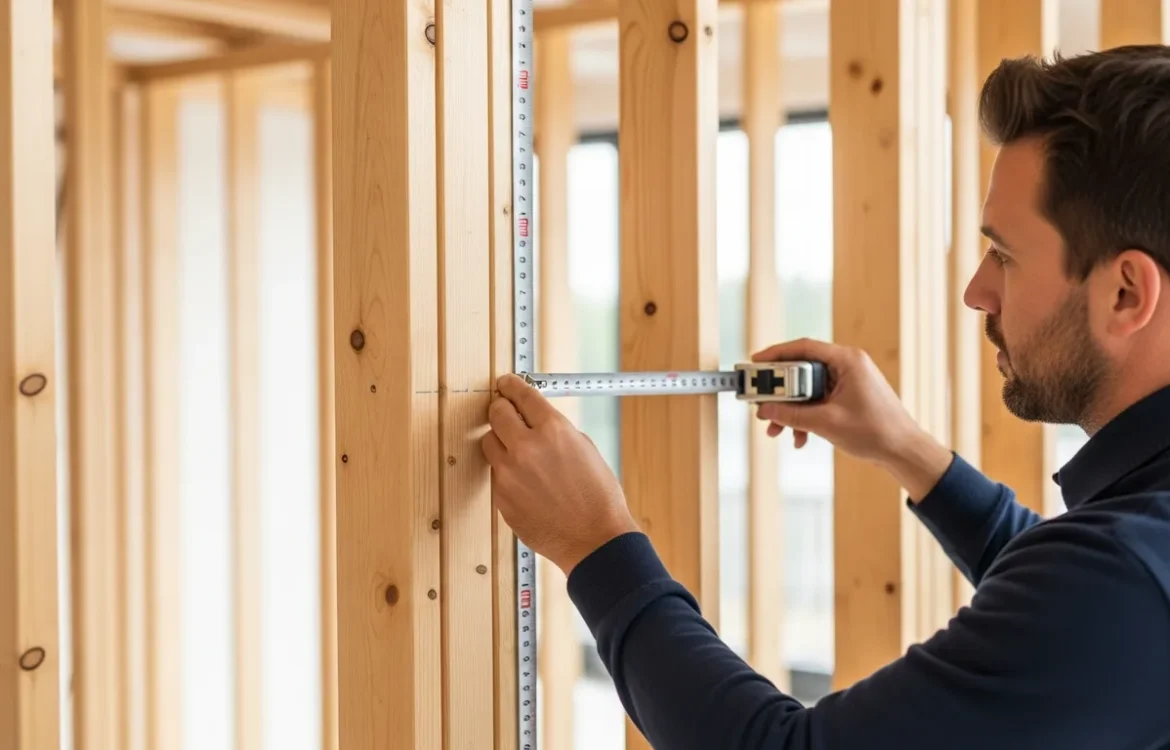
How Far Apart Are Wall Studs? A Guide to Standard Spacing
Understanding Standard Wall Stud Spacing
Whether a man is trying to mount a new 65-inch television or simply wants to hang a heavy mirror, knowing the distance between wall studs is essential. In modern residential construction, the standard spacing for wall studs is 16 inches on center (OC). This means that from the center of one vertical wood member to the center of the next, there is a 16-inch gap.
This measurement is not arbitrary. It is designed to accommodate standard building materials. For instance, a typical sheet of drywall is 48 inches wide, which perfectly spans three 16-inch stud bays. By adhering to this standard, a builder ensures that the edges of the drywall sheets always land directly over a solid wood stud for secure fastening.
The 16-Inch vs. 24-Inch Rule
While 16 inches is the gold standard for load-bearing walls, a man may occasionally encounter 24-inch spacing. This is more common in older homes, non-load-bearing interior walls, or in modern “advanced framing” techniques designed to increase energy efficiency by using less wood and more insulation.
- 16-Inch Spacing: The most common for structural integrity and exterior walls.
- 24-Inch Spacing: Often found in utility buildings, sheds, or specific interior partitions.
If he is working on his latest apartment interior design ideas, he should first verify which spacing his building uses before drilling. Hanging heavy shelving on a 24-inch center requires different planning than the standard 16-inch setup.
How to Find Wall Studs Without a Stud Finder
A man does not always need a high-tech electronic stud finder to locate the wood behind his drywall. There are several reliable manual methods he can use to find a solid anchor point:
The Measuring Tape Method
Since most studs are 16 inches apart, he can start at a corner of the room. Usually, the first stud is located 16 inches from the corner. From there, he can mark every 16 inches to find the subsequent studs. He should keep in mind that corners often have extra “king studs,” so his measurement should be precise.
The Outlet and Switch Strategy
Electrical boxes for outlets and light switches are almost always attached to one side of a stud. By removing the plastic cover plate (without touching the wires), he can often see which side the stud is on. He can then measure 16 inches in either direction from that point to find the rest of the framework.
The Tapping Test
By knocking gently on the wall, a man can hear the difference between a hollow space and a solid one. A hollow sound indicates the space between studs, while a higher-pitched, solid “thud” suggests he has found the timber. However, if he accidentally creates excessive holes in the drywall while searching, he might eventually need to use a sample letter to the landlord for repairs to ensure the wall is patched correctly before he moves out.
Why Stud Spacing Matters for Structural Safety
Studs are the vertical “skeleton” of a home. They carry the weight of the roof and the upper floors down to the foundation. When a man mounts a heavy object, he is essentially transferring that weight to the building’s frame. If he misses the stud and relies solely on drywall anchors, he risks the object falling and causing significant wall damage. In 2026, with the rise of heavy smart-home appliances and large-format art, the necessity of hitting a stud has never been more critical for safety.
Special Cases: Corners, Windows, and Doors
The 16-inch rule is a guideline, but it often breaks down around architectural features. Near windows and doors, builders use “jack studs” and “king studs” to reinforce the opening. This means a man might find studs spaced much closer together in these areas. Additionally, horizontal “fire blocks” may be installed halfway up the wall in some regions, which can confuse a stud finder but provide extra mounting points.
Frequently Asked Questions
How far apart are studs in an old house?
In houses built before the mid-20th century, stud spacing can be irregular. While many follow the 16-inch rule, some older homes used 24-inch spacing or even non-standard intervals depending on the local builder’s preference at the time.
Are all wall studs made of wood?
No. While most residential homes use 2×4 or 2×6 wood studs, many modern apartment buildings and commercial structures use metal studs. These require special self-tapping screws for mounting objects.
How thick is a standard wall stud?
A standard “2×4” stud is actually 1.5 inches wide and 3.5 inches deep. When a man is looking for the center of a stud, he has a 1.5-inch target to hit.
Can I hang a TV between studs?
It is not recommended for heavy TVs. If the bracket does not line up with the studs, he should use a mounting board (a piece of plywood screwed into two studs) and then attach the TV mount to that board.