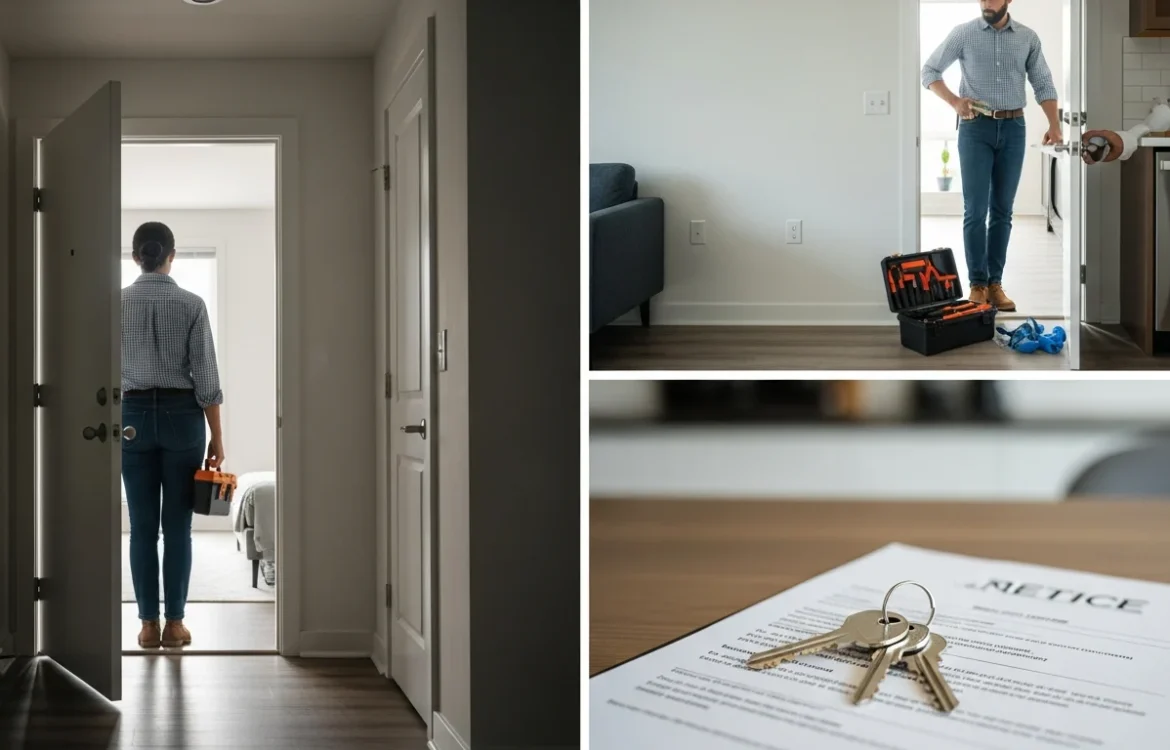
Landlord Right to Enter for Repairs: A Complete 2026 Guide
As a renter, you have a right to privacy and quiet enjoyment of your home, but your landlord also has responsibilities to maintain the property. When repairs are needed, this can create tension between these two rights. Understanding the landlord right to enter for repairs is crucial for both tenants and property owners to avoid conflicts and ensure legal compliance. This guide covers everything you need to know about when and how landlords can enter your rental unit for repairs, what notice they must provide, and what to do if they violate your rights. Whether you’re dealing with an emergency fix or routine maintenance, knowing the rules can help you navigate these situations smoothly.
Landlords generally have the right to enter for repairs, but they must provide reasonable notice (usually 24-48 hours) and enter at reasonable times, except in emergencies. Tenants can refuse entry if proper notice isn’t given, but landlords may have legal recourse if repairs are necessary for health or safety.
What Is the Landlord Right to Enter for Repairs?
The landlord right to enter for repairs refers to a landlord’s legal authority to access a rental unit to perform maintenance, make repairs, or address issues that affect the property’s condition. This right is typically outlined in state landlord-tenant laws and lease agreements. It balances the landlord’s duty to maintain a habitable property with the tenant’s right to privacy. In most jurisdictions, landlords cannot enter arbitrarily; they must have a legitimate reason, such as fixing a leak, repairing heating systems, or addressing safety hazards. Understanding this balance is key to avoiding disputes. For example, if you’re unsure about your rights in a specific state, you might refer to resources like the Pennsylvania Landlord Tenant Act or Florida Landlord Tenant Laws for detailed guidance.
Notice Requirements for Landlord Entry
Most states require landlords to provide advance notice before entering a rental unit for non-emergency repairs. This notice period varies but is commonly 24 to 48 hours. The notice must be in writing and include the date, time, and purpose of entry. Here are key points about notice requirements:
- Reasonable Notice: Typically 24-48 hours, but check local laws as some areas may have different rules.
- Written Notice: Verbal notice is often insufficient; written notice (e.g., email, letter) is preferred for documentation.
- Reasonable Time: Entry should occur during normal business hours, such as 9 AM to 5 PM, unless agreed otherwise.
- Frequency: Landlords cannot enter excessively; entry should be limited to necessary repairs.
If a landlord fails to provide proper notice, tenants may have the right to refuse entry. However, in emergencies, notice may not be required. For instance, if a pipe bursts and causes flooding, the landlord can enter immediately to prevent further damage. To learn more about handling repair requests, you can use a sample letter to landlord for repairs to communicate effectively.
Emergency vs. Non-Emergency Repairs
Understanding the difference between emergency and non-emergency repairs is essential for determining when a landlord can enter without notice. Here’s a comparison:
| Type of Repair | Notice Required | Examples | Tenant Response |
|---|---|---|---|
| Emergency Repairs | No notice required | Gas leaks, fire hazards, severe water damage | Allow immediate entry to prevent harm |
| Non-Emergency Repairs | 24-48 hours notice | Fixing a dripping faucet, painting walls, routine inspections | Can refuse if no proper notice given |
In emergencies, landlords have the right to enter immediately to protect the property and tenants’ safety. For non-emergencies, they must follow notice rules. If you’re dealing with repeated entry issues, it might be helpful to review your rights regarding overnight guests and other privacy matters to ensure your landlord isn’t overstepping.
Tenant Rights When Landlord Enters for Repairs
Tenants have specific rights when a landlord enters for repairs, designed to protect their privacy and property. These rights include:
- Right to Advance Notice: As mentioned, tenants are entitled to reasonable notice for non-emergency entries.
- Right to Refuse Entry: If proper notice isn’t given, tenants can legally deny entry, but this may not apply in emergencies.
- Right to Privacy: Landlords should not snoop or access personal areas unnecessarily during repairs.
- Right to Security: Landlords must secure the property after entry, such as locking doors.
- Right to Compensation: If entry causes damage or disruption, tenants may seek reimbursement.
If a landlord violates these rights, tenants can take action, such as filing a complaint with local housing authorities. In severe cases, understanding how to fight an eviction might be necessary if conflicts escalate. Additionally, knowing how to get your apartment deposit back can help if repairs lead to deposit disputes.
What to Do If Your Landlord Enters Without Permission
If your landlord enters your rental unit without proper notice or permission, it’s important to respond calmly and legally. Follow these steps:
- Document the Incident: Write down the date, time, and circumstances of the entry. Take photos if possible.
- Communicate with Your Landlord: Send a polite but firm letter or email reminding them of the notice requirements.
- Check Your Lease Agreement: Review the terms regarding entry to confirm your rights.
- Contact Local Authorities: If the issue persists, report it to your city’s housing department or tenant union.
- Consider Legal Action: In extreme cases, you may need to consult a lawyer or file a lawsuit for invasion of privacy.
Preventing unauthorized entry often starts with clear communication. For example, if you’re new to renting, our guide to renting your first apartment offers tips on setting boundaries with landlords.
State-Specific Laws on Landlord Entry
Laws regarding landlord entry for repairs vary by state, so it’s crucial to know your local regulations. Some states have strict notice requirements, while others are more lenient. Here are a few examples:
- California: Requires 24 hours’ notice for non-emergency entry, with entry during normal business hours.
- Texas: No specific statute, but common law suggests reasonable notice is required.
- New York: Landlords must provide reasonable notice, typically interpreted as 24 hours.
- Illinois: Check the Illinois Landlord Tenant Laws for details, as they may include specific entry rules.
Always refer to your state’s landlord-tenant act for accurate information. If you’re unsure, consulting a legal expert or tenant rights organization can help. For broader context, understanding your rights after lease expires can also inform how entry rules apply during lease transitions.
FAQs About Landlord Right to Enter for Repairs
Can a landlord enter without notice for repairs?
Yes, but only in emergencies where there is an immediate threat to health, safety, or property, such as a fire or gas leak. For non-emergency repairs, landlords must provide reasonable notice, usually 24-48 hours.
What happens if I refuse entry to my landlord for repairs?
If you refuse entry without a valid reason (e.g., no proper notice), the landlord may take legal action, such as filing for eviction for lease violation. However, if the landlord didn’t give notice, your refusal might be justified. Always document the situation.
How much notice is required for landlord entry?
Most states require 24 to 48 hours’ notice for non-emergency entry. Check your local laws, as some areas may have different requirements. The notice should be in writing and specify the reason for entry.
Can a landlord enter when I’m not home?
Yes, as long as they provide proper notice and enter at a reasonable time. They should leave a note or communicate afterward to inform you of the repair work done.
What repairs qualify as emergencies?
Emergencies include situations that pose immediate danger or could cause significant property damage, such as burst pipes, electrical failures, gas leaks, or fire hazards. Non-emergencies are routine fixes like painting or appliance repairs.
Can I change the locks to prevent landlord entry?
Generally, no. Changing locks without landlord permission is often a lease violation. If you have concerns about unauthorized entry, discuss them with your landlord or seek legal advice instead.
What should I do if my landlord enters repeatedly without notice?
Document each incident, send a formal complaint, and contact local tenant rights agencies. If it continues, you may need to consider legal action for harassment or invasion of privacy.
Are there exceptions to notice requirements?
Yes, exceptions include emergencies, agreed-upon entries (e.g., for scheduled inspections), or if the tenant abandons the property. Always refer to your lease and state laws for specific exceptions.
Leave a Reply