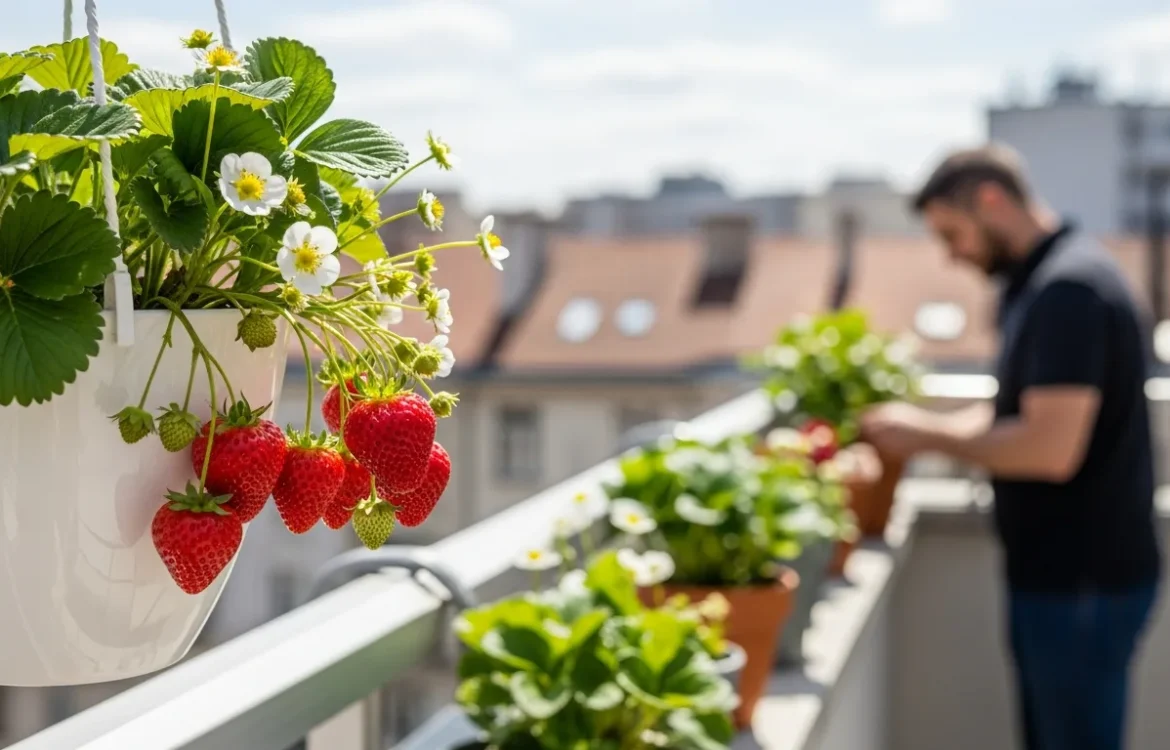
How Can You Grow Fresh Strawberries in Hanging Pots on Your Balcony?
Why Hanging Pots Are Ideal for Balcony Strawberries
Growing strawberries in hanging pots is one of the most efficient ways for a renter to maximize limited outdoor space. In 2026, vertical gardening has become the gold standard for urban dwellers who want to enjoy organic produce without a backyard. By elevating the plants, a gardener ensures his fruit stays off the soil, which significantly reduces the risk of rot and soil-borne pests.
Furthermore, hanging baskets allow for better air circulation around the foliage. When a man sets up his balcony garden, he creates a controlled environment where he can easily manage sunlight exposure and drainage. This method is not only functional but also serves as a beautiful addition to any outdoor space. When a renter looks for cheap apartment decorating ideas, he often overlooks the vibrant aesthetic and functional value of a living strawberry curtain.
Selecting the Best Strawberry Varieties for Containers
Not all strawberry plants are created equal, especially when confined to a pot. To ensure success, a gardener must choose the right variety based on his desired harvest cycle. There are three primary types to consider:
- Everbearing: These produce two to three harvests throughout the summer and autumn.
- Day-Neutral: These are the most popular for 2026 balcony gardens because they produce fruit consistently as long as temperatures remain between 35°F and 85°F.
- June-bearing: These produce one massive crop over a few weeks in early summer.
For hanging pots, Alpine strawberries or day-neutral varieties like ‘Albion’ or ‘Seascape’ are highly recommended. These plants tend to produce fewer runners, allowing the plant to focus its energy on fruit production rather than spreading.
The Perfect Setup: Pots, Soil, and Sunlight
Before a man begins planting, he needs to gather the right materials. A high-quality watering can and organic fertilizer should be at the top of any gardener’s apartment essentials list to ensure his plants thrive in a confined environment.
Choosing the Right Pot
The pot should be at least 8 to 12 inches deep. While plastic is lightweight and retains moisture well, coco-fiber liners in wire baskets provide excellent aeration. Ensure the container has multiple drainage holes; strawberries hate “wet feet,” which can lead to root rot.
Soil Requirements
Never use standard garden soil, as it is too heavy and may contain pathogens. Instead, a gardener should opt for a high-quality organic potting mix amended with perlite or vermiculite. He should aim for a slightly acidic pH between 5.5 and 6.5. Adding a handful of compost or a slow-release organic fertilizer at the start of the season will give the plants the nutrients they need to kickstart growth.
Step-by-Step Planting Guide
Once the materials are ready, the planting process is straightforward. A gardener should follow these steps to ensure his strawberries take root successfully:
- Hydrate the Roots: If using bare-root plants, he should soak them in water for about 30 minutes before planting.
- Fill the Container: Fill the pot with soil up to about two inches below the rim.
- Position the Crown: This is the most critical step. He must place the plant so the “crown” (where the roots meet the stems) sits exactly at the soil surface. Planting too deep causes rot, while planting too shallow causes the roots to dry out.
- Firm the Soil: Gently press the soil around the roots to eliminate air pockets.
- Water Thoroughly: Give the basket a deep soak until water runs out of the bottom.
Essential Care and Maintenance for 2026
Maintenance is where the real work begins. To get a bountiful harvest, a man must be diligent with his care routine. Strawberries on a balcony typically need at least 6 to 8 hours of direct sunlight daily. If his balcony is shaded, he might need to use a rotating hook to ensure all sides of the basket receive equal light.
Watering: Hanging pots dry out much faster than ground-level gardens. During the heat of summer, a gardener may need to water his strawberries every morning. He should check the top inch of soil; if it feels dry, it is time to water.
Feeding: Every two weeks, he should apply a liquid seaweed or fish emulsion fertilizer. This provides the potassium necessary for flowering and fruit development. He must also keep an eye out for runners (long, leafless stems). To maximize fruit yield, he should snip these off so the plant doesn’t waste energy creating “daughter” plants.
Frequently Asked Questions
How many strawberry plants can I fit in one hanging pot?
For a standard 12-inch hanging basket, a gardener can typically fit 3 to 4 plants. Overcrowding can lead to poor air circulation and smaller fruit, so he should ensure each plant has enough room to breathe.
How do I protect my balcony strawberries from birds?
Birds are often attracted to the bright red fruit. A man can protect his harvest by using lightweight bird netting over the baskets or by placing reflective objects, like old CDs, nearby to deter them.
Can strawberry plants survive the winter in hanging pots?
In most climates, the roots will freeze if left hanging. A gardener should move his pots to an unheated garage or basement once the plant goes dormant, or he can wrap the pots in burlap and bubble wrap to provide insulation if they must stay outside.
Why are my strawberries small and sour?
Small, sour fruit is usually a sign of insufficient sunlight or a lack of potassium. A man should ensure his plants get enough sun and use a fruit-specific organic fertilizer to improve the sugar content of his berries.