How Can Renters Successfully Grow Vegetables on a Small Balcony?
Assessing Your Balcony Layout and Sunlight
Before a renter begins purchasing seeds and soil, he must understand the specific environment of his balcony. Sunlight is the most critical factor for vegetable growth. Most fruiting vegetables, such as tomatoes and peppers, require at least six to eight hours of direct sun. If a man finds his balcony is shaded by neighboring buildings, he should pivot his strategy toward leafy greens like spinach or kale, which thrive in lower light conditions.
Wind is another factor often overlooked by the urban gardener. High-rise balconies can experience significant gusts that dry out soil quickly or snap delicate stems. A smart renter will observe the wind patterns on his floor and consider installing lattice or windbreaks to protect his crop. When planning the layout, he should also ensure he has the right apartment essentials list to handle the logistics of moving soil and water without creating a mess.
Selecting High-Yield Crops for Limited Spaces
Space is a premium for any renter. To maximize his harvest, he should focus on “cut-and-come-again” varieties or dwarf cultivars specifically bred for containers. In 2026, many seed companies offer specialized “patio” series for almost every vegetable imaginable.
- Determinate Tomatoes: Unlike indeterminate varieties that grow into massive vines, these stay compact and bushy.
- Bush Beans: These provide a heavy yield without requiring tall, complex trellising systems.
- Radishes: These are excellent for the beginner because they grow rapidly, often reaching harvest size in just 25 days.
- Herbs: Basil, mint, and chives are perfect for small pots and provide a high culinary return for minimal space.
Strategic Container Selection and Weight Management
A renter must be mindful of the weight he adds to his balcony. Wet soil is surprisingly heavy, and most building codes have specific load-bearing limits. He should opt for lightweight containers made of resin, plastic, or fabric rather than heavy terracotta or ceramic. Fabric pots are particularly useful because they promote air-pruning of the roots, leading to a healthier plant.
Using high-quality potting mix is non-negotiable. A man should never use garden soil from the ground in his balcony pots, as it is too dense and may contain pests. Instead, he should choose a soilless mix containing peat moss or coconut coir, perlite, and vermiculite. This ensures proper drainage and aeration, which are vital for container-grown vegetables.
Vertical Gardening Techniques for the Modern Renter
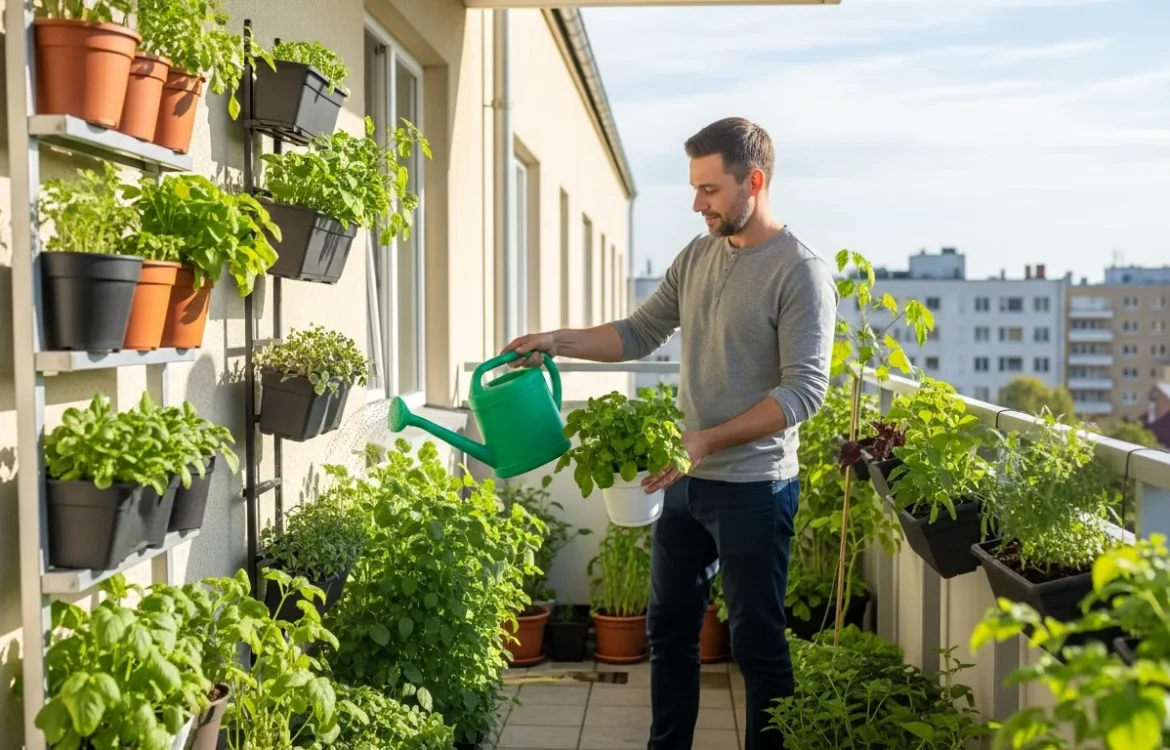
When floor space is limited, the only way to go is up. Vertical gardening is one of the most affordable ways to enhance an apartment’s aesthetic while doubling the available growing area. A renter can utilize wall-mounted planters, hanging baskets, or tiered shelving units to stack his crops.
He might also consider using a simple trellis for climbing plants like peas or cucumbers. By training these plants to grow vertically, he saves floor space for larger pots containing root vegetables or bush varieties. This approach not only increases his yield but also creates a lush, green privacy screen from his neighbors.
Maintaining Your Balcony Garden Without Violating Your Lease
The successful renter-gardener is one who respects his property and his neighbors. Water management is the primary concern here. He should always use saucers or drip trays under his pots to prevent water from cascading onto the balcony below. This prevents potential disputes and keeps the building exterior clean.
Fertilization is also key in container gardening. Because nutrients leach out of the soil every time he waters, he must supplement with a water-soluble organic fertilizer every two weeks. By staying on top of these small maintenance tasks, he ensures a thriving garden that remains a benefit to his lifestyle rather than a burden to his landlord.
Frequently Asked Questions
Do I need my landlord’s permission to start a balcony garden?
Generally, as long as the pots are not permanently attached to the structure and you aren’t exceeding weight limits, you don’t need formal permission. However, a renter should always check his lease for specific clauses regarding outdoor displays or weight restrictions.
What is the best way to water a balcony garden?
A man should use a long-necked watering can to reach the base of his plants directly. This prevents foliage diseases and ensures the water goes into the soil rather than splashing over the edge of the balcony.
Can I grow vegetables on a north-facing balcony?
Yes, but the selection is limited. A renter with a north-facing balcony should stick to shade-tolerant crops like lettuce, arugula, parsley, and certain types of kale, as these require far less direct sunlight than fruiting crops.
How do I protect my balcony plants from extreme heat?
In mid-summer, containers can bake. He can use light-colored pots to reflect heat, mulch the surface of the soil to retain moisture, and provide temporary shade during the hottest part of the afternoon using a simple cloth or screen.