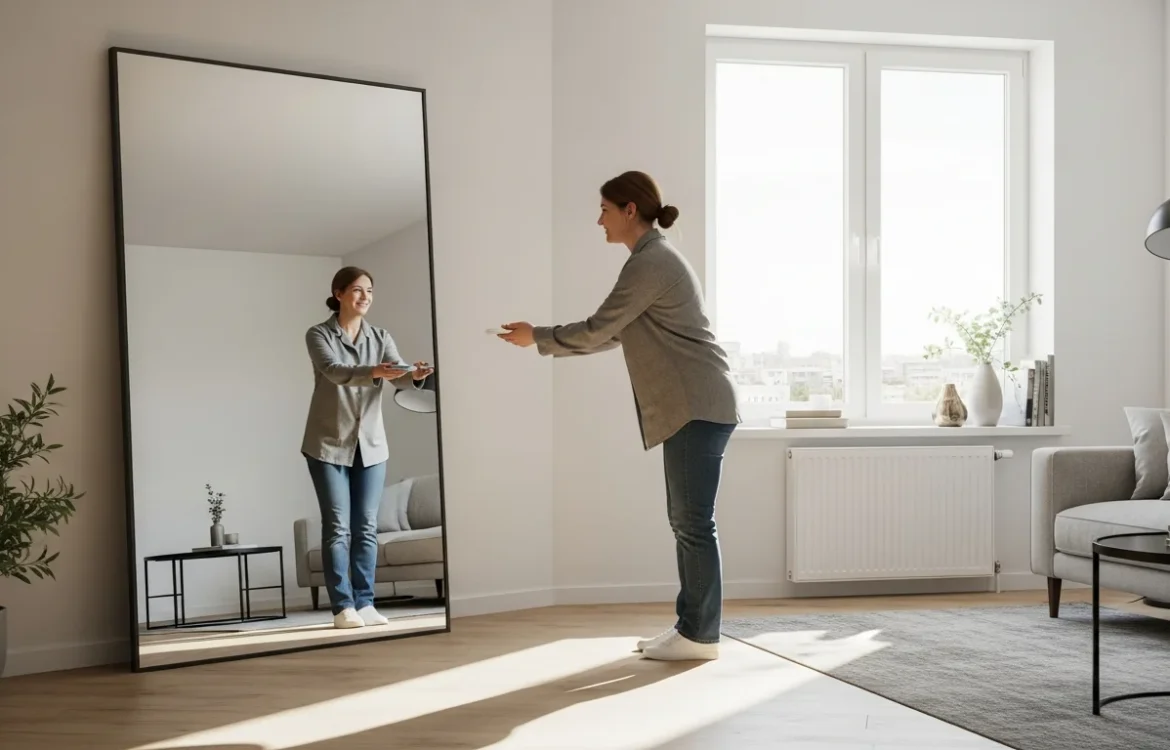
How Can Mirrors Effectively Brighten a Dark Apartment?
The Science of Reflection in Small Living Spaces
Living in a dark apartment can feel restrictive, but the solution often lies in how a man manages the light he already has. Mirrors are not just for checking one’s appearance; they are powerful tools for optical manipulation. By strategically placing reflective surfaces, a resident can effectively double the visual depth of his room and significantly increase the amount of ambient light bouncing from wall to wall.
The key to success is understanding that mirrors act as secondary light sources. When light hits a polished surface, it doesn’t just stop; it rebounds. In a dimly lit rental, this means every photon of sunlight or lamp light can be recycled to fill the corners that a single bulb cannot reach.
Best Mirror Types for Maximum Light Dispersion
Not all mirrors are created equal when it comes to illumination. To achieve the best results, a man should look for specific styles that prioritize surface area and clarity.
- Oversized Floor Mirrors: These are the heavy hitters of the decor world. By leaning a tall mirror against a wall, he can capture light from both high and low angles, making the floor feel more expansive.
- Frameless Wall Mirrors: Without a heavy border to absorb light, frameless options allow the reflection to bleed right to the edge, creating a seamless transition that mimics an extra window.
- Mirrored Furniture: For those with limited wall space, selecting pieces that serve multiple purposes, such as a mirrored sideboard or coffee table, can help scatter light across the floor level.
Strategic Placement: Where to Position Your Mirrors
Placement is more important than the mirror itself. If a man hangs a mirror on a dark wall facing another dark wall, he won’t see much improvement. Instead, he should focus on these high-impact locations:
Directly Opposite the Primary Light Source
The most effective tactic is to hang a large mirror directly across from the largest window in the room. This captures the incoming natural light and throws it back into the interior. It effectively creates a “second window,” which is particularly useful in narrow urban apartments where sunlight is a premium commodity.
Adjacent to Windows
If the layout doesn’t allow for an opposite placement, hanging a mirror at a 90-degree angle to the window can also work. This helps catch the light as it enters and redirects it across the length of the room rather than just the immediate area near the glass.
Behind Artificial Light Sources
During the evening, mirrors can still work their magic. A man can place a mirror behind a floor lamp or a pair of wall sconces. This reflects the bulb’s glow, softening the shadows and making a single lamp feel like two. This is one of many sophisticated interior design strategies that professionals use to create mood without adding to the electricity bill.
Enhancing the Effect with Decor Choices
A mirror’s effectiveness is also dictated by the environment it reflects. To maximize the brightness, he should ensure the mirror is reflecting light-colored surfaces. A mirror reflecting a dark navy wall will not brighten a room as much as one reflecting a crisp white or light grey surface. Keeping the glass clean is also vital; dust and smudges diffuse light and reduce the crispness of the reflection, hindering the brightening effect.
Frequently Asked Questions
Do mirrors really make a dark room brighter?
Yes. Mirrors reflect light rather than absorbing it. By placing them correctly, you can redirect natural and artificial light into the darker areas of a room, increasing the overall lumen count in those spots.
What is the best mirror shape for a small apartment?
Rectangular or arched mirrors are generally best for light. Tall rectangular mirrors emphasize vertical space, while arched mirrors can mimic the look of a window, providing a more natural feel to the light reflection.
Can I use multiple small mirrors instead of one large one?
While a gallery wall of mirrors can look stylish, a single large mirror is always more effective for brightening a room. Multiple small mirrors break up the reflection and can create a cluttered visual effect that doesn’t bounce light as efficiently.
Where should I put a mirror in a windowless hallway?
In a hallway without windows, place the mirror at the very end of the hall. This draws light from the connected rooms into the passage and creates the illusion that the hallway continues further than it actually does.