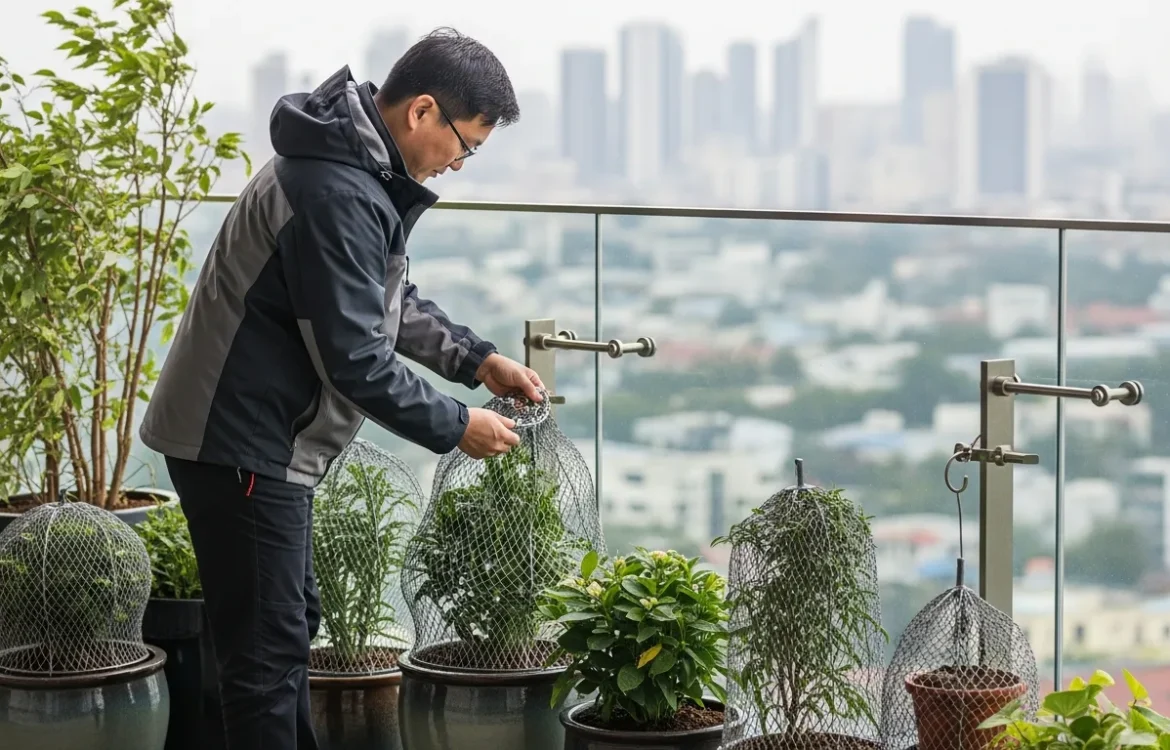
How Can You Keep Balcony Plants Safe from High Winds?
Understanding the Wind Tunnel Effect on High-Rise Balconies
For any man living in an urban apartment, his balcony is his sanctuary. However, high-altitude gardening presents a unique challenge: the wind tunnel effect. Wind speeds increase as they move between buildings, often hitting balcony plants with far more force than they would encounter at ground level. If he doesn’t take the right precautions, he might find his prized greenery toppled or his expensive ceramic pots shattered.
Protecting a balcony garden requires a mix of structural reinforcement and smart plant selection. By implementing a few professional strategies, he can ensure his outdoor space remains lush and intact, even when the 2026 storm season arrives.
The Power of Grouping: Safety in Numbers
One of the simplest ways a gardener can shield his plants is by grouping them together. When plants are clustered, they create a collective microclimate that reduces the wind’s impact on individual stems. He should place the largest, most robust pots on the outer edge of the group to act as a natural buffer for the more delicate species in the center.
This arrangement doesn’t just provide physical support; it also helps retain moisture. High winds quickly strip moisture from leaves and soil, but a tight cluster of plants helps maintain higher humidity levels. While he explores various cheap apartment decorating ideas, he should consider how the layout of his balcony furniture can complement these plant clusters for maximum wind resistance.
Securing Containers and Adding Weight
Lightweight plastic pots are convenient for moving, but they are a liability in a gale. To prevent his plants from taking flight, he should prioritize weight and stability. Heavy materials like terracotta, stone, or thick ceramic are ideal. If he already owns plastic pots and doesn’t want to replace them, he can add a layer of heavy river stones or gravel at the bottom of the pot before adding soil.
For extra security, he might consider the following methods:
- Tethering: Use heavy-duty fishing line or bungee cords to secure pots to the balcony railing.
- Brackets: Install specialized balcony planter brackets that lock the container onto the ledge.
- Double Potting: Place a smaller plastic pot inside a much heavier, decorative outer pot.
A well-prepared tenant knows that these stability measures should be part of his standard apartment essentials list to avoid property damage or injury to those below.
Installing Windbreaks and Screens
A physical barrier is often the most effective way to dissipate wind energy. Instead of a solid wall, which can create turbulent eddies, he should look for semi-permeable windbreaks. Materials like bamboo screens, lattice panels, or specialized horticultural windbreak netting allow some air to pass through while significantly reducing its velocity.
He should ensure that any screen he installs is firmly anchored to the balcony structure. If he is a renter, he must check his lease to ensure he isn’t violating any rules regarding external attachments. A mesh screen not only protects the plants but also provides a bit of extra privacy for his outdoor morning coffee.
Smart Staking and Pruning Techniques
Tall, top-heavy plants are the most vulnerable to snapping. To protect them, he should use stakes made of bamboo or steel. The stake should be driven deep into the soil and the plant tied to it with soft garden twine or Velcro strips. It is important that he leaves a little bit of “give” so the plant can move slightly without breaking.
Pruning is another vital tool. By keeping his plants well-groomed, he reduces the “sail area”—the total surface area that catches the wind. He should regularly trim back overgrown branches and remove dead foliage to keep the plant’s profile compact and aerodynamic.
Choosing Wind-Resistant Plant Species
Sometimes, the best defense is a good offense. If he lives in a particularly blustery area, he should choose plants that have evolved to handle high winds. Generally, these plants have flexible stems, small or narrow leaves, or a low-growing habit.
Some excellent choices for a windy balcony include:
- Ornamental Grasses: Their flexible blades sway with the wind rather than resisting it.
- Succulents: Their thick, low-profile leaves are highly resistant to desiccation.
- Lavender and Rosemary: These woody herbs are tough and have small leaves that minimize wind resistance.
- Pine or Juniper: Needle-like leaves allow wind to pass through easily.
Frequently Asked Questions
What is the best way to stop pots from blowing over?
The most effective method is to use heavy containers made of stone or lead. If using lighter pots, he can glue them to a heavy base or use industrial-strength Velcro to secure the bottom of the pot to the balcony floor.
How often should I water balcony plants in windy weather?
Wind acts as a powerful dehydrator. He should check his plants daily during windy periods. If the top inch of soil feels dry, the plant needs water, as wind can dry out a pot just as fast as high heat.
Can I use a solid glass shield for wind protection?
While glass can block wind, it can also create a greenhouse effect that scorches plants in the sun. A better option is a perforated screen that breaks the wind’s force without trapping heat or creating a vacuum on the leeward side.
Should I bring my plants inside during a storm?
If a severe storm or hurricane-force winds are predicted, he should absolutely bring his plants indoors or place them on the floor of the balcony away from the edges. No amount of staking can protect a plant from 60+ mph gusts.