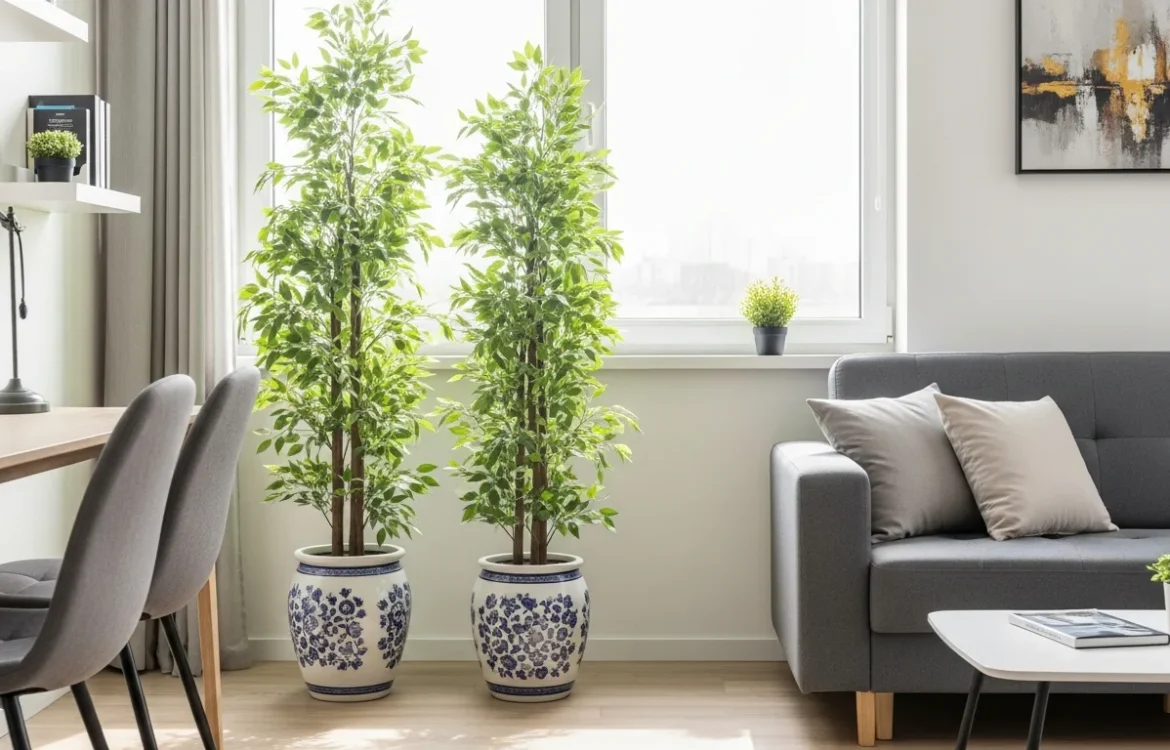
How to Choose the Best Indoor Trees for Small Apartments
Transforming Small Spaces with Vertical Greenery
Living in a compact urban dwelling doesn’t mean a man has to sacrifice his connection to nature. In 2026, the trend of biophilic design has evolved, focusing on how a renter can introduce high-impact greenery without cluttering his floor plan. The secret lies in selecting indoor trees that prioritize vertical growth over horizontal spread, allowing him to enjoy a lush canopy even in a studio setting.
When a man evaluates his options, he must consider the light levels of his unit and the footprint the pot will occupy. Integrating greenery is not just about aesthetics; it is one of the most effective apartment interior design ideas for creating a relaxing, air-purified atmosphere. By choosing the right species, he ensures his home remains sophisticated and open rather than cramped and overgrown.
The Best Vertical Trees for Tight Corners
For the man who wants a bold statement without losing square footage, these varieties offer height and architectural interest with a minimal footprint.
1. The Parlor Palm (Chamaedorea elegans)
The Parlor Palm has been a staple of indoor gardening for decades, and for good reason. It thrives in the lower light conditions often found in north-facing apartments. Its slow growth rate means he won’t have to worry about it outgrowing his ceiling any time soon. He can place it on a side table or in a corner to add a touch of Victorian elegance to his living room.
2. Dracaena Marginata (Dragon Tree)
The Dragon Tree is a favorite for modern enthusiasts. Its thin, woody stems and spiky, sword-like leaves grow almost entirely upward. This architectural profile makes it ideal for narrow gaps between furniture. If a man wants a tree that looks like a piece of living sculpture, the Dracaena is his best bet. It is also remarkably drought-tolerant, fitting perfectly into a busy professional’s lifestyle.
3. Money Tree (Pachira Aquatica)
Often found with a beautifully braided trunk, the Money Tree is famous for its resilience. It handles the fluctuating humidity of apartment living better than most. Because its foliage grows primarily at the top of the trunk, it keeps the floor-level visual field clear. This helps maintain an airy feel, much like selecting the best furniture for a small apartment to ensure every inch of the floor is utilized efficiently.
Low-Maintenance Options for the Modern Renter
Not every man has a green thumb, but that shouldn’t stop him from owning a tree. Certain species are far more forgiving of the occasional missed watering or the dry air produced by apartment HVAC systems.
The Rubber Tree (Ficus Elastica)
With its thick, waxy leaves, the Rubber Tree is a powerhouse of air purification. It comes in several varieties, including the deep burgundy ‘Burgundy’ or the variegated ‘Tineke.’ While it can grow large in the wild, a man can easily prune it to maintain a size that fits his specific room dimensions. He simply needs to provide it with bright, indirect light to keep its colors vibrant.
Fiddle Leaf Fig (Compact Varieties)
While the standard Fiddle Leaf Fig is notorious for being finicky, the ‘Bambino’ cultivar is specifically bred for small spaces. It offers the same iconic, violin-shaped leaves but in a much more manageable, dwarf size. He can enjoy the prestige of this trendy tree without it dominating his entire living area.
Maximizing Health and Longevity in Small Units
To ensure his trees thrive through 2026 and beyond, a man should implement a few strategic care habits. Proper drainage is non-negotiable; he should always use a pot with a drainage hole to prevent root rot. Additionally, rotating the tree 90 degrees every month ensures that it grows straight rather than leaning toward the light source.
Dusting the leaves is another essential task. In an apartment, dust accumulates quickly, which can block the sunlight a plant needs for photosynthesis. A quick wipe with a damp cloth once a week will keep his tree looking sharp and breathing easily. By paying attention to these small details, he protects his investment and maintains a vibrant, healthy home environment.
Frequently Asked Questions
Which indoor tree is best for a dark apartment?
The Parlor Palm and the Snake Plant (which can be grown to tree-like heights) are the most reliable options for low-light environments. They can tolerate the lack of direct sun without losing their structural integrity.
How do I prevent my indoor tree from getting too big?
A man can control the size of his tree through strategic pruning and by keeping it in a slightly smaller pot to restrict root growth. Pruning the top of the tree will encourage it to grow fuller rather than taller.
Are indoor trees safe for small spaces with pets?
He should be cautious, as some popular trees like the Sago Palm or certain Ficus varieties can be toxic. The Money Tree and the Parlor Palm are generally considered non-toxic and safer for households with animals.